7 min read
Is PinealPure a Scam? 39 RCTs Later, Here's the Real Verdict
Pycnogenol® backed by 39 RCTs. Bacopa by 9. But the 'pineal detox' claims? Zero human trials. Full ingredient breakdown and honest verdict...
April 16, 2026
Read →
You’ve already read the individual reviews. You know both products exist, you know what they claim, and now you’re stuck on the same question most people are: which one do I actually buy?
I spent time going through both formulas side by side — every ingredient, every published study behind those ingredients, and every place where the marketing diverges from what the science supports. The answer isn’t “it depends.” There’s a real distinction here, and it comes down to what you’re actually trying to accomplish.
The short version is in the box below. Everything else is the reasoning behind it.
Quick Verdict — Pineal Guardian vs Pineal XT — Quick Verdict
Pineal Guardian wins on ingredient transparency and evidence quality. Pineal XT wins on price point and the iodine-fluoride angle. Neither has clinical trials behind the full formula — but Pineal Guardian's core stack is better supported by existing research.
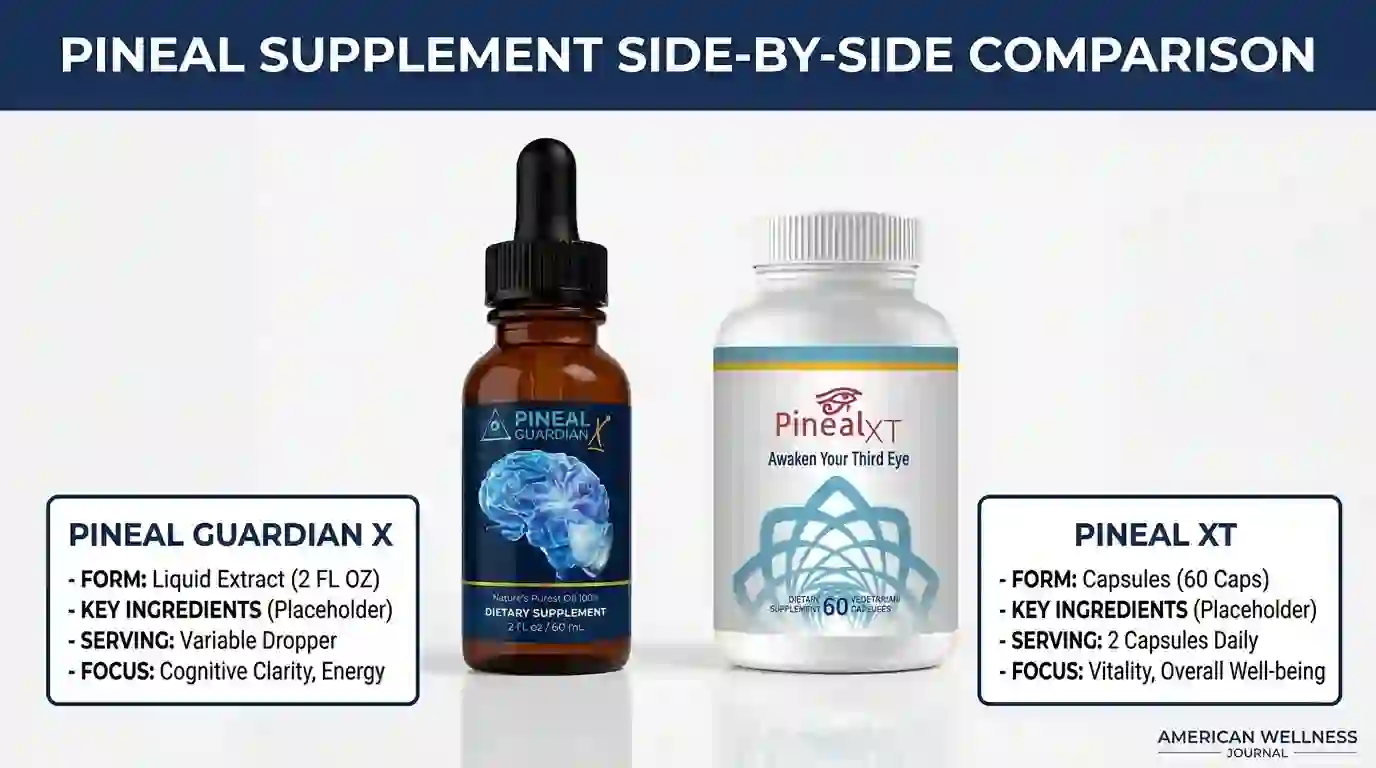
Before getting into the ingredients, here’s what the two products look like next to each other.
| Pineal Guardian | Pineal XT | |
|---|---|---|
| Format | Liquid drops | Capsules |
| Key ingredients | Pine Bark, Ginkgo Biloba, Chlorella | Iodine, Turmeric, Chaga, Chlorella, Schisandra |
| Dosage transparency | Partial | Not publicly disclosed |
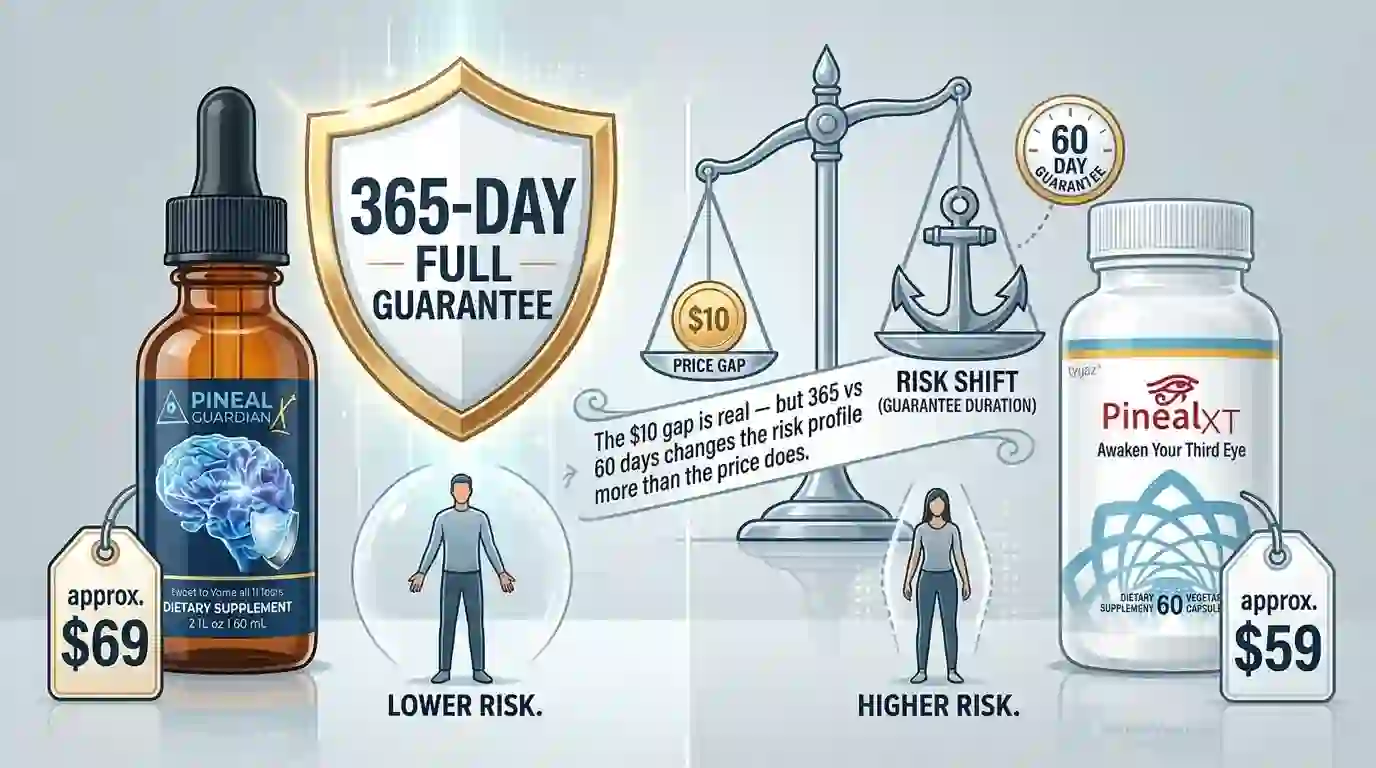
| Price (1 bottle) | ~$69 | ~$59 |
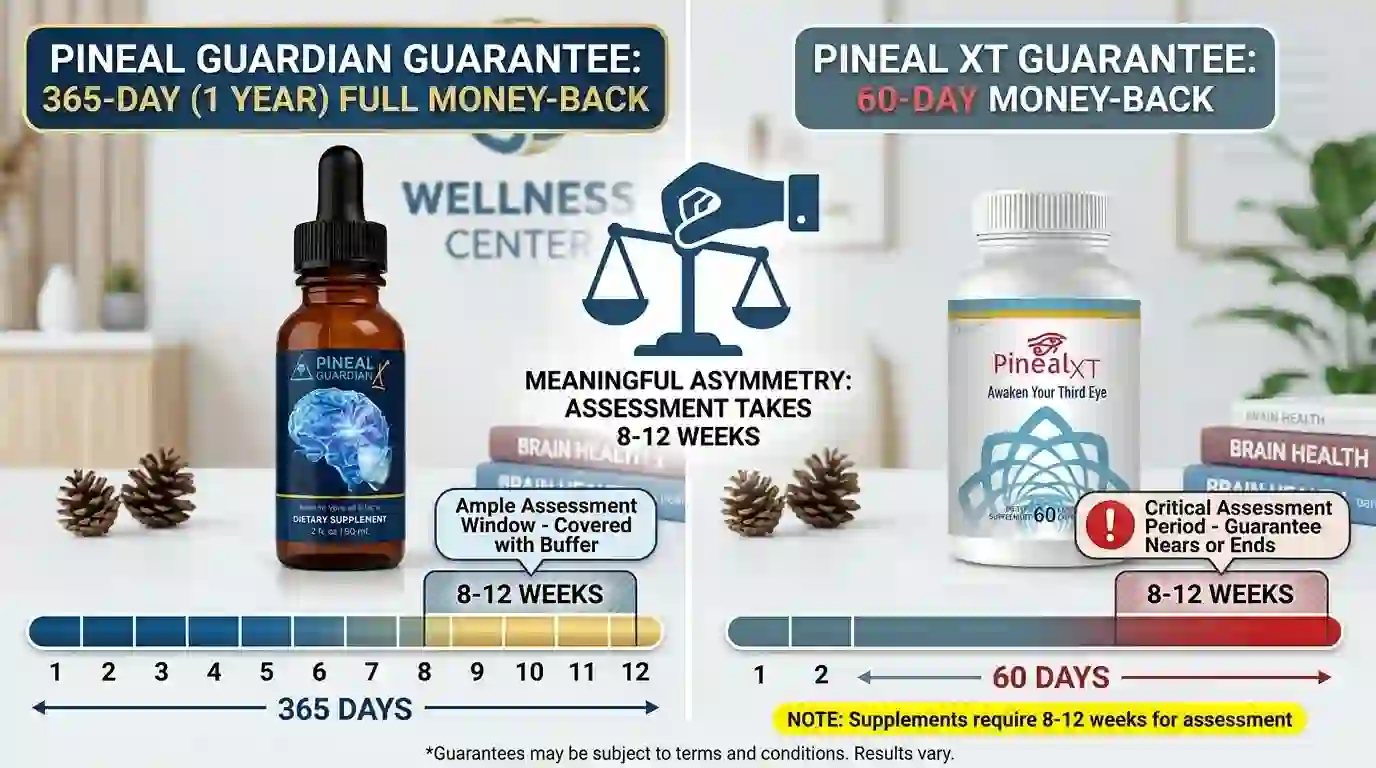
| Guarantee | 365 days | 60 days |
| Evidence tier | Moderate (for core ingredients) | Low–Moderate |
| Best for | Cognitive support + circulation | Spiritual-framework users, price-sensitive buyers |
The guarantee gap matters more than it looks. A 365-day window gives you enough time to run the 8–12 week trial the science actually requires and still request a refund if nothing changes. Pineal XT’s 60 days is workable — barely — for a category where results come in slowly.
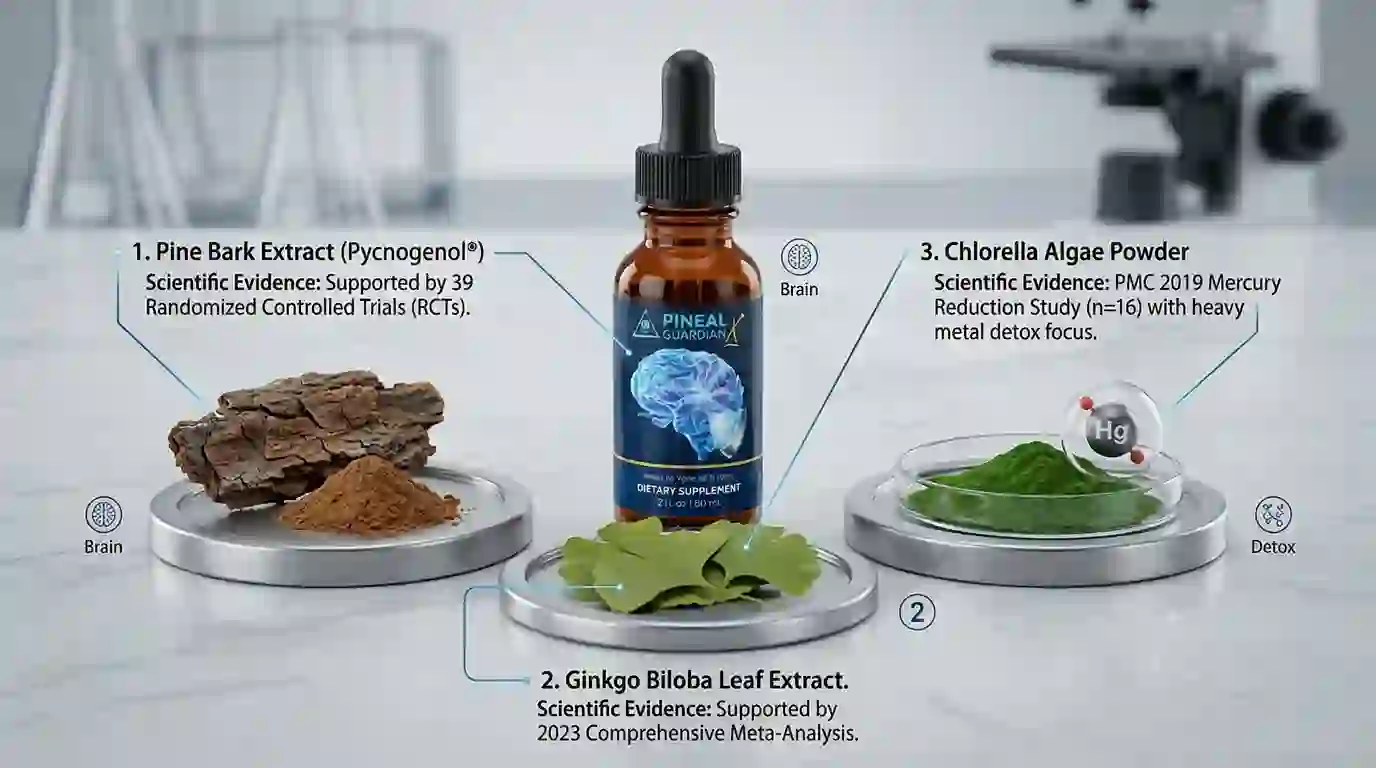
Pine Bark Extract is the ingredient I came into this review most skeptical about and left most impressed by. A 2024 meta-analysis in Frontiers in Nutrition covering 39 randomized controlled trials with over 2,000 participants confirmed real effects on cerebral blood flow, oxidative stress markers, and cognitive performance. The caveat matters: most of that research used Pycnogenol®, the patented standardized form. I went looking for whether Pineal Guardian specifies Pycnogenol® certification in their materials. They don’t. That’s not a dealbreaker, but it means the comparison to clinical data stays approximate.
Ginkgo Biloba has a long research record. A 2023 meta-analysis in Frontiers in Aging Neuroscience found clear improvements in immediate word recall, working memory, and image recognition — strongest when Ginkgo was combined with conventional cognitive treatments. For a healthy adult using it standalone, the effect is real but modest. That’s an honest read, not a dismissal.
Chlorella is shared by both products. It’s probably the most defensible ingredient in the “pineal detox” category — which isn’t a high bar, but it clears it. A 2019 study in PMC demonstrated reduced mercury toxicity markers after 90 days in human subjects. Small sample (n=16), and Chlorella was combined with other compounds, so you can’t isolate the contribution. But the biological mechanism — heavy metal binding — is documented, and the human evidence exists. That puts it ahead of most things in this space.
The Pineal Guardian formula doesn’t have obvious weak links the way its competitor does. The bigger problem is what I mentioned above: without knowing exact doses, it’s impossible to verify whether the amounts used match what the clinical studies employed. A documentation problem, not necessarily a formulation problem. The distinction matters.
→ See the full Pineal Guardian ingredient breakdown
Iodine is the most legitimate ingredient in the Pineal XT formula, though not for the reasons the marketing suggests. Iodine is essential for thyroid function, and the fluoride-calcification connection is biologically plausible — a 2019 animal study found that rats on fluoride-free diets showed greater pineal cell proliferation than controls. That’s a rodent study. There is no published human RCT showing oral iodine supplementation reverses pineal calcification. The premise is reasonable; the clinical evidence isn’t there yet. It reminds me of how chelation therapy looked in the early 1950s — the mechanism made sense before the trials existed. Sometimes that’s where science lives for a while.
Turmeric (Curcumin) has genuine anti-inflammatory and heavy-metal- chelating properties in the literature. Meta-analyses published through 2022 confirm reduced CRP and other systemic inflammation markers in curcumin trials. The caveat is a real one: standard curcumin bioavailability is extremely low — roughly 1% absorption. Without piperine or a liposomal form, most of what you consume doesn’t reach circulation. Pineal XT doesn’t disclose which form of curcumin they use. The mechanism is real and the absorption problem is also real. Both things are true at once.
Chaga Mushroom is described in Pineal XT’s materials as a melanin source that protects the pineal gland from calcification. I went looking for peer-reviewed studies connecting Chaga specifically to pineal function or calcification. I came back empty-handed. That’s not skepticism — that’s the search. The melanin-protection hypothesis is speculative, and as much as I appreciate novel positioning, I can’t call it evidence-based.
Schisandra chinensis has pre-clinical data suggesting adaptogenic and neuroprotective effects. Human evidence for cognitive outcomes is limited, and nothing in the literature connects Schisandra to the pineal gland specifically. It’s a reasonable adaptogen. Calling it a “pineal support ingredient” is a stretch.
→ See the full Pineal XT ingredient breakdown
Pineal Guardian’s differentiator: Pine Bark Extract. If the product works, this is likely why. The evidence behind Pycnogenol®-standardized pine bark on cerebral circulation and oxidative stress is better documented than most ingredients in this category. The standardization question is unresolved, but the biological pathway is sound.
Pineal XT’s differentiator: Iodine. It’s the most direct attempt to address the fluoride-calcification mechanism — which is why people in this space are looking for supplements in the first place. The evidence is animal-grade for the pineal-specific claim, but the thyroid and detox mechanisms around iodine are well-documented. I was ready to dismiss this product over the Chaga situation, and then I kept coming back to the iodine rationale. If the fluoride and pineal gland connection is real — and a 2025 correlational study published in RSIS International suggests it’s worth taking seriously — then iodine is a reasonable first move. Not conclusive. But reasonable.
This is where I have to be direct about a shared limitation. Neither Pineal Guardian nor Pineal XT publicly discloses the full dosages of their active ingredients. For Pineal Guardian, partial information is available. For Pineal XT, dosages are not listed on publicly accessible product materials.
This matters. The clinical evidence for Pine Bark, Ginkgo, and Curcumin was obtained at specific doses. Without knowing whether these formulas match those doses, any comparison to the research is an approximation. This isn’t unique to these two products; it’s a category-wide transparency problem. One I wish someone would fix.
On the liquid-vs-capsule question: Pineal Guardian’s drop format may offer faster absorption for some compounds. Whether it’s meaningfully better depends on the specific ingredients and their solubility. No third-party testing has answered that for either product.
→ View current Pineal Guardian pricing and availability
Pineal Guardian runs approximately $69 for a single bottle. Multi- bottle packages reduce the per-unit cost, and the three-bottle option brings the monthly cost into range with mid-tier nootropic stacks.
Pineal XT starts at approximately $59 for a single bottle. The $10 difference is consistent across purchase options. It’s real money over a 3–6 month trial.
The guarantee differential changes the calculus. Pineal Guardian’s 365-day return window is the most generous I’ve seen in this supplement category. A $69 purchase with a 365-day window carries lower practical risk than a $59 purchase backed by 60 days — you have more time to evaluate whether the product is doing anything before committing to a multi-bottle order.
Both products are available exclusively through their official websites. Third-party listings on Amazon or eBay are unauthorized and carry the usual risks: counterfeiting, expired stock, and no access to the manufacturer’s guarantee.
Most likely to benefit:
Less likely to benefit — or should look elsewhere:
→ Pineal Guardian — Official Website
Most likely to benefit:
Less likely to benefit — or should consider alternatives:
→ Pineal XT — Official Website

Here’s where I land after working through both formulas:
Both products are built on a real biological premise. Pineal calcification is documented. The ingredients address plausible mechanisms. Neither has proven it owns the solution.
Pineal Guardian’s core ingredients have stronger clinical backing. Pine Bark and Ginkgo are among the better-studied compounds in cognitive support. The standardization question on Pine Bark is unresolved, but the foundation is more solid than anything Pineal XT can point to.
Pineal XT’s iodine inclusion is the most direct play on the fluoride-calcification pathway — and I’ll admit my position on this shifted as I wrote this section. I came in ready to discount it because of the Chaga situation. The iodine rationale kept me from doing that. It’s animal data. It’s still the most targeted ingredient in this category for this specific mechanism.
The guarantee gap is a real differentiator. 365 days versus 60 days changes the risk profile of the purchase in a practical way, not just on paper.
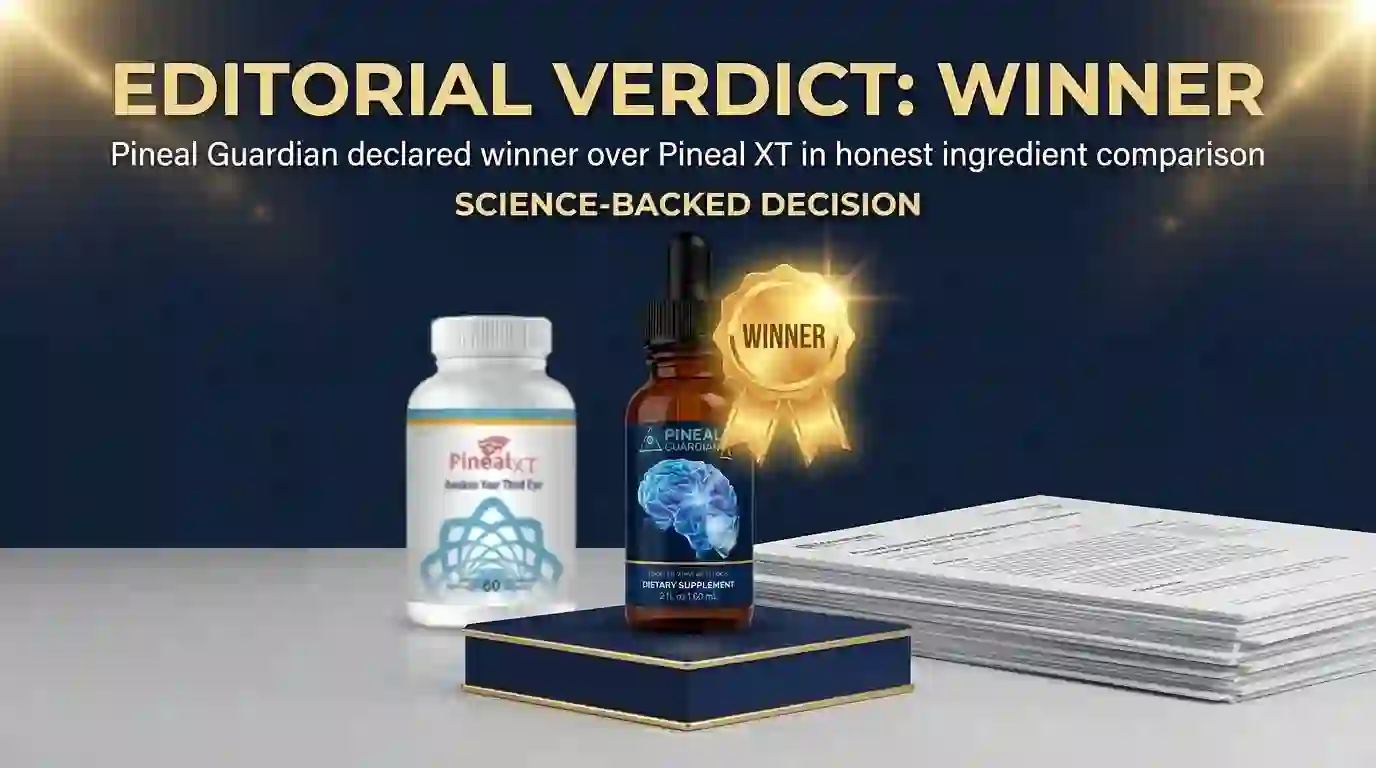
My position: if you’re choosing one, Pineal Guardian is the more defensible choice — better-evidenced ingredients, a return policy that actually gives you time, and a core stack with clinical literature behind it. Pineal XT is a reasonable alternative if price, format, or the iodine-specific angle is the deciding factor.
IF you’re a skeptical buyer who wants cognitive support with the strongest available evidence AND you’re willing to run a proper 8–12 week trial, Pineal Guardian is where I’d start.
Marcus's Verdict
Pineal Guardian
The stronger of the two on ingredient evidence quality. Pine Bark and Ginkgo are among the best-documented ingredients in this category. The 365-day guarantee makes it a lower-risk trial than most comparable products.
Affiliate disclosure: we may earn a commission at no extra cost to you.
Quick Verdict — Pineal XT
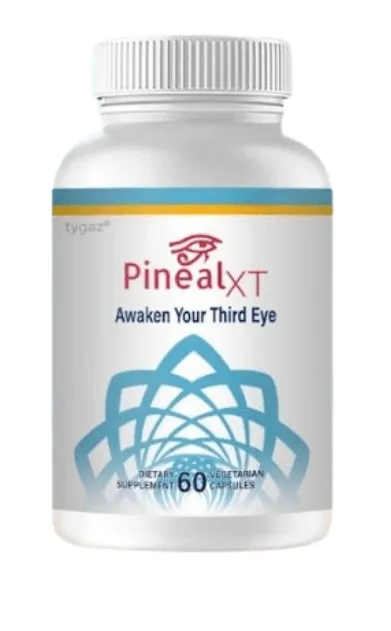
Lower price point and the most direct fluoride-calcification angle via iodine. Weaker overall on evidence quality, especially for Chaga. A reasonable first option if budget or the iodine mechanism is the deciding factor.
For deeper analysis of either product individually, see the Pineal Guardian Review, the Pineal XT Review, or the full best supplements to decalcify your pineal gland comparison. For context on why calcification matters, see how to reverse pineal gland calcification.
Affiliate Disclosure: PinealCode.com participates in affiliate programs. If you purchase through links on this page, we may receive a commission at no additional cost to you. This does not influence our analysis — products are evaluated on ingredient evidence, transparency, and value regardless of affiliate relationship.
Pycnogenol® backed by 39 RCTs. Bacopa by 9. But the 'pineal detox' claims? Zero human trials. Full ingredient breakdown and honest verdict...

9 botanicals, 7 with documented mechanisms — but Lion's Mane needs 3,000 mg/day. Full Pineal Guardian ingredient analysis: what works,...

61.65% of adults have pineal calcification (Belay 2023). Boron, K2, tamarind, iodine — ranked by peer-reviewed mechanism data. One outranks...

Marcus Hale
Independent Researcher · Former Clinical Neuroscientist
I spent 12 years in clinical neurology before the questions got more interesting than the answers. PinealCode is where I document what I find at the intersection of brain science and consciousness.