8 min read
Iodine Pineal Gland: The NIS Mechanism 4M Sites Got Wrong
4 million results claim iodine decalcifies the pineal gland. The NIS mechanism is real — the extrapolation isn't. Here's where the evidence...
April 14, 2026
Read →

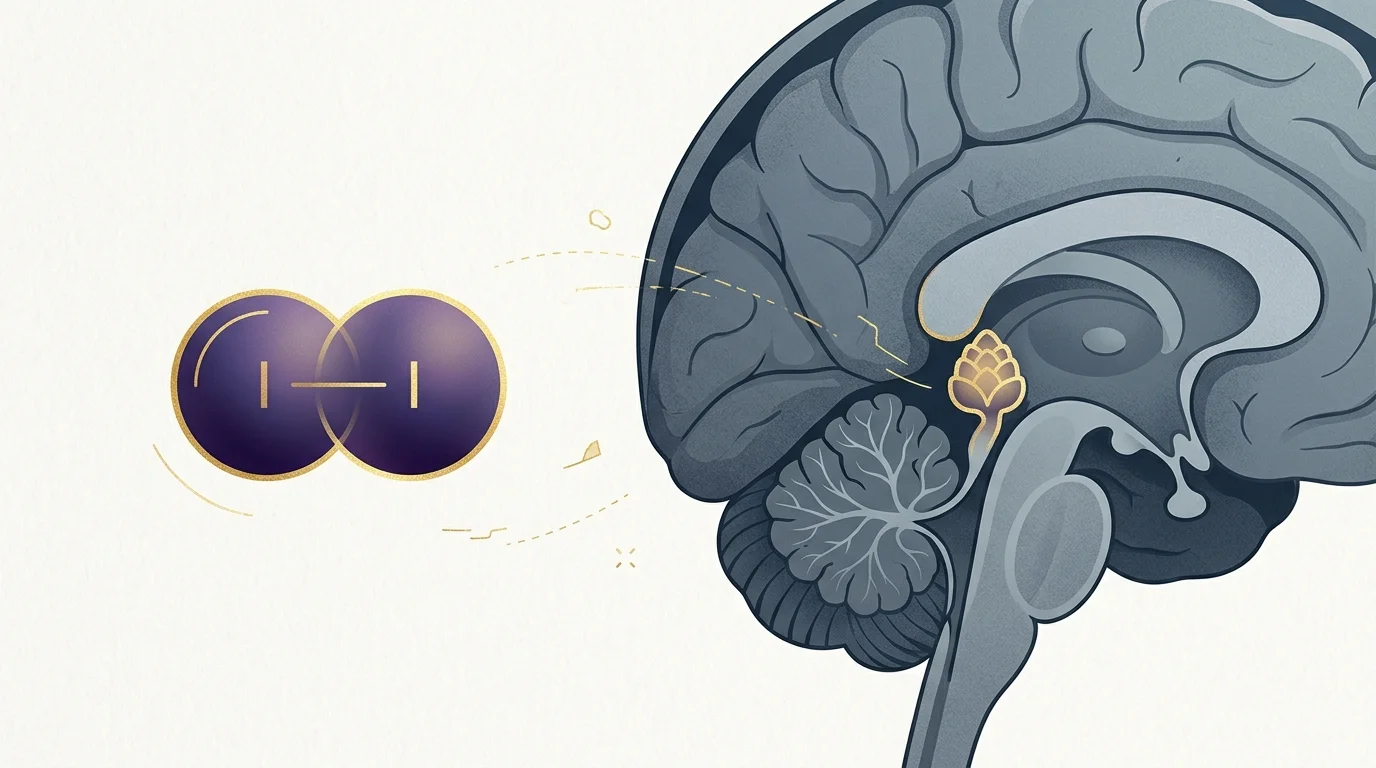
Someone in a biohacking forum will tell you C60 is 172 times stronger than Vitamin C. Someone else will tell you it decalcifies your pineal gland and unlocks psychic perception. And somewhere in between those two claims sits the actual science. Which is more interesting than most people expect, if you’re willing to sit with a little ambiguity.
The c60 pineal gland connection is real enough to take seriously. It’s also far less proven than the supplement industry wants you to believe.
Here’s what the research actually shows: what C60 is, how it works as an antioxidant, what it does in the brain, and where the honest edge of the evidence sits. No overclaiming. No dismissing. Just the mechanism. And the gaps.
In 1985, Harold Kroto, Robert Curl, and Richard Smalley were trying to simulate the chemistry of interstellar space. They vaporized graphite with a laser and found something unexpected: a molecule of exactly 60 carbon atoms, arranged in the same geometric pattern as a geodesic dome — or a soccer ball.
They named it Buckminsterfullerene, after the architect Buckminster Fuller. The Nobel Committee gave them the Chemistry Prize in 1996. Fuller spent his career arguing that geometry was the operating system of the universe. He’d have found it fitting that a molecule bearing his name turned up in meteorites and dying stars.
That’s not marketing copy. That’s a real discovery.
What makes C60 structurally unusual: each molecule is a hollow nanosphere, small enough to slip through biological membranes. Fullerenes have been found in meteorites, in soot, in the nebulae of dying stars. Biohackers call it the “magic molecule” because of its size and apparent ability to penetrate places most molecules can’t, including, potentially, mitochondria and cell membranes. That’s the hook for everything that follows.
The Baati 2012 study — more on that below — is what launched C60 into the supplement world. But the molecule itself predates the hype by decades.

Here’s the mechanism that makes C60 unusual. Most antioxidants work by sacrificing themselves. Vitamin C donates an electron to neutralize a free radical, and that’s it, it’s spent. One radical, one molecule consumed.
C60 doesn’t work that way.
It acts as a catalytic scavenger: it neutralizes multiple reactive oxygen species (ROS) without getting consumed in the process. The technical framing from Andrievsky et al. (2013, PMC3816026) is that C60 absorbs protons and undergoes mild mitochondrial uncoupling, functioning as a reusable antioxidant rather than a single-use one.
C60 can bind up to six electrons simultaneously, neutralizing multiple free radicals in a single interaction — a mechanism that makes it structurally unlike vitamin C, vitamin E, or any other conventional antioxidant.
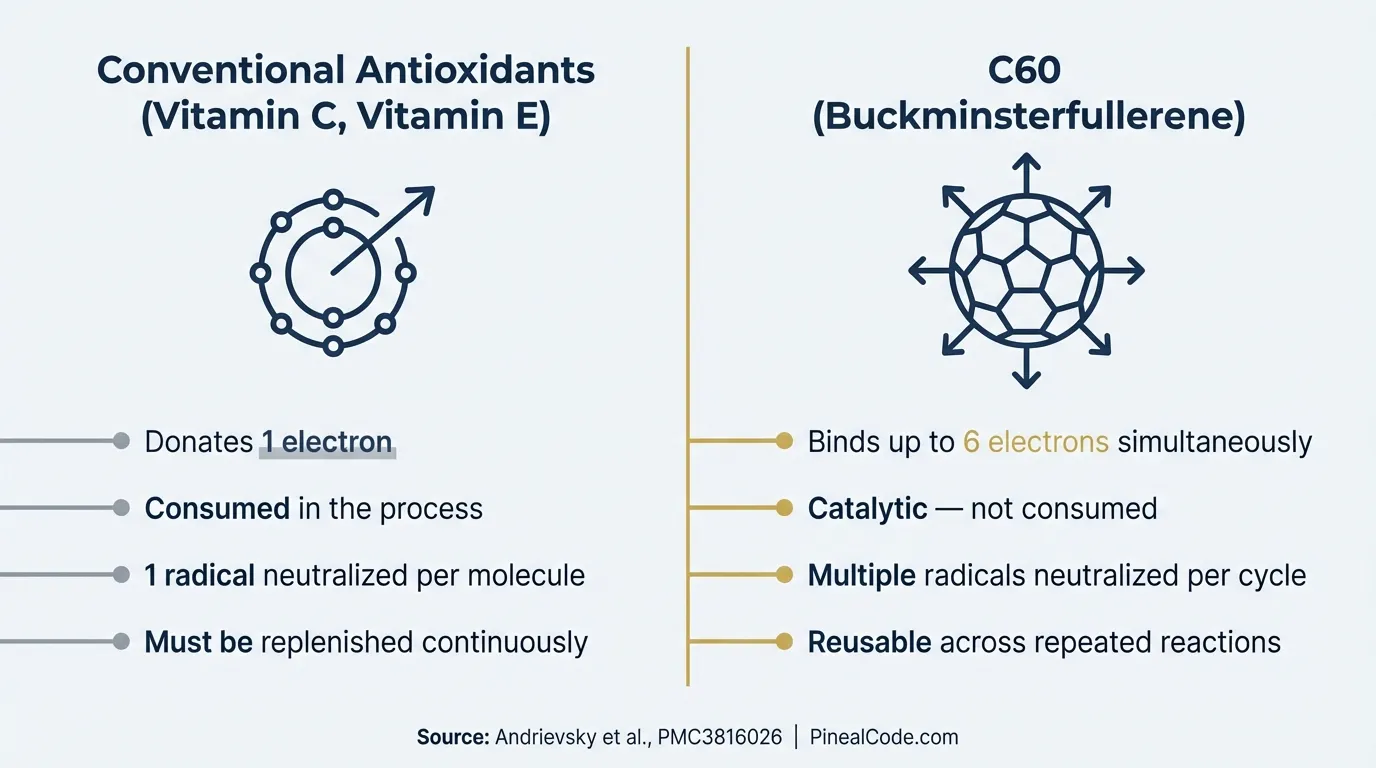
That’s where the “172x stronger than Vitamin C” claim comes from. It’s from an in vitro assay using a method called β-carotene bleaching, a lab technique measuring radical scavenging capacity in controlled conditions. It is not a clinical comparison. It does not mean C60 will make your blood 172 times healthier than an orange. It means, in a test tube, measuring a specific kind of ROS activity, the ratio was striking.
The Baati 2012 study (PubMed: 22498298) is the other pillar of the hype. Rats given C60 in olive oil lived roughly 90% longer than controls, nearly double their expected lifespan. The olive oil group alone lived 18% longer. The C60 effect was attributed to attenuation of age-related oxidative stress.
One important caveat: a 2020 study (PMC8110650) failed to replicate this longevity effect in a different mouse strain and detected light-dependent toxicity in C60 olive oil. Different species, different conditions — but the discrepancy matters. The Baati result is real. It’s also not settled.
This is where the data gets thin but interesting.
A 2008 study by Komatsu et al. (PubMed: 19049160) injected C60 directly into rat brains and found increased serotonin turnover in the hypothalamus, cerebral cortex, striatum, and hippocampus — and increased dopamine turnover in multiple regions. Meaningful, if you’re interested in what C60 does to neurochemistry.
I used to lead with that finding when talking about C60 and the brain. I don’t anymore.
But.
The delivery method was intracerebral microinjection. Not oral. Not even systemic. They put C60 directly into brain tissue. The same study’s intraperitoneal injection, the systemic route, showed no behavioral changes at all and no evidence the molecule crossed the blood-brain barrier.
The neuroprotection story is stronger in derivatized forms. Lin et al. (1997, PNAS 94:9434) showed that water-soluble C60 derivatives protected neurons from oxidative damage in both in vitro and animal models. Kraemer et al. (2017, PubMed: 29191454) found that C60 nanoparticles increased antioxidant capacity and reduced ROS in brain tissue, though larger particles (above 450nm) also reduced BDNF and impaired spatial memory.
Particle size apparently matters a lot. Which is not something most supplement labels tell you.
If you want broader context on why the neurological environment of the pineal specifically is worth protecting, the piezoelectric properties of pineal tissue make an interesting parallel read.
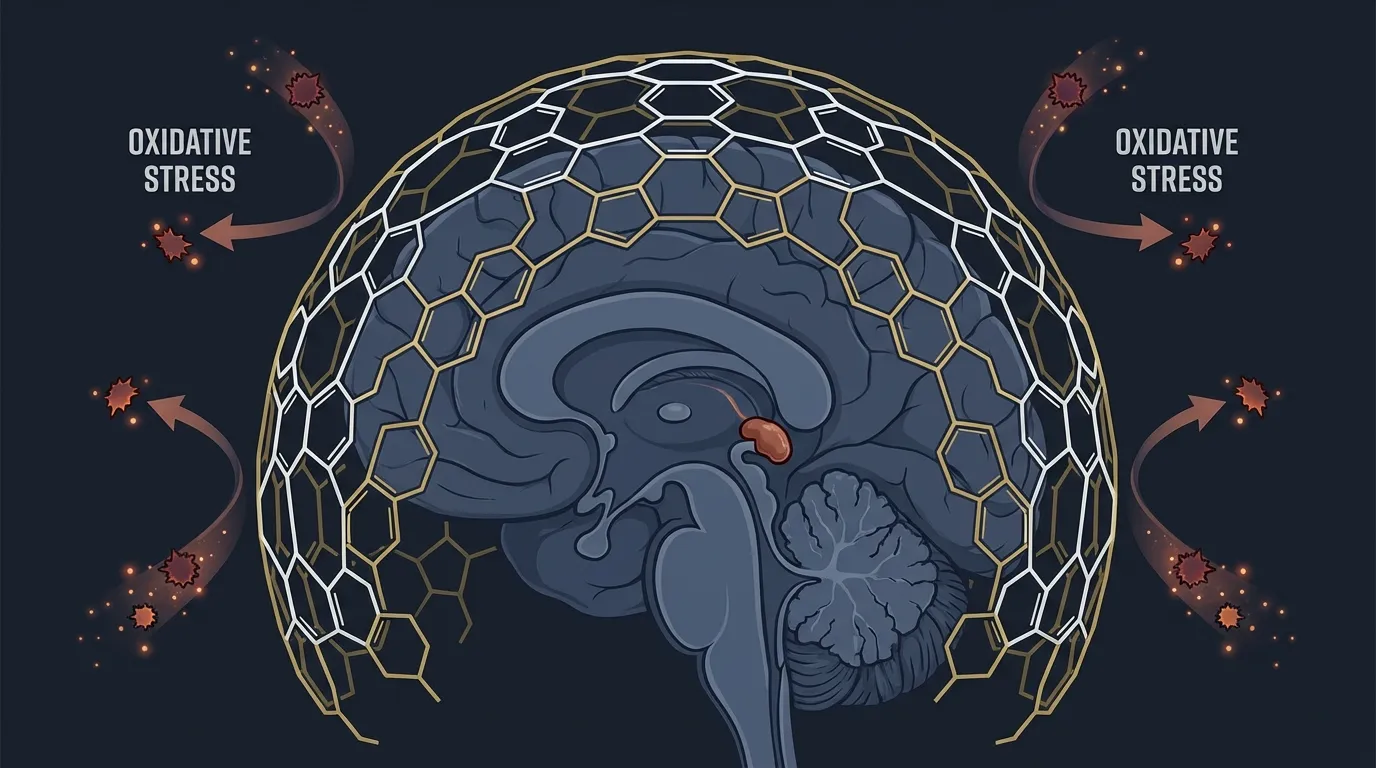
The pineal gland is one of the most metabolically active structures in the brain per unit volume. High metabolic activity means high ROS output. It’s also exposed to fluoride, heavy metals, and electromagnetic fields. All of which add to that oxidative load. And it has the highest calcification rate of any gland in the human body, according to Bhardwaj et al. (2018, PMC6017004).
That last point matters for the C60 conversation.
Calcification accelerates when oxidative damage accumulates. The mechanism runs something like this: ROS damages pineal tissue → inflammatory response → calcium deposits form as part of the repair process → calcification increases → melatonin synthesis declines. Bhardwaj et al. link pineal calcification directly to reduced melatonin production and a range of neurological outcomes associated with aging.
The theoretical connection to C60: if C60 neutralizes ROS in the brain, it may reduce the oxidative burden that accelerates calcification. Less oxidative damage, potentially less calcium deposition, and a pineal gland under less cumulative stress.
That is a biologically coherent hypothesis. It is not a proven mechanism. No study has tested C60 directly on pineal calcification, in animals, in vitro, or in humans. The link is inferential, built from separate lines of evidence that haven’t been connected in a single experiment.
If you’re building a broader heavy metal detox protocol for the pineal, C60’s antioxidant mechanism is at least rationally relevant. But “rationally relevant” is different from “clinically demonstrated.”
No direct clinical study confirms that C60 decalcifies the pineal gland. However, C60’s antioxidant mechanism may reduce the oxidative stress that accelerates calcification — making it biologically plausible, not yet proven.
Here’s an honest map of where the evidence stands:
| What the science supports | What remains speculative |
|---|---|
| C60 reduces ROS in brain tissue (animal/in vitro) | C60 directly decalcifies the pineal gland |
| Oxidative stress accelerates pineal calcification | C60 increases melatonin production |
| C60 hybridized forms can cross the BBB | C60 activates the “third eye” |
| Pineal has highest calcification rate of any gland | C60 reverses existing calcification |
The honest answer: there is a plausible mechanism. There is no direct evidence. Anyone telling you otherwise is selling something.
Whether C60 crosses the blood-brain barrier depends almost entirely on which form you’re talking about. The plain molecule dissolved in olive oil is not the same as a hybridized C60 derivative engineered for BBB penetration. Most of the supplement world treats them as equivalent. They aren’t.
Komatsu et al. (2008) found that intraperitoneal injection of aqueous C60 produced no behavioral changes. The authors concluded it doesn’t cross the BBB via systemic routes. That’s the aqueous form, though. A 2012 study (PubMed: 22455733) showed hybridized C60 can cross the BBB. Kraemer et al. (2017) called buckminsterfullerene a “promising candidate for drug and gene delivery to the brain,” while also finding that particle size critically determines both safety and efficacy.
The practical implication: C60 in olive oil (lipid-soluble) likely has better cerebral bioavailability than aqueous suspensions. Whether it reaches the pineal specifically, in concentrations that matter biologically, is unconfirmed.
“Promising candidate” is not “proven delivery system.” That’s a distinction worth keeping.
Based on available animal data, C60 in olive oil appears safe at typical doses. That’s the honest read. But the ceiling on that statement is low: every study in the stack is short-term and in rodents, with no long-term human data anywhere in the picture.
Baati 2012 found no detectable toxicity in rats even at prolonged exposure. A 2024 regulatory-compliant study (PMC11231456) administered C60 olive oil to rats for 14 days at the maximum testable dose. No adverse effects observed. Mori et al. (2012, PubMed: 22467026) found no toxicological signals during the administration period, though slight liver and spleen weight changes appeared post-cessation at extreme doses.
No randomized controlled trials in humans exist for any C60 endpoint, whether longevity, neuroprotection, antioxidant effect, or safety. WebMD’s summary on carbon 60 is blunt: “insufficient reliable information to know if it is safe or what the side effects might be” for oral human use.
Typical market dose: about 1 teaspoon per day of C60 in olive oil. That’s a convention, not a clinically established dose. There is no human pharmacokinetic data behind it.
Groups that should not start a C60 protocol without medical guidance: pregnant or nursing women, anyone on anticoagulants, and anyone managing a chronic condition. That 2020 replication failure (PMC8110650) also flagged light-dependent toxicity in C60 olive oil, suggesting storage conditions matter.
Yes, there’s a supplement for everything. But not everything with a compelling mechanism has a safety profile that matches it yet.
If you’re going to use C60, the honest framing is this: it’s a speculative antioxidant layer within a broader protocol. Not a standalone intervention, and not a decalcification treatment.
A rational stack for the biohacker working on pineal health:
If you want a single daily formula that combines high-potency antioxidants with pineal-specific support rather than sourcing each ingredient separately, Pineal Guardian stacks Chlorella, Spirulina, and Ginkgo Biloba in one dose. It’s not a C60 product. It’s a complementary approach to the same underlying mechanism.

C60 is not a scam. It’s also not a miracle.
It’s a molecule with an antioxidant mechanism unlike anything else in the stack, a striking (unreplicated) longevity finding in rats, plausible neuroprotective properties, and no direct human clinical trials for anything. The connection to pineal gland health is mechanistically coherent but experimentally untested. That’s where the evidence actually is.
If you’re building a protocol around oxidative stress reduction, which is probably the most scientifically defensible angle on long-term pineal health, C60 in olive oil is a reasonable addition at low risk. Pair it with better-evidenced interventions. Don’t expect it to undo calcification that took decades to accumulate.
Start with the basics: sleep, reduced heavy metal exposure, and limiting the oxidative inputs you can actually control. C60 fits in that stack. It doesn’t replace it.
Marcus Hale is an independent researcher and former clinical neuroscientist. The content on PinealCode.com is for informational purposes only and does not constitute medical advice.
4 million results claim iodine decalcifies the pineal gland. The NIS mechanism is real — the extrapolation isn't. Here's where the evidence...
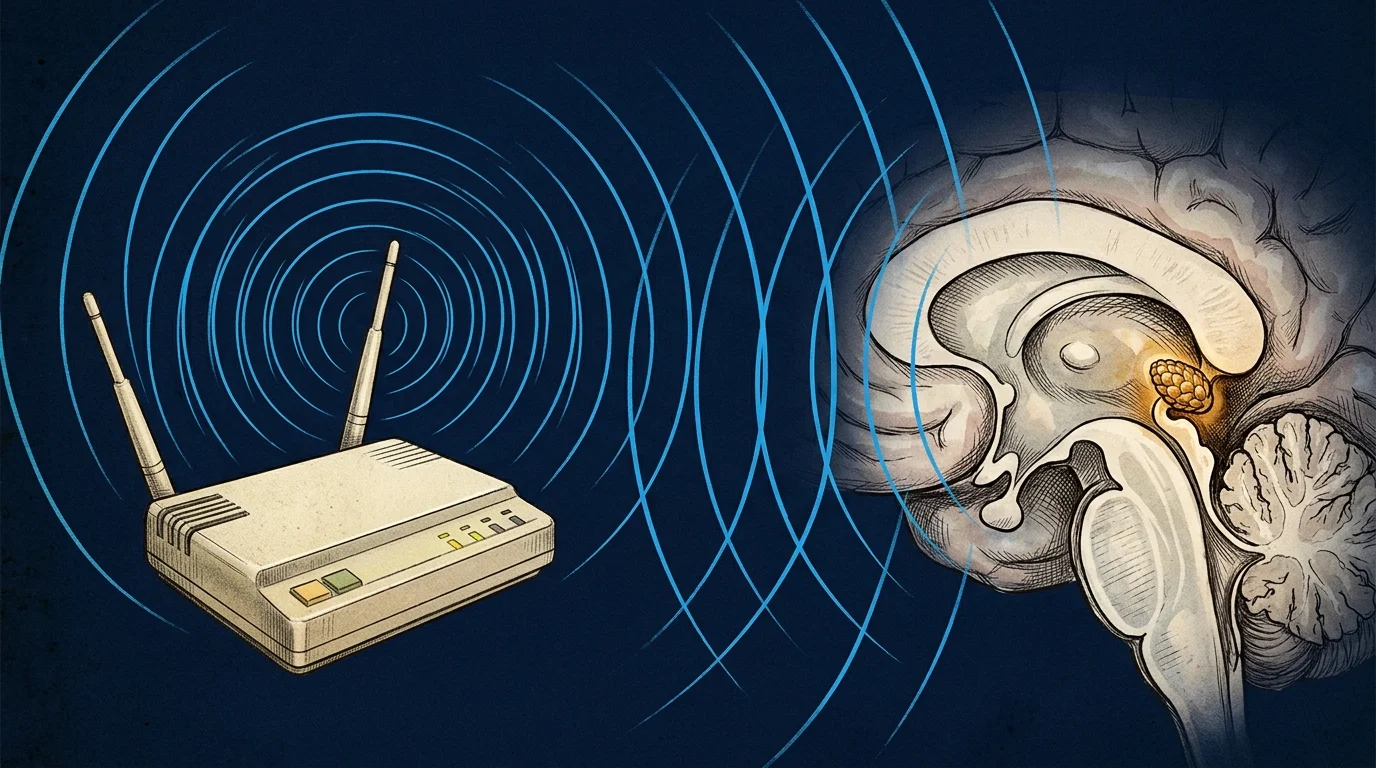
WiFi and pineal calcification — what the science actually shows. Volkow 2011, Baconnier 2002 crystals, calcium channels. Honest analysis,...
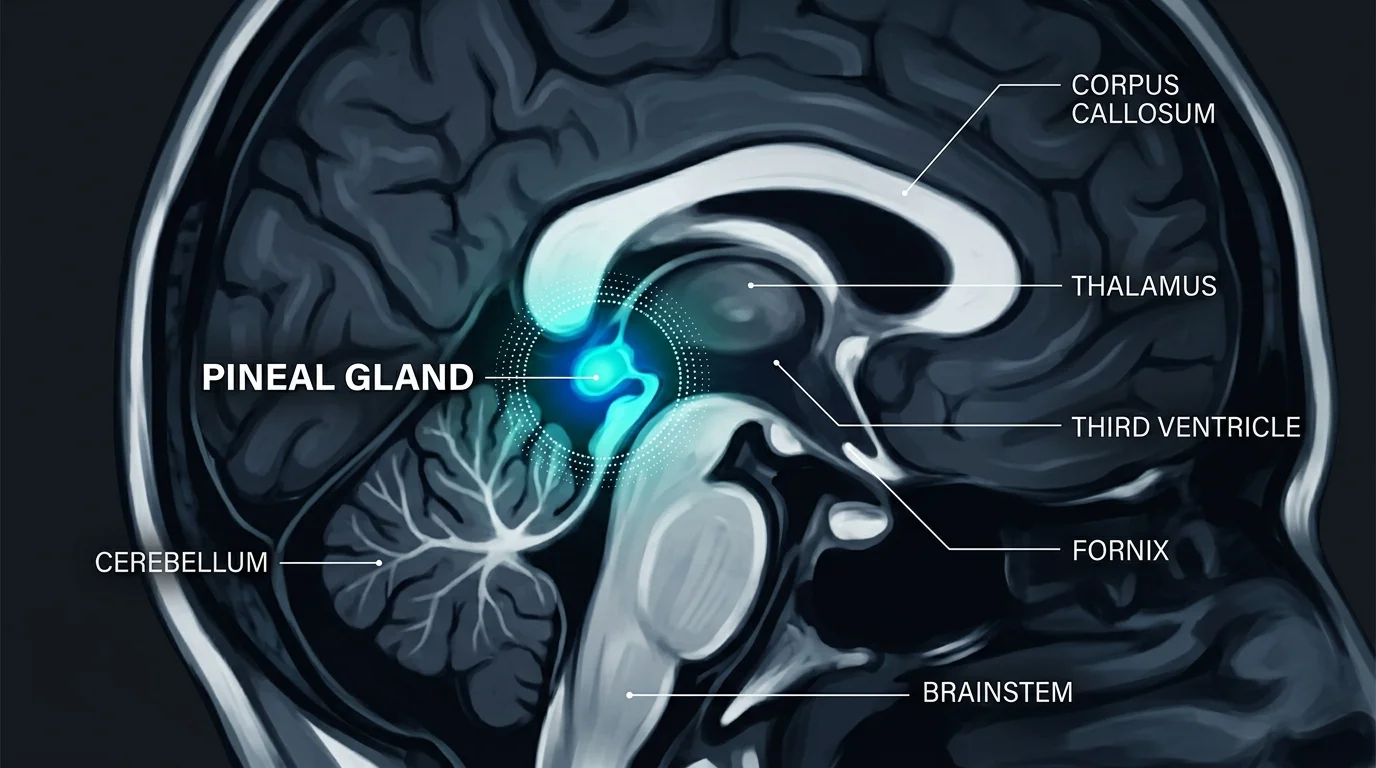
A bulky pineal gland with rim calcification on MRI is usually benign—but here's what the radiology report actually means and when you need...

Marcus Hale
Independent Researcher · Former Clinical Neuroscientist
I spent 12 years in clinical neurology before the questions got more interesting than the answers. PinealCode is where I document what I find at the intersection of brain science and consciousness.