8 min read
Iodine Pineal Gland: The NIS Mechanism 4M Sites Got Wrong
4 million results claim iodine decalcifies the pineal gland. The NIS mechanism is real — the extrapolation isn't. Here's where the evidence...
April 14, 2026
Read →
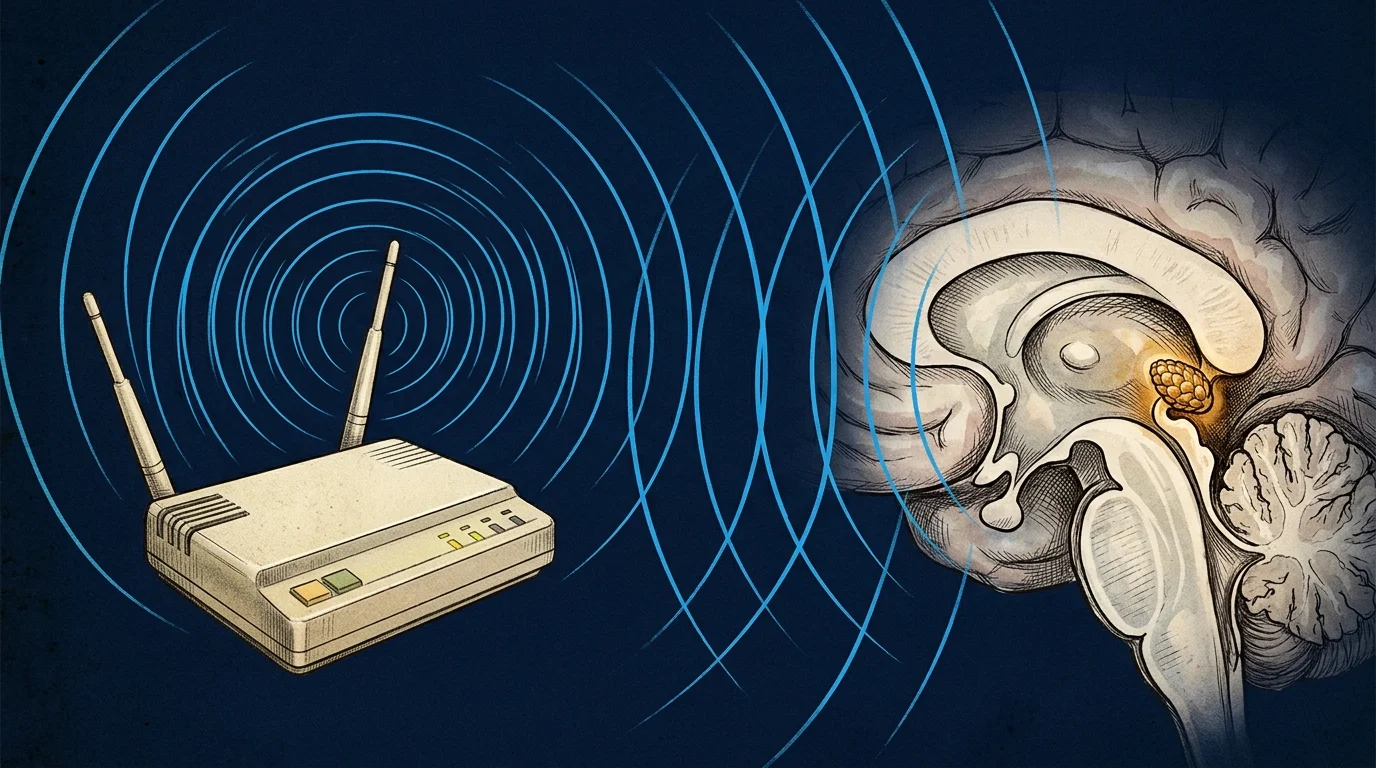
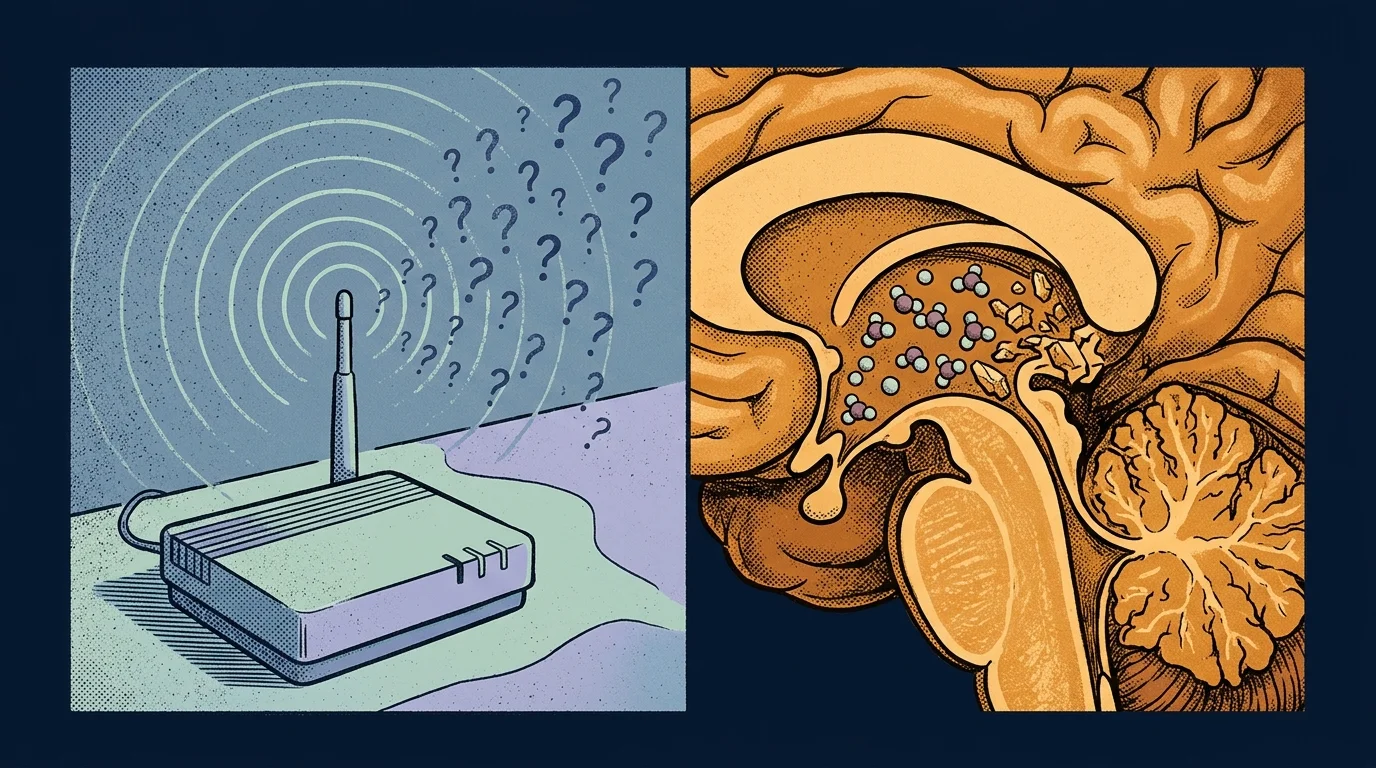
Most people who search “does WiFi calcify the pineal gland” have already made up their mind.
Either they believe WiFi is systematically dismantling their neurological function one router ping at a time. Or they find the question so absurd that they’ve stopped reading three sentences in, probably to go post something dismissive on Reddit.
Neither group has read the actual studies.
I have. And here’s what I’ll tell you upfront: the research is more interesting than the conspiracy theorists make it, and more unsettling in specific ways than the people saying “everything is fine” are willing to admit. Nora Volkow’s 2011 JAMA study, peer-reviewed, published in one of the most rigorous medical journals on earth, showed measurable biological effects from radiofrequency EMF on human brain tissue. That’s not fringe. That’s not panic. That’s data.
The WiFi-pineal theory has the same DNA as most health panics: real studies (Volkow, Baconnier), legitimate uncertainty, and somewhere a podcast host willing to skip the limitations section. The studies underneath are actually worth reading.
What the data doesn’t show is WiFi calcifying your pineal gland. That’s where things get complicated.
Let’s start with what we actually know, not what Reddit says and not what the telecommunications industry’s PR would prefer you believe.
WiFi operates at 2.4GHz and 5GHz. These are non-ionizing frequencies, meaning they don’t carry enough energy to strip electrons from atoms or break chemical bonds the way X-rays or gamma radiation do. That distinction matters enormously and gets glossed over in both directions.
But “non-ionizing” doesn’t mean “biologically inert.”
Volkow et al. published in JAMA in 2011 showing that 50 minutes of cell phone exposure, phone pressed against the head with the call muted, increased glucose metabolism in the orbitofrontal cortex and temporal pole by a statistically significant margin (35.7 vs. 33.3 μmol/100g/min; p=.004). The correlation between field amplitude and metabolic increase hit R=0.95. That’s a strong linear relationship. Not noise.
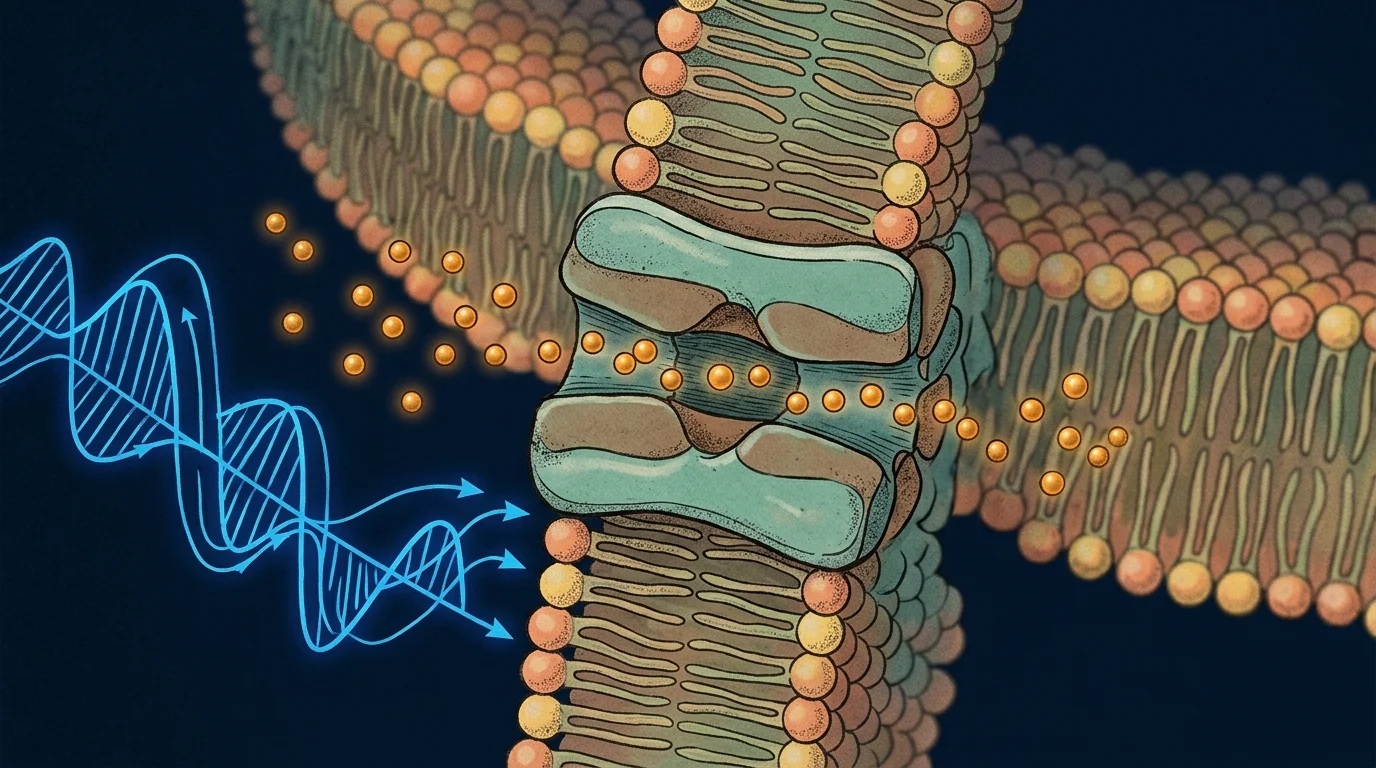
Then there’s the calcium channel question. Pall’s 2013 review in the Journal of Cellular and Molecular Medicine examined 23 studies showing that EMFs activate voltage-gated calcium channels (VGCCs) in cell membranes. The proposed mechanism: EMF activates VGCCs, Ca²⁺ floods in, triggers a calmodulin cascade, produces nitric oxide, generates oxidative stress. It’s a plausible pathway. Pall’s broader claims about EMF dangers are also considered overstated by a meaningful portion of the research community. Both things are true.
So here’s where the science lands: EMFs at levels produced by consumer devices have measurable biological effects. What those effects mean clinically? Still open.
No study has directly measured pineal gland calcification rates in populations with high WiFi exposure versus low WiFi exposure.
Read that again.
The leap from “EMFs modulate calcium channels” to “WiFi calcifies your pineal gland” crosses multiple biological levels, assumes dose-response extrapolation that hasn’t been tested, and lands on tissue that hasn’t been studied in this context at all. That gap is where conspiracy theorists operate. It’s also where legitimate open scientific questions live. The difference matters.
This is what most EMF coverage misses entirely.
The pineal gland sits outside the blood-brain barrier. It’s one of the few brain structures without the chemical isolation that protects most of the brain from what’s circulating in your blood.
That’s why fluoride accumulates there at concentrations higher than in bone. That’s why certain heavy metals show up preferentially in pineal tissue. And that anatomical reality is why, if you’re going to hypothesize EMF sensitivity anywhere in the brain, the pineal gland is a more defensible target than most.
(For a full breakdown of what actually does accumulate there and why, see our piece on fluoride and the pineal gland.)

This is the part most articles skip — because it requires actually reading Baconnier et al. (2002), published in Bioelectromagnetics.
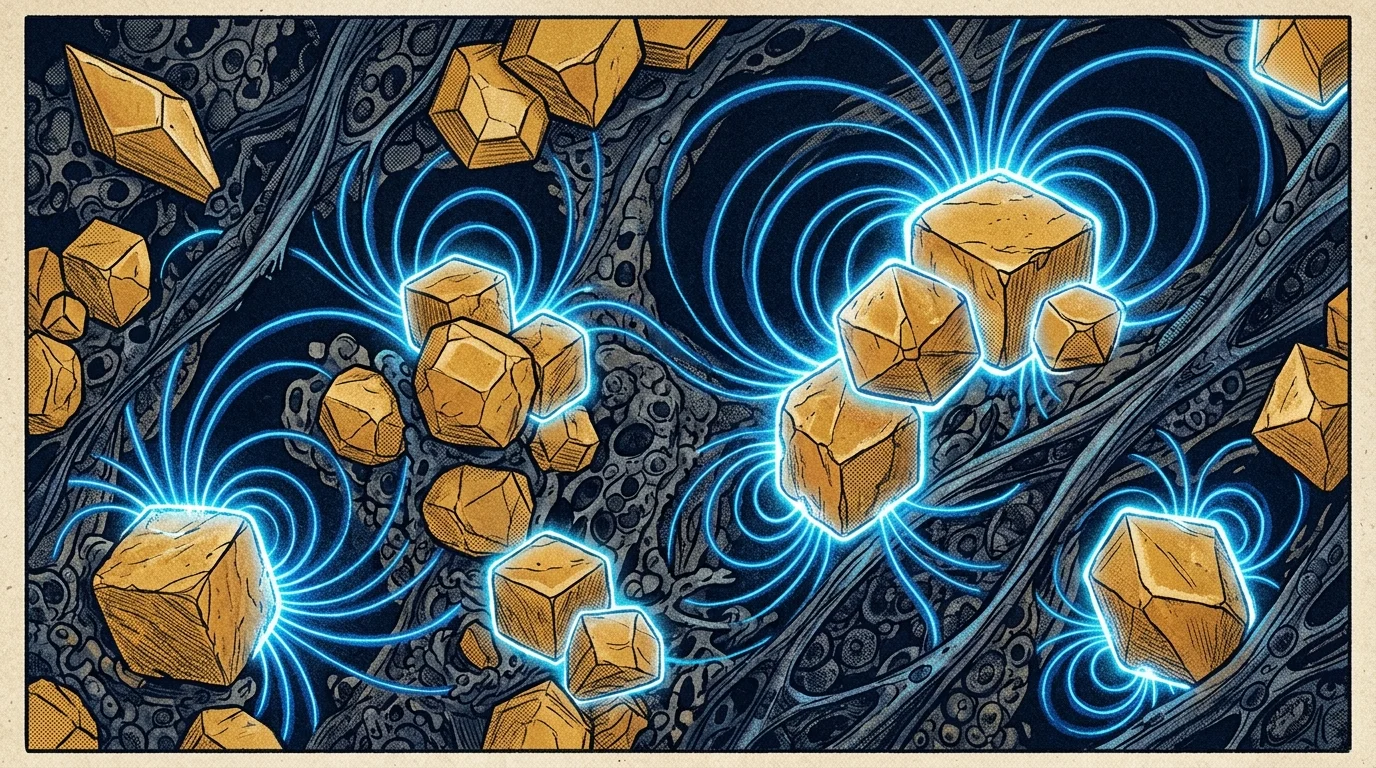
The human pineal gland contains 100–300 calcite microcrystals per cubic millimeter with complex crystalline morphologies, structures Baconnier et al. (2002) identified as potential piezoelectric transducers that may respond to electromagnetic fields through basic physical properties.
Piezoelectric materials generate electrical charge when mechanically stressed and respond to electromagnetic stimulation. This isn’t speculation. It’s physics. Calcite crystals in the inner ear (otoconia) operate on this principle to help us detect gravity. Baconnier found the same category of material in the pineal gland. Their 2004 follow-up in IEEE Transactions on Dielectrics and Electrical Insulation confirmed these microcrystals produce second-harmonic generation in pineal tissue, consistent with piezoelectric behavior.
When I first came across this paper, I almost filed it under “interesting but probably irrelevant.” Took me a second read to realize the piezoelectric inference is defensible physics, not fringe speculation. I’m still not entirely sure what to make of it. That’s an honest answer.
The study describes crystals and their physical properties. It does not demonstrate that residential WiFi stimulates them in functionally relevant ways. That experiment hasn’t been done.
But the mechanism is not invented. The crystals are real. Their potential electromagnetic sensitivity is a legitimate hypothesis. That’s different from conspiracy, and it deserves more scientific attention than it’s gotten.
See our deeper breakdown of pineal gland crystals and the separate piece on piezoelectricity and the pineal gland.
Animal studies, and this caveat is critical, show melatonin suppression under electromagnetic field exposure. Reiter’s 1993 review documented this across multiple animal models. De Seze et al. (1999) attempted to measure the effect in humans using mobile phones and found inconclusive results.
Two problems.
First, the ELF exposures (50/60Hz power lines) used in many animal studies have nothing to do with 2.4GHz WiFi signals. The frequencies are radically different. You can’t extrapolate across that gap.
Second, doses in those animal studies typically exceed residential WiFi exposure by orders of magnitude. “Melatonin drops under extreme EMF exposure in rodents” tells you something. It doesn’t tell you what a router in your living room does to melatonin in a human sleeping two rooms away.
The thing actually suppressing your melatonin is probably the screen you’re staring at while worrying about your router. Blue light exposure at night has far stronger evidence than WiFi. That’s the problem worth solving first — and the pineal gland decalcification at night guide covers the actual biology behind it.
No. Residential WiFi has not been shown to calcify the pineal gland. No study has demonstrated this mechanism in humans.
If you came here hoping I’d confirm the conspiracy, I won’t. If you expected me to tell you EMF research is paranoid noise, I won’t do that either.
Here’s what the data actually supports: EMFs produce measurable biological effects on brain tissue, the pineal gland contains material that may be physically responsive to electromagnetic stimulation, and that gland sits in an unusually exposed anatomical position. Volkow, Baconnier, Pall — the evidence is real. It just doesn’t connect to calcification. Nobody has run that study.
What does calcify the pineal gland, with solid peer-reviewed evidence, is fluoride accumulation, hydroxyapatite deposition with aging, and normal physiological calcification that begins in many people by their mid-teens. Those have mechanisms. Those have data. WiFi calcification is a hypothesis without a study. For a full picture of what symptoms that documented calcification actually produces, see pineal gland calcification symptoms.
That’s a less satisfying answer than “WiFi is destroying your third eye” or “WiFi is perfectly safe.” That’s how it goes when you read the actual papers.
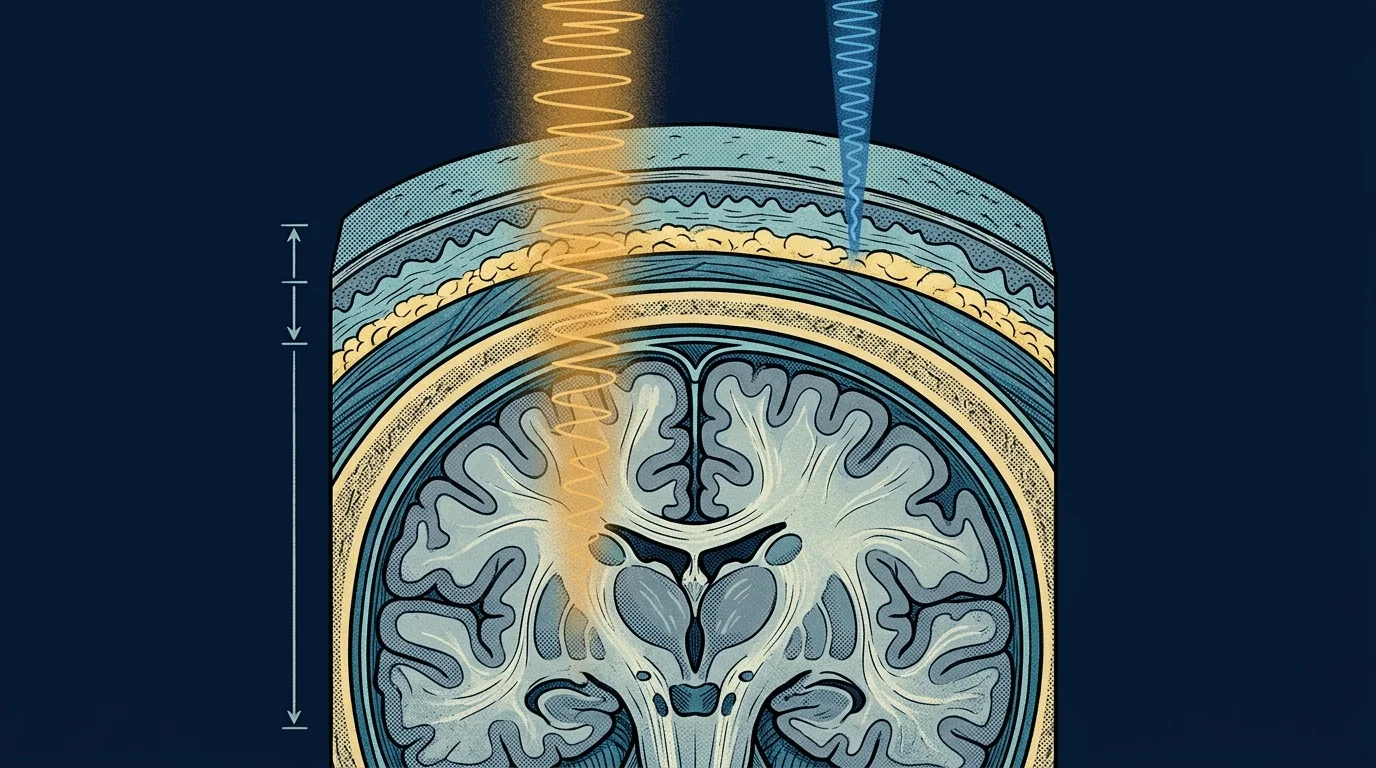
5G is different from WiFi in frequency, but not more dangerous for deep brain structures. The counterintuitive part: millimeter-wave bands at 28–39GHz penetrate tissue far less than 2.4GHz WiFi, absorbed at the skin surface and unable to reach the brain.
Penetration depth of 28GHz radiation in human tissue is less than 1 millimeter. Sub-6GHz 5G, which is what most coverage actually uses, is comparable to existing LTE frequencies in terms of tissue interaction.
ICNIRP says exposures within their guidelines for current 5G technology are safe by available evidence standards.
Honest caveat: we don’t have longitudinal data on 5G exposure at population scale. The technology is too new. “We don’t know enough to say it’s dangerous” and “we don’t know enough to guarantee it’s safe” are both true simultaneously. What isn’t true is that 5G mmWave frequencies penetrate to the pineal gland. The physics rule that out.
About WiFi specifically? Probably not. The evidence doesn’t support it as a meaningful driver of pineal calcification. The concerns worth having are about fluoride exposure and light at night, not your router.
Everyone in this space is fixated on WiFi as the calcification culprit. I get it — the technology is invisible, ubiquitous, and relatively new. But that fixation pulls attention away from what’s actually documented.
Fluoride’s effect on pineal accumulation is documented, peer-reviewed, and uncontested since Luke et al. in 2001. Age-related calcification has decades of histological data behind it. WiFi? A hypothesis without a study. Those aren’t equivalent concerns.
If you want to apply precautionary thinking, and it’s reasonable given how much we don’t know, the low-cost moves are logical: don’t sleep with your phone on the nightstand next to your head, and put the router in a different room than where you sleep. These reduce your closest-proximity, highest-duration exposures without requiring you to believe anything unproven.
But if you’re focused on protecting your pineal gland from WiFi while drinking unfiltered tap water in a fluoridated city, you’re optimizing around the wrong variable.
For a practical approach to what actually affects pineal health, see our guide on how to decalcify the pineal gland naturally.
Start there. The WiFi question is worth watching. It’s not where the evidence points today.
Marcus Hale is an independent researcher and former clinical neuroscientist. The content on PinealCode.com is for informational purposes only and does not constitute medical advice.
4 million results claim iodine decalcifies the pineal gland. The NIS mechanism is real — the extrapolation isn't. Here's where the evidence...

C60 binds up to 6 electrons at once — no other antioxidant works this way. Whether it protects your pineal from calcification: the honest...
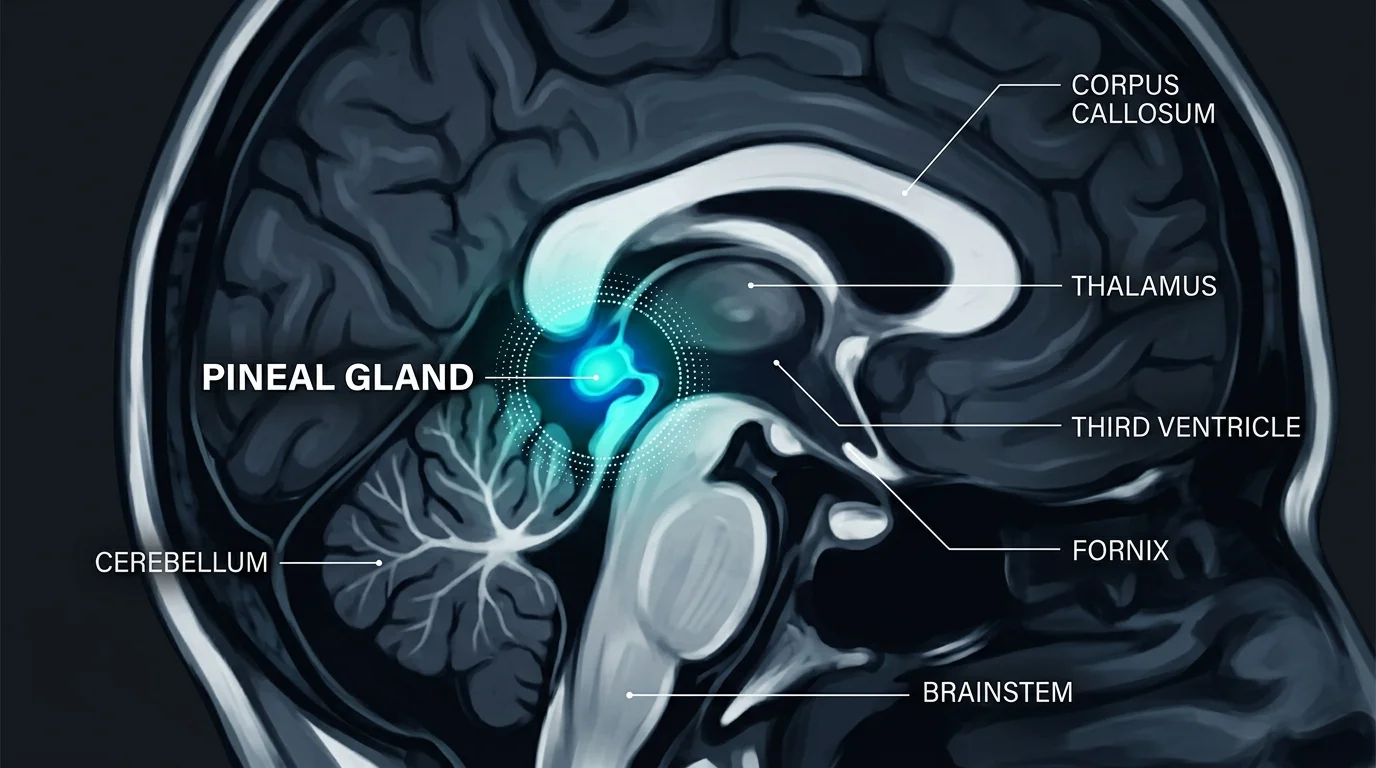
A bulky pineal gland with rim calcification on MRI is usually benign—but here's what the radiology report actually means and when you need...

Marcus Hale
Independent Researcher · Former Clinical Neuroscientist
I spent 12 years in clinical neurology before the questions got more interesting than the answers. PinealCode is where I document what I find at the intersection of brain science and consciousness.