Is 963 Hz Frequency Dangerous? No Scientific Evidence of Harm (2026)
By Marcus Hale·
Is 963 Hz Frequency Dangerous? What the Science Actually Says
Everyone who searches this question already suspects the answer is “probably not.” They’re asking anyway — because the claims around 963 Hz are loud, and the people making them rarely cite anything.
Short answer: no scientific evidence links 963 Hz to harm at typical listening volumes. No study has documented direct injury, cognitive damage, or physiological danger from this specific frequency. That’s not reassurance by omission — it’s the honest state of the research.
The longer answer is more useful. “No evidence of harm” is not the same as “completely neutral for everyone.” There are real groups who should approach any repetitive audio stimulus with caution. And there are real ways to misuse audio — any audio — that produce genuine problems. That’s what this article is actually about.
What Is 963 Hz?
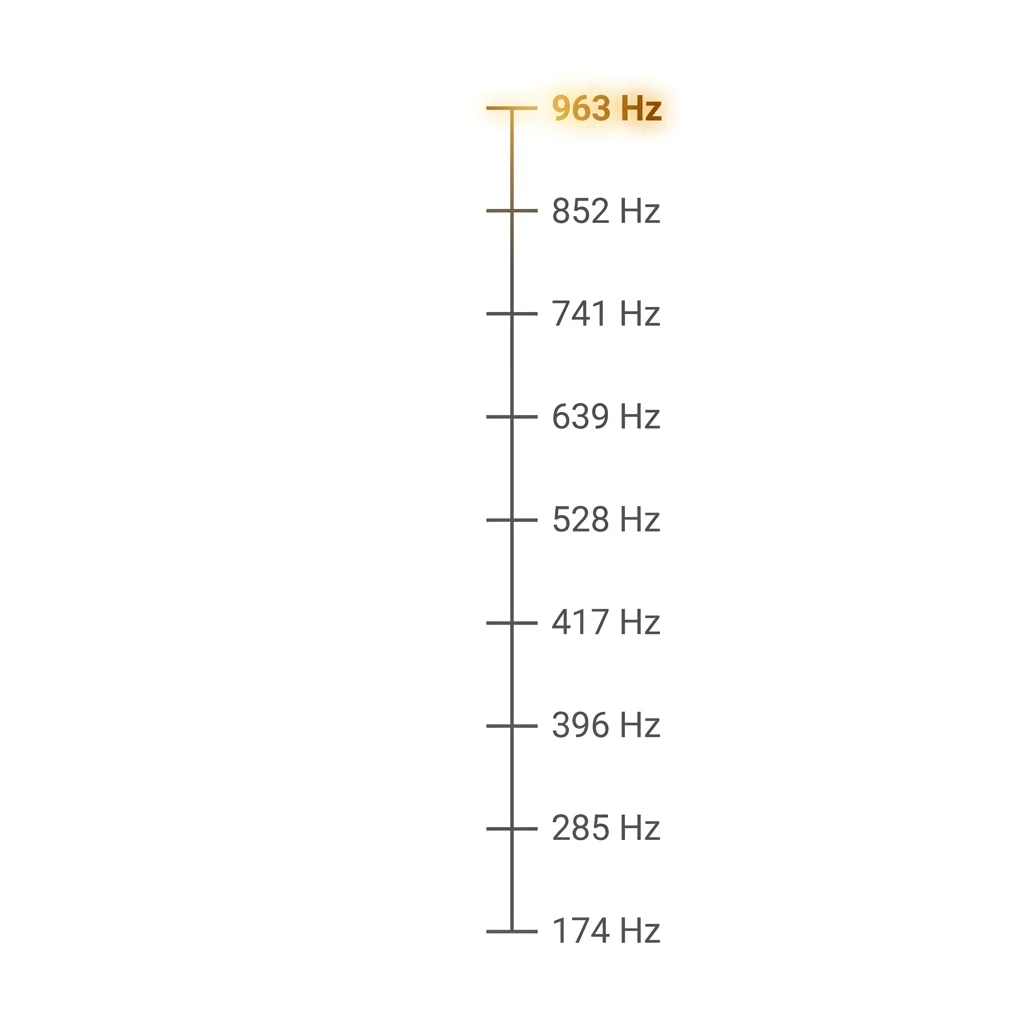
963 Hz is an audible tone — 963 cycles per second, sitting in the upper register of human hearing as a bright, high-pitched sound. It’s the highest frequency in what’s called the extended Solfeggio scale, a system popularized in Joseph Puleo and Leonard Horowitz’s 1999 book Healing Codes for the Biological Apocalypse. Worth noting: the original Solfeggio scale from 11th-century monk Guido d’Arezzo topped out at six notes and had nothing to do with specific hertz values. The 963 Hz version is a 20th-century construction, not an ancient rediscovery.
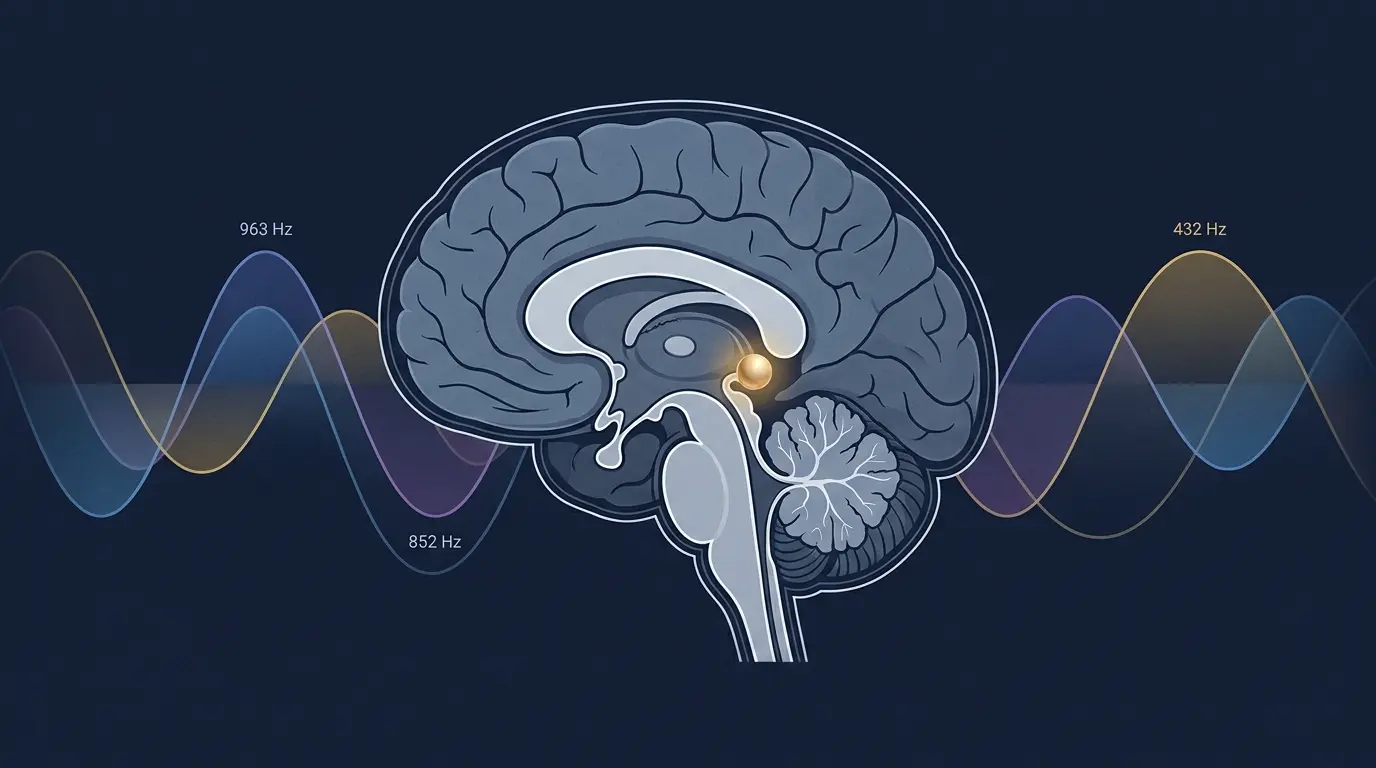
Culturally, it’s been labeled the “frequency of the gods” and linked to pineal gland activation and crown chakra connection. Those are spiritual framings — not clinical claims. For the actual mechanisms behind that association, read our full breakdown of 963 Hz and the pineal gland. If you want context on where 963 Hz sits within the broader system, the complete Solfeggio frequencies guide covers the full range from 174 Hz to 963 Hz.
What 963 Hz is not: a pharmaceutical. A surgical tool. A frequency with proven effects on anything — by the current published literature.
963 Hz sits at the top of the extended Solfeggio scale — a 20th-century system, not an ancient rediscovery. The original Guido d’Arezzo scale had no specific hertz values.
What Does the Research Actually Say?
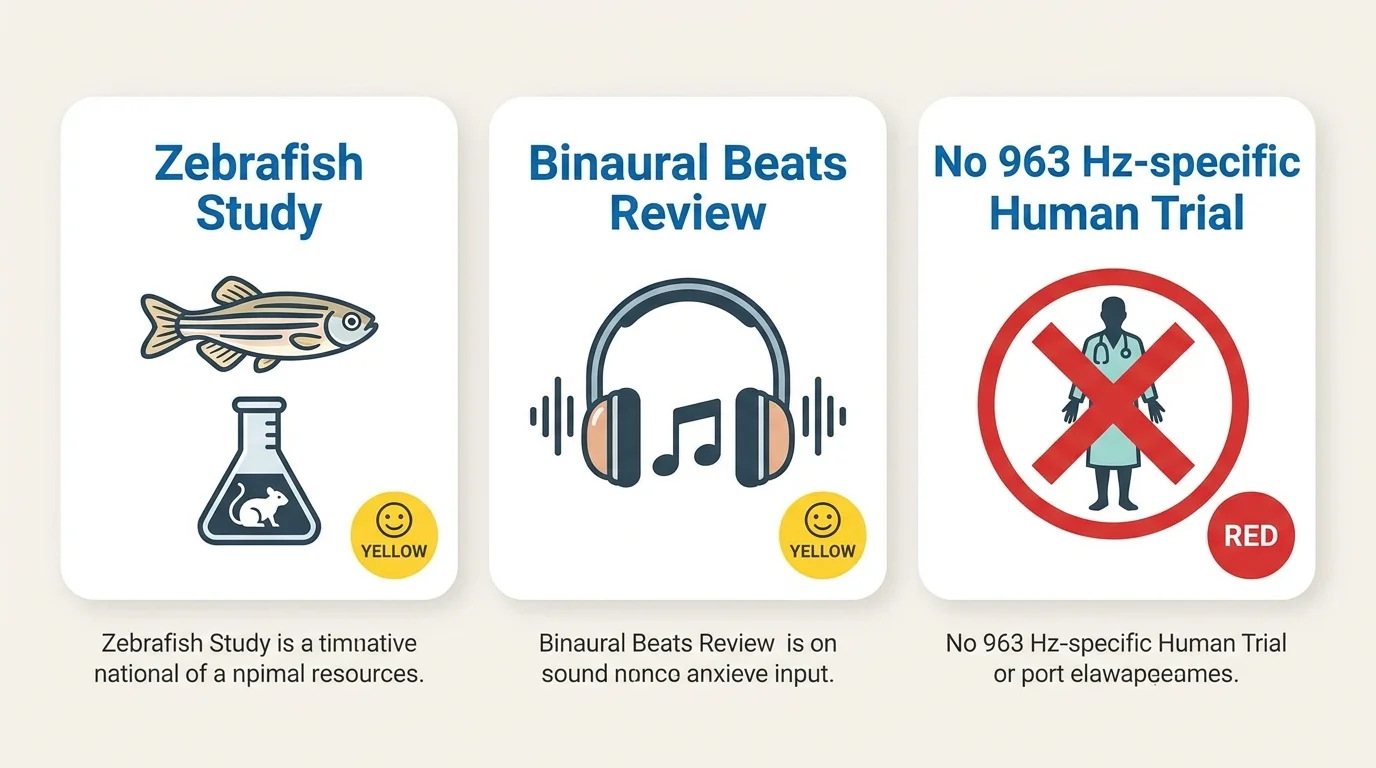
Search PubMed for “963 Hz” and you get nothing useful. No human trials. No safety studies. No randomized experiments isolating this specific frequency and measuring what it does — beneficial or harmful — to the people listening.
What exists instead is a body of adjacent research.
A 2023 study published in Behavioural Brain Researchexposed stressed zebrafish to Solfeggio-frequency music and found reversals in cognitive deficits and cortisol elevation. Interesting. But zebrafish, not humans — and the study tested the full Solfeggio range as a category, not 963 Hz in isolation. A review from Singapore Management University confirmed that Solfeggio frequencies have potential to influence brain activity and well-being, then concluded explicitly that more research is needed before any specific claims hold.
On the binaural beats side — where 963 Hz sometimes acts as a carrier frequency — a 2024 PMC review found binaural beats are generally safe for healthy adults, with the main documented risk being hearing damage from sustained high-volume exposure. A 2023 systematic review confirmed limited but real evidence that binaural beats can modulate brain oscillatory activity, while flagging high variability in methodology and sample sizes often under 20 participants.
Solfeggio frequency research in humans remains almost entirely absent as of 2026 — no controlled study has isolated 963 Hz specifically to measure either its benefits or its risks, leaving all claims about this frequency, in either direction, without direct scientific support.
The current research landscape for 963 Hz — no human trial has isolated this specific frequency for either benefit or harm. Adjacent studies provide context, not conclusions.
Who Should Be Cautious?
If you have a specific medical condition, the question isn’t really about 963 Hz. It’s about repetitive auditory stimulation in general — and for a few groups, the standard precautions are worth taking seriously.
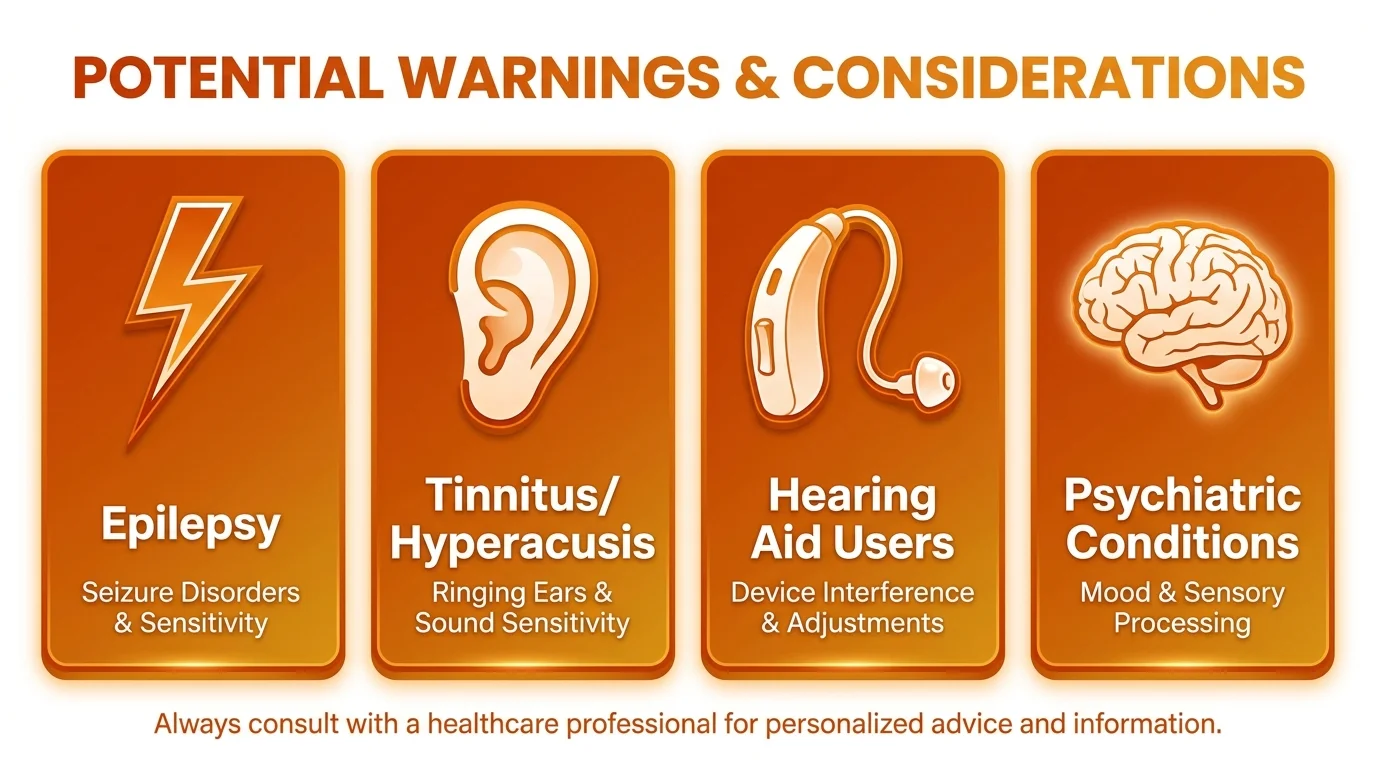
Epilepsy: A study in Seizure: European Journal of Epilepsy examined binaural and monaural beats in patients with epilepsy using depth electrodes and found that rhythmic auditory stimulation can interact with neural activity in this population. Ten patients — not a definitive sample — but real enough that anyone with a seizure disorder should talk to their neurologist before using any looping frequency audio.
Tinnitus and auditory hypersensitivity: 963 Hz is a high-pitched tone. If your auditory system is already sensitized — from tinnitus, hyperacusis, or noise-induced damage — a sustained high-frequency sound is exactly the kind of stimulus that can make symptoms worse.
Hearing aids: High-frequency content can interact with the processing of some hearing aid models. Volume monitoring matters more here than with bare ears.
Dissociative and certain psychiatric conditions: Reddit threads on r/Meditation and r/AstralProjection report users experiencing prolonged dissociative states, disorientation, and unusually heavy sedation after extended sessions. Unverified. But if you have a history of dissociation or are managing a psychiatric condition, starting with a short session first is just common sense, not paranoia.
These are general audio precautions. Not 963 Hz-specific dangers.
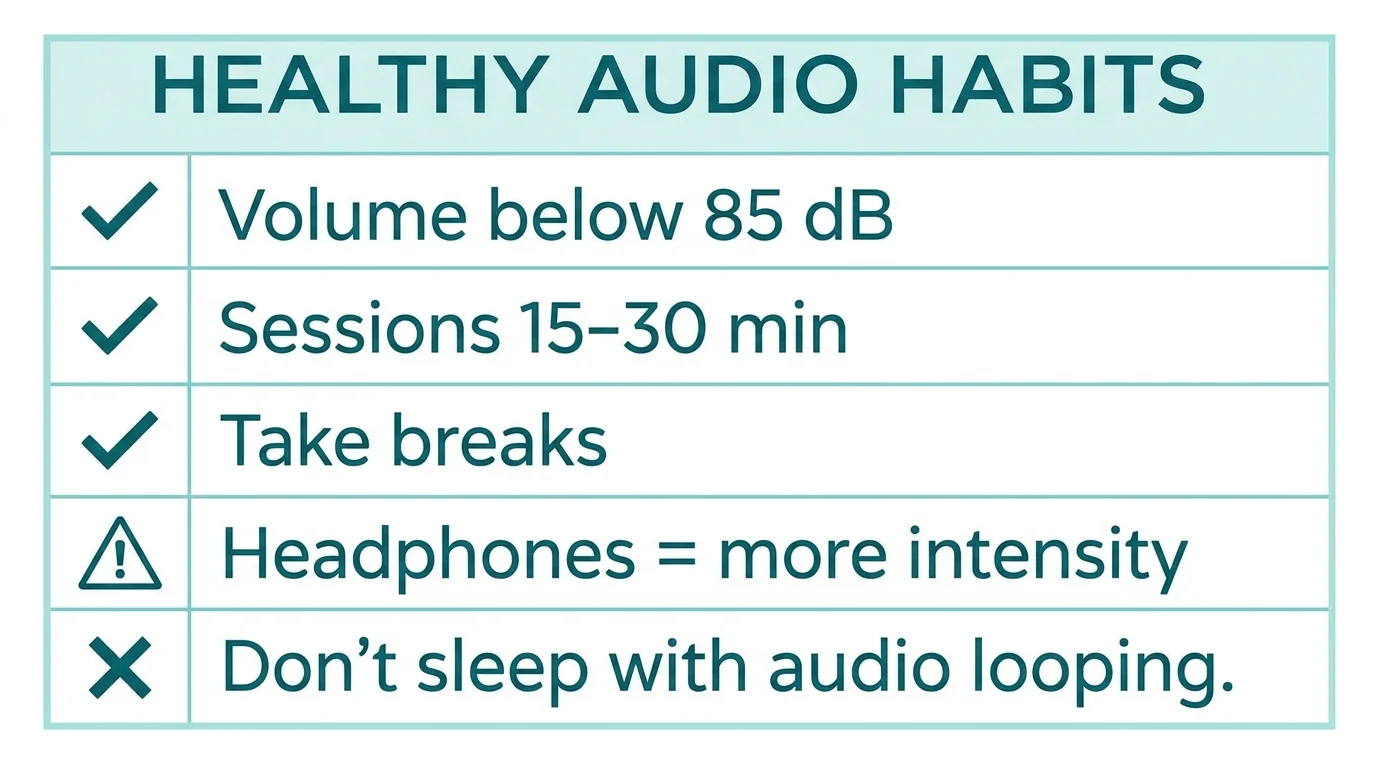
Start with 15–30 minute sessions; don’t open with a two-hour loop
Headphones deliver more concentrated intensity than speakers — what feels “quiet” through earbuds often isn’t
If you fall asleep with audio looping, that’s unintended prolonged exposure; worth reconsidering
Four groups warrant extra caution with repetitive frequency audio — these are general auditory stimulation precautions, not risks unique to 963 Hz.
How Do People Typically Use 963 Hz?
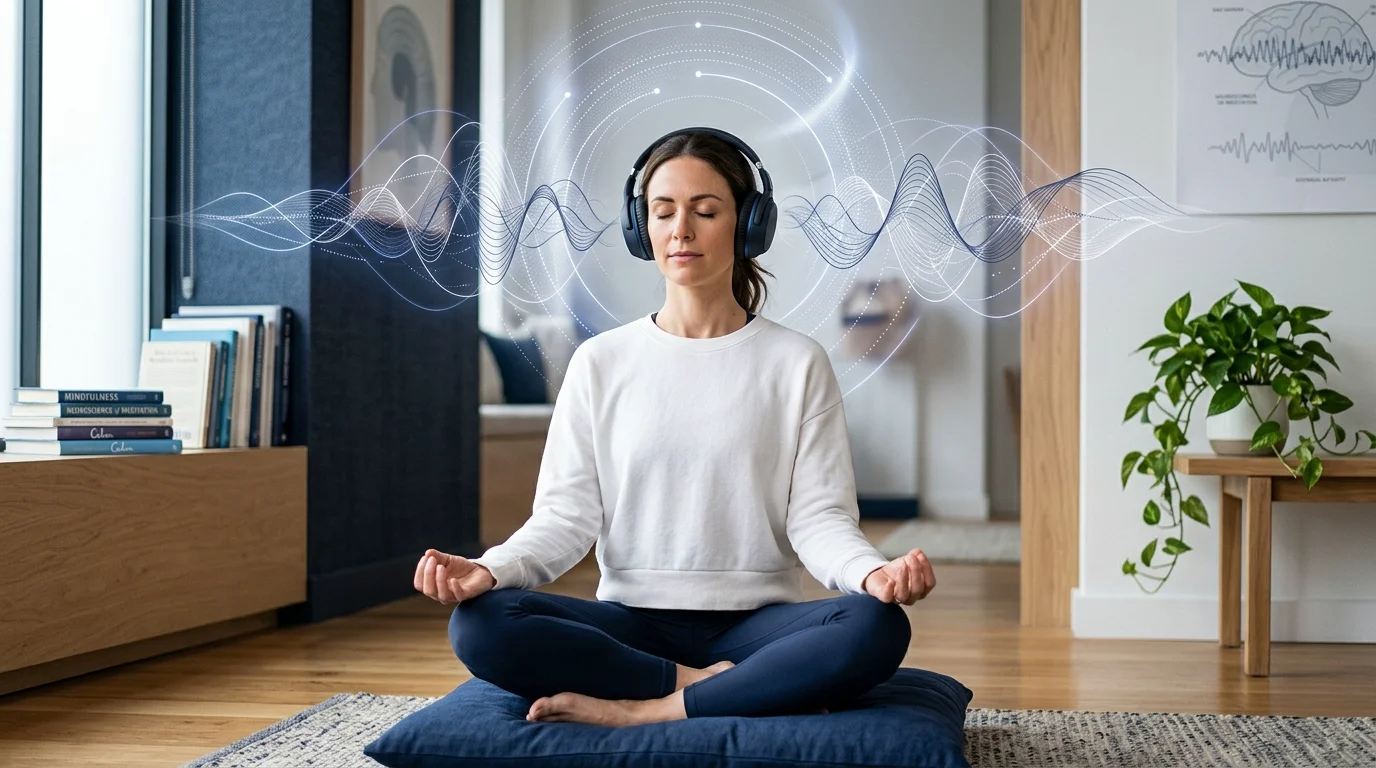
Most people using 963 Hz are doing something quite specific: seated or lying down, headphones on, eyes closed, volume at a comfortable level, for 15–30 minutes before sleep or during morning meditation. That’s a fundamentally different exposure scenario than industrial noise or sustained clinical stimulation.
Used that way — intentionally, at moderate volume, in defined sessions — the risk profile looks like any other ambient meditation audio.
Where it gets murkier is extended exposure. “Vibrational fatigue” circulates in these communities to describe the dull disorientation some users report after long sessions. It has no clinical definition, no peer-reviewed literature, and no established mechanism. Honestly, it probably is the neurological equivalent of staring at a bright light for two hours: your system didn’t break — it hit saturation. That’s worth respecting, not pathologizing.
Safe listening guidelines for 963 Hz — the same rules apply to any repetitive audio. Volume and duration are the real variables, not the frequency value.
Can 963 Hz Cause Headaches?
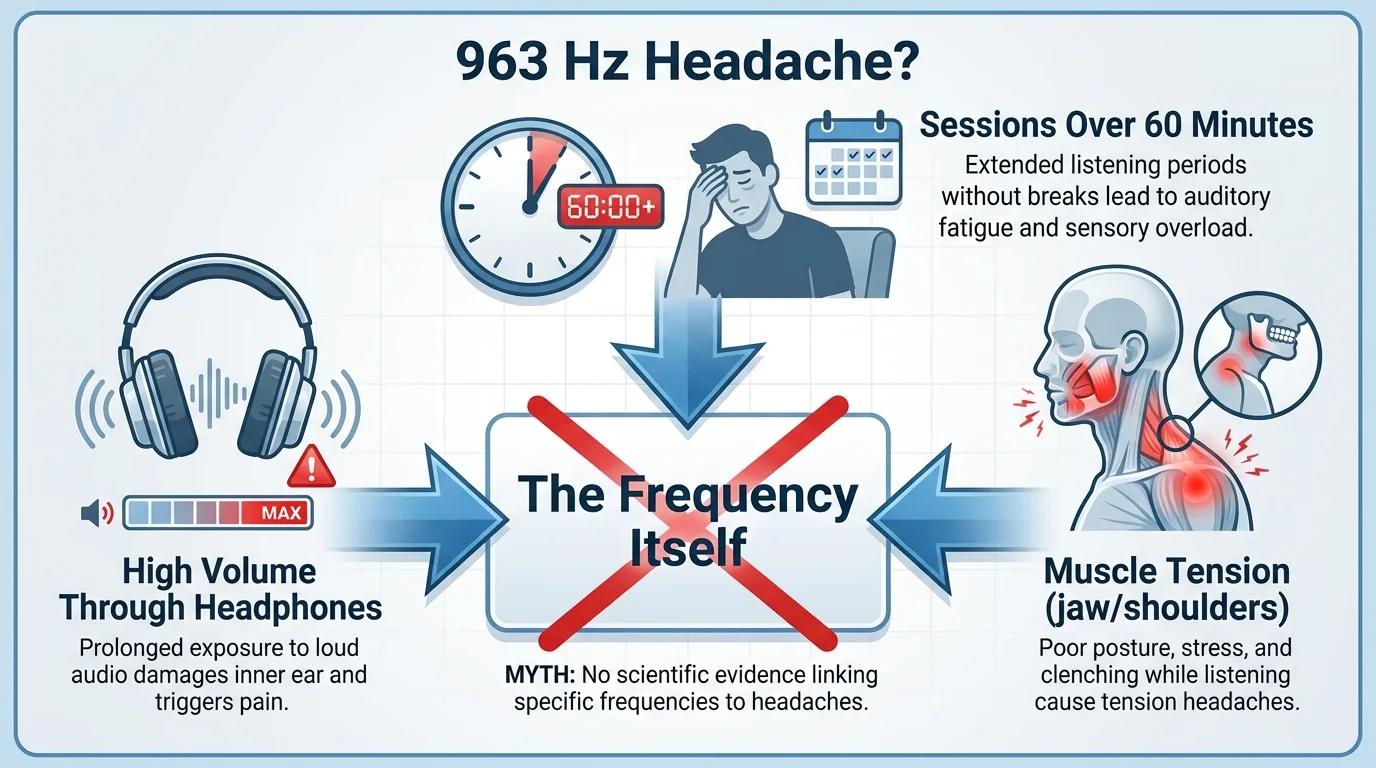
No direct evidence connects 963 Hz to headaches as a causal mechanism. No controlled study has shown this frequency produces pain at safe volumes.
But here’s what probably is happening when people report it.
Listening at high volume through headphones compresses a sustained high-pitched tone directly against your auditory canal. Muscle tension during focused meditation — jaw clenching, shoulder tightening, holding still too long — is a well-documented trigger for tension headaches. Extended sessions without movement or breaks compound this. Reports on r/Soulnexus cluster around 90-minute-plus sessions, not 20-minute ones. The pattern points at duration and volume, not the frequency value.
If you get a headache during a 963 Hz session, stop. Reduce session length. Lower the volume. The frequency isn’t attacking you — your setup might be.
Headaches attributed to 963 Hz trace back to volume, duration, and posture — not the frequency. The pattern in user reports consistently points to sessions over 90 minutes, not 20-minute ones.
The Bottom Line
Is 963 Hz frequency dangerous? Not in any way the current science can document. No study has demonstrated harm from this specific frequency at standard listening volumes.
The 963 Hz frequency content is everywhere right now. And most of it is selling you a feeling, not a function. That doesn’t mean there’s nothing here — it means the claims have outrun the evidence by a wide margin, and it’s worth knowing the difference.
The risks that exist — hearing damage, overstimulation, potential interactions with epilepsy or tinnitus — apply to any repetitive audio, not to 963 Hz as a unique hazard. Two groups genuinely warrant caution: people with neurological or psychiatric conditions that respond to auditory stimulation, and anyone tempted to treat “low volume” as optional.
For everyone else: keep sessions short to start, keep the volume honest, and pay attention to how your body actually responds — not how the YouTube comment section says you should feel.
Can 963 Hz cause headaches?
There is no scientific evidence that 963 Hz directly causes headaches. Headaches reported by some users are likely linked to high volume, extended sessions without breaks, or muscle tension during meditation — not the frequency itself. If you experience head pain, reduce session length and lower the volume.
How long is it safe to listen to 963 Hz?
Most practitioners recommend starting with 15–30 minute sessions, 3–5 times per week. Listening for extended periods at high volume may cause fatigue or discomfort. As with any audio practice, take breaks and pay attention to how your body responds.
Can 963 Hz frequency cause dizziness?
Dizziness has been reported anecdotally, but no controlled study has linked 963 Hz to dizziness directly. Extended listening at high volumes or in an intense meditative state may contribute. If you feel dizzy, stop the session, rest, and consider shorter sessions at a lower volume.
Is 963 Hz safe for everyone?
For most healthy adults listening at moderate volumes, 963 Hz is considered safe. People with epilepsy, tinnitus, hearing aids, or certain mental health conditions should consult a healthcare provider before use. The risks that exist are general audio risks, not specific to this frequency.
Marcus Hale is an independent researcher and former clinical neuroscientist.
The content on PinealCode.com is for informational purposes only and does not
constitute medical advice.
Medical Disclaimer: The content on
PinealCode.com is for informational and educational purposes only. Nothing here
constitutes medical advice, diagnosis, or treatment. Always consult a qualified
healthcare provider before making changes to your health regimen.
Marcus Hale
Independent Researcher · Former Clinical Neuroscientist
I spent 12 years in clinical neurology before the questions got more interesting
than the answers. PinealCode is where I document what I find at the intersection
of brain science and consciousness.