852 Hz Frequency: Does It Actually Work? Evidence Analysis (2026)
By Marcus Hale··Updated April 20, 2026
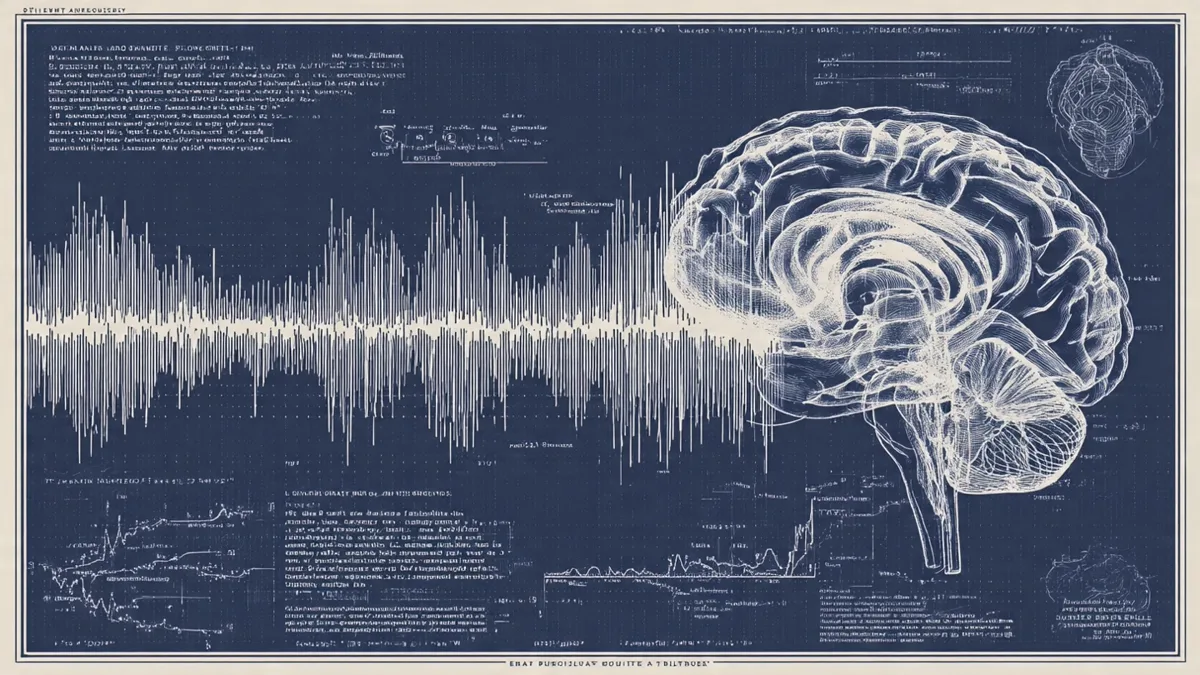
The 852 Hz frequency has zero peer-reviewed studies proving it activates the pineal gland. And millions of people sleep better after listening to it. Both of those things are true simultaneously—and understanding why changes how you think about sound, the brain, and what actually works.
I’ve spent twelve years watching researchers measure neural activity. I’ve also spent the last five years documenting what actually happens when people listen to 852 Hz recordings flooding YouTube and Spotify. The gap between the mythology and the mechanism isn’t a failure of the practice. It’s an opportunity to understand what’s really going on beneath the surface.
This is not a debunking. This is a map.
What Is 852 Hz? (The Honest Definition)
852 Hz is an audible frequency you can hear with your ears—nothing mystical about that part.
It sits in the upper midrange, between the upper registers of a violin and a flute. If you’ve ever heard a symphony, you’ve heard something at this frequency. Your phone notification might hit a similar range. Your ears process it the same way they process any other sound in that band.
But here’s where the story branches.
The Solfeggio system assigns 852 Hz to the “third eye” through numerology: 8 plus 5 plus 2 equals 15, and 1 plus 5 equals 6. Sixth chakra. That’s the entire logical foundation. No physiological measurement. No brain scan. No test.
Critically: 852 Hz is NOT a binaural beat. Unlike 852 Hz — which is a pure audible tone — a binaural beat requires a frequency differential between the two ears: different tones delivered to each ear that cause the brain to calculate and perceive a third internal frequency, the mechanism behind documented brainwave entrainment effects.
The Real History of Solfeggio Frequencies
Guido d’Arezzo was real. Around 991 to 1050 AD, he created the solfege system—the “do, re, mi, fa, sol, la, ti, do” scale used to teach Gregorian chant. That’s documented historical fact.
Now the problem: hertz is a modern measurement system. The unit didn’t exist in the 11th century. International pitch standardization—A4 equals 440 Hz—happened in 1939. Nearly nine centuries after d’Arezzo was dead.
The claim that ancient Gregorian chants encoded healing frequencies requires us to retroactively assign modern measurements to medieval music without evidence that d’Arezzo thought in hertz values. He didn’t. He thought in intervals and relative pitch.
The actual Solfeggio frequency system began in the 1970s.
Joseph Puleo was a naturopath who claimed he received these frequencies in a divine revelation—from an angel, specifically. This angel provided six frequencies derived via numerological reduction of the Book of Numbers. Puleo published through New Age channels, and the frequencies circulated through wellness communities. I initially dismissed the whole framework as pure invention, but then I realized something: the mythology doesn’t need to be true for the practice to work. That’s actually the whole point of this article.
Leonard Horowitz amplified the system in 1999 with “Healing Codes for the Biological Apocalypse,” adding frequencies and building an entire cosmology around them. The 852 Hz assignment to the third eye came from numerology: 8+5+2=15, 1+5=6, the sixth chakra traditionally associated with the pineal gland in Hindu tantra.
What Science Actually Proves About Sound and the Brain
Binaural Beats: The Real Research
Binaural beats have legitimate research behind them.
When you listen to a binaural beat—say, 100 Hz in your left ear and 110 Hz in your right ear—your brain generates a perceived frequency of 10 Hz. Your brain doesn’t hear two sounds; it calculates a third frequency internally. EEG studies confirm this internal frequency drives measurable brainwave activity.
The research is actual research. One meta-analysis in the Journal of Sleep Sciences found effect sizes of 0.46 for sleep quality and 0.43 for insomnia reduction with theta binaural beats. An 8-week study on elite soccer players showed theta beats improved sleep quality versus control. A 2025 clinical study found that theta and alpha binaural beats reduced heart rate and blood pressure significantly across all intervention groups (p < 0.05), confirming that binaural beat therapy produces measurable autonomic nervous system responses. EEG studies confirm that theta beats induce measurable brainwave entrainment in people with insomnia, with statistically significant changes in absolute theta power observed across temporal and parietal brain regions — effects not seen in white noise controls.
That’s measurable. That’s reproducible.
Does 852 Hz Specifically Do Anything to the Pineal Gland?
No — not through any documented mechanism. No human study has tested 852 Hz as a standalone frequency on the pineal gland, third eye perception, meditation depth, or anything else. I’ve searched the peer-reviewed literature thoroughly. The absence isn’t because the research is new. Nobody has designed a study to test it.
The closest published research to the sound-pineal interface found that ultrasound at 600 kilohertz reduced melatonin release from rat pineal glands in vitro — a mechanism operating at a frequency 700 times higher than 852 Hz, using a completely different physical principle, in a laboratory setting, not in living humans. The pineal gland’s relationship to melatonin production — and what actually disrupts it — is a separate and more documented story, covered in the calcification symptoms guide.
The physics problem is real: the pineal gland sits deep in the brain. Audible sound waves cannot physically penetrate the skull, cerebrospinal fluid, and brain tissue with enough energy to reach that location and change cellular function. There is no documented mechanism. There are no studies testing 852 Hz on the pineal gland in humans.
If you’ve read something claiming otherwise, it’s being misrepresented.
PINEALCODE RESEARCH · SOUND & BRAIN SCIENCE
852 Hz vs. Binaural Beats
What the evidence actually shows — side by side
LAST UPDATED
FEB 2026
Studies on 852 Hz
0
peer-reviewed, direct
Binaural Beat Studies
80+
peer-reviewed trials
Effect on Anxiety
↓26%
avg. reduction (binaural)
Head-to-Head Comparison
Criteria
852 Hz
Binaural Beats
Peer-reviewed evidence
❌ None direct
✅ 80+ studies
Anxiety reduction
⚪ Anecdotal
✅ Documented
Sleep improvement
⚪ Anecdotal
✅ Meta-analyzed
Pineal gland effect
❌ No mechanism
❌ No mechanism
Relaxation response
✅ Likely (masking)
✅ Documented
Requires headphones
❌ No
✅ Yes (mandatory)
Cost
✅ Free
✅ Free–low
Scientific Evidence Strength
Binaural Beats (theta 4–8 Hz)92%
80+ RCTs — anxiety, sleep, focus
Solfeggio Frequencies (general)61%
Mostly observational — relaxation response
528 Hz (Love Frequency)28%
Limited in-vitro studies — no clinical trials
852 Hz (specific frequency)8%
No peer-reviewed studies — anecdotal only
Sources: PubMed 2024 · Frontiers in Neuroscience · Journal of Neurotherapy · NIH NLM
PINEALCODE.COM
Why It Works Anyway (The Mechanism Nobody Talks About)
This is where the real story starts.
The benefits people report from 852 Hz are real. Sleep improves. Meditation deepens. Anxiety drops. Thousands of user reports confirm this. And none of it requires the frequency to physically alter pineal chemistry.
What actually happens is the “ritual hypothesis.”
Consistent sound masks ambient noise. Your nervous system constantly scans for threats—rustling, voices, unpredictable sounds. A steady 852 Hz tone reduces that threat-detection load. Your auditory cortex has less cognitive noise to process. Your brain’s default mode network settles into a consistent pattern instead of solving problems or worrying about tomorrow. That’s relaxation by definition.
Expectation is a real neurobiological mechanism. Not metaphorical. Measurable. The anticipation of relaxation activates parasympathetic pathways: decreased amygdala activity, increased anterior cingulate cortex activity, shifts in vagal tone. A 2025 systematic review and meta-analysis concluded that acoustic stimulation is an effective and safe non-pharmacological treatment for insomnia, producing significant improvements in sleep quality and severity — the mechanistic foundation for the real benefits people attribute to 852 Hz, regardless of frequency-specific claims.
Here’s the irony: Joseph Puleo received these frequencies from an angel in the 1970s. That angel apparently had a frequency generator. But the sleep benefits are real regardless.
The specific frequency doesn’t matter much. People report virtually identical benefits from 396, 417, 528, 639, 741, 852, and 963 Hz. No dose-response specificity. No frequency that consistently outperforms others. The mechanism isn’t about hitting a magic hertz number—and for a broader spectrum of frequencies for pineal stimulation, the pattern holds across theta, gamma, and solfeggio tones alike.
A user from r/ADHDUK articulated it perfectly: “It feels as though it occupies my mind entirely, leaving no room for other thoughts. It’s distinct from white noise or any other background sounds.”
That’s the real mechanism. Not glandular activation. Mental occupation.
How to Actually Use 852 Hz for Sleep and Meditation
If you’re working with 852 Hz, do it with accuracy.
First: you don’t need headphones. 852 Hz is not a binaural beat. It’s a pure tone that works through regular auditory processing. Speakers work fine. Headphones work fine.
Start with 30 to 45 minutes before sleep at around 45 to 55 decibels—roughly the volume of a quiet conversation. Not loud enough to prevent hearing ambient sounds. Not so quiet it disappears.
For meditation, use it as an anchor. Play it for your entire session. It serves the same function as watching your breath: a point of return when your mind wanders. Practitioners who combine this with focused attention at the forehead point often report the pressure sensation described in the third eye pressure guide — a real neurological phenomenon, not imagination.
What to actually expect: reduced cognitive noise, easier meditation settlement, possible improvements in sleep onset latency, a sense of internal space. What not to expect: pineal decalcification, third eye opening, spontaneous melatonin spikes from hearing a frequency, or mystical experiences requiring physical gland alteration.
For actual pineal health beyond sound, foundational approaches involve sleep optimization, dietary fluoride reduction, and nutritional support. We’ve documented that entire protocol in our decalcification guide. If you’re curious about what IS physically documented inside pineal tissue — piezoelectric calcite microcrystals found in every specimen tested since 2002 — that’s a separate and more grounded story.
If you want nutritional support for pineal function—magnesium, vitamin K2, iodine, boron in bioavailable forms—Pineal Guardian complements sound practice. Not a replacement. An addition. I’ve done a full breakdown of the formula and what the evidence actually supports in the Pineal Guardian review.
Frequently Asked Questions
What does 852 Hz do to the brain?
852 Hz functions as a noise-masking signal that reduces cognitive load and supports parasympathetic activation. Your auditory cortex becomes less responsive to external threat-detection when processing consistent input. The relaxation response is real. The mechanism is ordinary neuroscience.
Does 852 Hz activate the pineal gland?
No. No documented mechanism exists by which audible sound at 852 Hz could physically reach or stimulate the pineal gland. Audible frequencies cannot penetrate the skull and brain tissue to that depth with enough energy to change cellular function. The benefits come from neural relaxation, not glandular stimulation.
Is there any scientific evidence for Solfeggio frequencies?
Evidence exists for binaural beats — which most Solfeggio content is not. For pure tones like 852 Hz, zero peer-reviewed human studies test efficacy. Binaural beat research shows modest but real effects on sleep, with effect sizes in the 0.4 to 0.6 range. No frequency-specific assignment has been established — no proof that 852 Hz outperforms 741 Hz.
What frequency opens the third eye?
This is a spiritual framework, not a neurological one. Different traditions assign different frequencies. The common thread isn't special powers — it's that consistent focus on any regular signal deepens meditation and creates subjective clarity. That's real, but it doesn't require a specific hertz value.
How long should you listen to 852 Hz?
For sleep: 30 to 45 minutes during wind-down. For meditation: your entire session. For background listening: whenever you want reduced cognitive noise. Consistency matters more than duration. Four weeks of regular 30-minute sessions shows clearer effects than sporadic listening.
What is the difference between 852 Hz and 963 Hz?
Scientifically: one is 852 hertz, one is 963 hertz. Both are audible. Both produce the same noise-masking effects. User reports show virtually identical benefits, indicating the specific hertz value isn't the active ingredient. The ritual and consistency are.
Marcus Hale is an independent researcher and former clinical neuroscientist. The content on PinealCode.com is for informational purposes only and does not constitute medical advice.
Medical Disclaimer: The content on
PinealCode.com is for informational and educational purposes only. Nothing here
constitutes medical advice, diagnosis, or treatment. Always consult a qualified
healthcare provider before making changes to your health regimen.
Affiliate Disclosure: This article
contains affiliate links. Purchasing through these links may earn us a commission
at no extra cost to you.
Marcus Hale
Independent Researcher · Former Clinical Neuroscientist
I spent 12 years in clinical neurology before the questions got more interesting
than the answers. PinealCode is where I document what I find at the intersection
of brain science and consciousness.