7 min read
Is PinealPure a Scam? 39 RCTs Later, Here's the Real Verdict
Pycnogenol® backed by 39 RCTs. Bacopa by 9. But the 'pineal detox' claims? Zero human trials. Full ingredient breakdown and honest verdict...
April 16, 2026
Read →
Here’s the problem with most pineal gland supplements: exotic ingredients on the label, vague spiritual language underneath, and zero information about dose or actual research. You’re expected to buy on vibes.
Pineal XT is one of the more visible products in this space. Seven ingredients, a lot of copy about the “third eye,” and a price tag that implies someone believes the formula is doing something. So let’s do what the product page won’t: work through each ingredient, look at the published research, and be straight about where the science holds and where it doesn’t.
This is not a review. If you want the full product evaluation, that’s the complete Pineal XT review. What follows is a nutritional breakdown — mechanism, evidence, dose context, nothing invented.
Pineal XT is an oral supplement targeting the pineal gland — a pea-sized endocrine structure responsible for melatonin synthesis and circadian regulation. Its core claim: the ingredient blend counters calcification of the pineal gland, a real anatomical process where calcium phosphate deposits accumulate in the tissue over time.
A 2023 systematic review on pineal calcification confirmed that pineal calcification correlates with reduced melatonin output and disrupted circadian function (PMC9987140). That part is documented. What isn’t established is whether any oral supplement reverses or prevents that process in living humans — and that gap runs through every ingredient in this formula. For a full breakdown of evidence-based decalcification methods beyond supplementation, see our complete protocol guide.
Two capsules per day, 60 capsules per bottle, 30-day supply. Sold direct.
The manufacturer does not publish individual milligram doses on any publicly accessible channel. That’s a transparency problem I’ll address directly in the dose section. What is confirmed across multiple sources:
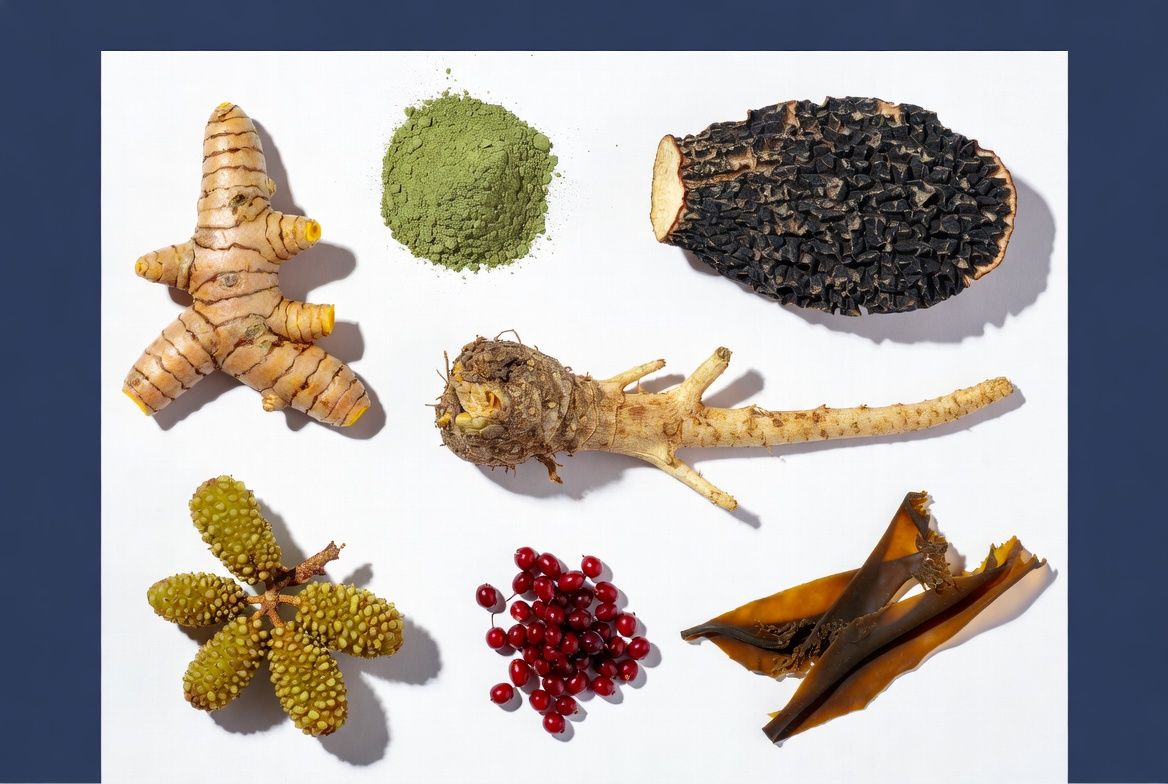
| Ingredient | Form | Disclosed Dose |
|---|---|---|
| Iodine | Purified iodine | Not publicly disclosed |
| Burdock Root | Arctium lappa powder | Not publicly disclosed |
| Chlorella | Chlorella vulgaris powder | Not publicly disclosed |
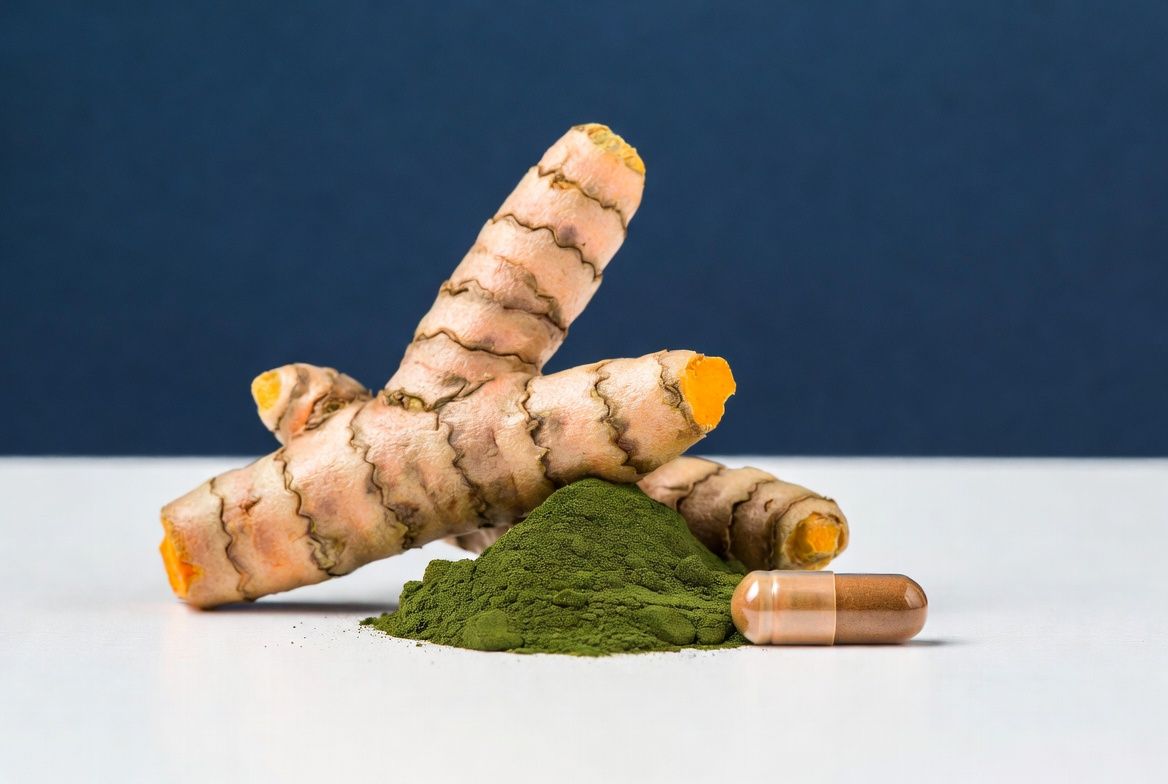
| Turmeric | Curcuma longa root extract | Not publicly disclosed |
| Chaga Mushroom | Inonotus obliquus extract | Not publicly disclosed |
| Amla | Phyllanthus emblica fruit extract | Not publicly disclosed |
| Schisandra | Schisandra chinensis powder | Not publicly disclosed |
Serving size: 2 capsules daily. Physical capsule volume constrains a two-capsule serving to roughly 1,000–1,400 mg combined, including excipients. Keep that ceiling in mind throughout what follows.
Iodine is the most scientifically defensible ingredient here, even if the direct human evidence for pineal decalcification doesn’t exist. The theoretical basis comes from Jennifer Luke’s 1997 doctoral research at the University of Surrey: fluoride accumulates in pineal calcification deposits at concentrations averaging 8,900 mg/kg — higher than in severely fluorotic bone. The hypothesis that follows is reasonable: if fluoride displaces iodine in calcification chemistry, iodine status might matter.r.
A 2018 review published in Frontiers in Endocrinology confirmed that pineal calcification correlates with lower melatonin output and metabolic disruption. The iodine-as-intervention step, though, remains mechanistic inference. No randomized controlled trial has demonstrated that supplementing iodine decalcifies a human pineal gland. The RDA sits at 150 µg/day — achievable through diet in most developed countries without supplementation.
Honest assessment: The rationale exists. The clinical evidence does not.
Burdock root (Arctium lappa) has a real antioxidant profile, full stop. A 2011 study (PMID 21429215) found measurable DPPH radical scavenging activity, antiproliferative effects in cancer cell lines in vitro, and hepatoprotective properties. A companion study at PMC3073957 identified chlorogenic acid and caffeic acid as the primary active compounds.
Every one of those studies is either in vitro or animal-based. No clinical trial has tested burdock in the context of pineal health. No established effective oral dose exists for humans. The inclusion logic — oxidative stress contributes to calcification, burdock is an antioxidant, therefore burdock helps — is a chain with one unverified link at the end. What dose is in this capsule? Still unknown.
Chlorella’s most studied property is heavy metal binding, and there’s real data here. A 2009 animal study (PMC2788181) showed Chlorella vulgaris induced metallothionein-like proteins that assisted cadmium clearance in rats. More relevant: a 2019 human study (PMC6523211) ran 90 days of chlorella supplementation and found modest but measurable increases in mercury and cadmium excretion.
“Modest” is the operative word — and the dose used was 3–10 grams per day.
Picture the biohacker on Reddit carrying a 3-liter Nalgene of chlorella water. That’s the dosing scale that produced effects. Pineal XT’s entire two-capsule serving is roughly 1,000–1,400 mg across seven ingredients. Chlorella is almost certainly a fraction of what worked in research. There’s also no published study linking chlorella to any direct change in pineal tissue specifically. “Binds metals” and “affects pineal calcification” are not interchangeable claims.
Curcumin at 30 mg/kg reduced fluoride-induced lipid peroxidation and hippocampal neurodegeneration in mice versus fluoride-only controls, establishing a direct neuroprotective mechanism against fluoride toxicity (PMC3969660).
I called this the most mechanistically interesting ingredient — and I’ll stand by that, with one major qualification I almost buried: the bioavailability problem makes the dose question almost irrelevant. The study at PMC3969660 is a mouse model, but it directly addresses the fluoride-neurodegeneration pathway that anchors the entire Pineal XT marketing argument. The 30 mg/kg animal dose scales to roughly 150–300 mg/day in humans.
Here’s where I have to recalibrate. Standard curcumin has oral bioavailability below 1% without piperine or a liposomal delivery system. Pineal XT shows no indication of any bioavailability-enhancing technology. If the extract isn’t enhanced, the amount reaching systemic circulation is negligible regardless of what’s packed into the capsule. That’s not a footnote — it’s the central limitation for this ingredient, and it should have been addressed in the formulation.
Not going to oversell this one. Chaga (Inonotus obliquus) has solid antioxidant credentials: a 2007 study (PMID 17980585) isolated polyphenol compounds — inonoblins A, B, and C — with strong free radical scavenging activity. A separate study (PMID 15630179) showed aqueous Chaga extract protected human lymphocyte DNA from oxidative damage in vitro.
Real findings. But the manufacturer’s claim that Chaga melanin “prevents pineal calcification” has no peer-reviewed support. Melanin is a general antioxidant pigment. Its presence in Chaga does not establish targeted action on pineal tissue. All existing Chaga research is in vitro or measures general antioxidant capacity. Assigning it a pineal-specific protective role is several inferential steps beyond what anyone has actually tested.
Amla (Phyllanthus emblica) has one of the stronger antioxidant profiles among botanicals in this formula. A 2018 analysis found amla phenolics with antioxidant IC₅₀ values between 6 and 158.9 µM — significantly more potent than BHT, the synthetic antioxidant standard, at 371.4 µM. The same paper documented activity against β-amyloid-induced neurotoxicity in a C. elegans model (DOI: 10.1177/1934578X1801301019).
A 2016 study (PMC4909908) added cellular mechanism: amla extract activated AMPK-α/Nrf2 signaling, boosting mitochondrial spare respiratory capacity and cutting reactive oxygen species. Well-characterized pathway. What it doesn’t establish is any benefit specific to pineal tissue. One claim circulating on affiliated product sites — that amla improves “electrical conductivity of rhombohedral crystals in the pineal gland” — appears in zero indexed publications. Treat it as marketing copy.
Schisandra (S. chinensis) earns its place in adaptogen research. PMC3155223 documented inhibition of stress-response kinases (p-SAPK/p-JNK) and cortisol attenuation during acute stress. A 2019 review (PMC6412213) confirmed hepatoprotective, neuroprotective, and anti-inflammatory activity via schisandrin lignans.
Clinical adaptogen trials used 160–500 mg/day of standardized extract. Divide ~1,200 mg across seven ingredients and schisandra likely lands at 50–150 mg — below the dose range that produced documented effects. It adds a stress-modulation rationale to a formula otherwise built around antioxidant and detoxification mechanisms. Legitimate mechanism, uncertain dose, no pineal-specific evidence.
No — and the reason is structural, not incidental.
The manufacturer publishes no Supplement Facts panel with individual ingredient weights. That single omission makes rigorous dose analysis impossible. What we can infer from capsule volume: a two-capsule serving runs roughly 1,000–1,400 mg total. That ceiling does real damage to this formula.
Spread across seven ingredients — unevenly, with iodine requiring only micrograms — the botanical ingredients likely average 100–250 mg each. Compare that to:
| INGREDIENT | DOSE IN STUDIES | PINEAL XT EST.* | STATUS |
|---|---|---|---|
| Chlorella | 3,000–10,000 mg/day | ~100–200 mg* | ⚠️ Likely underdosed |
| Curcumin | 150–300 mg/day (bioavailable form) | ~100–150 mg* (no enhancer) | ⚠️ Bioavail. issue |
| Schisandra | 160–500 mg/day | ~50–150 mg* | ⚠️ Below range |
| Iodine | 150 µg/day (RDA) | Not disclosed | ✓ May be adequate |
| Amla | Low threshold | Not disclosed | ✓ May be adequate |
* ESTIMATION METHOD: Based on capsule volume analysis. Two-capsule serving ≈ 1,000–1,400 mg total (including excipients). Divided across 7 ingredients with iodine requiring only micrograms, botanical ingredients likely average 100–250 mg each.
The structural limitation is capsule volume. A two-capsule serving cannot accommodate clinical doses of all 7 ingredients simultaneously. Chlorella and schisandra appear underdosed relative to published RCT ranges. Curcumin faces a bioavailability problem independent of dose.
Iodine and amla have low effective dose thresholds and may be adequately covered. Chlorella is almost certainly underdosed for its primary documented mechanism. Curcumin faces a bioavailability problem that dose alone can’t solve. For burdock and chaga, clinical dose thresholds in humans haven’t been established — so “underdosed” can’t even be properly assessed.
The most revealing thing about a formula isn’t always what’s in it.
Pineal XT is built around the claim that it supports pineal gland function — primarily by countering calcification and its effect on melatonin output. Yet the formula contains no melatonin, no L-tryptophan, no 5-HTP. Nothing that directly addresses the output the gland is supposed to produce. That’s the sharpest gap here, and I don’t think it gets enough attention in reviews of this product.
Beyond that:
Piperine or a curcumin delivery system. Turmeric without absorption enhancement is a formulation decision that undermines one of the formula’s strongest ingredients. Phytosome-bound or liposomal curcumin exists, is not prohibitively expensive at scale, and is the standard in serious formulations.
Magnesium. Deficiency in magnesium is associated with pathological calcification across multiple tissue types. Its absence from an anti-calcification formula is worth noting.
Selenium. Frequently paired with iodine for thyroid and broader endocrine support. Not present here.
For a look at how a competing formula handles some of these gaps, see the Pineal Guardian review.
| Ingredient | Pineal XT | Pineal Guardian | Research Quality |
|---|---|---|---|
| Iodine | ✓ | ✗ | Moderate (mechanistic, not RCT) |
| Burdock Root | ✓ | ✗ | Low (in vitro / animal only) |
| Chlorella | ✓ | ✗ | Moderate (human data, but high dose) |
| Turmeric / Curcumin | ✓ | ✓ | Moderate (bioavailability caveat) |
| Chaga Mushroom | ✓ | ✗ | Low-Moderate (in vitro) |
| Amla Extract | ✓ | ✓ | Moderate (cellular / in vitro) |
| Schisandra | ✓ | ✗ | Moderate (adaptogen evidence) |
| Pine Bark Extract | ✗ | ✓ | Moderate (human antioxidant data) |
| Bacopa Monnieri | ✗ | ✓ | Moderate-High (human cognitive RCTs) |
| Melatonin / Precursors | ✗ | ✗ | N/A — both miss this |
Pineal XT covers more botanical ground. Pineal Guardian leans toward ingredients with stronger direct human clinical trial support for cognitive function. Neither product has RCT evidence for pineal decalcification — that research simply doesn’t exist yet for any supplement.
Seven real botanicals, legitimate antioxidant and adaptogenic research behind several of them, and a mechanistic hypothesis — iodine, fluoride, pineal calcification — that is coherent even if unproven in clinical trials. That’s a fair summary of what this formula offers.
The problems are dose opacity and the gap between general antioxidant activity and specific pineal decalcification. You cannot verify what you’re getting per capsule. The leap from “reduced ROS in a cell culture” to “decalcifies your pineal gland” is a large one that the peer-reviewed literature does not currently support.
If antioxidant botanical support is what you’re after and the ingredient list satisfies your threshold for evidence, the 365-day money-back guarantee removes most of the financial risk. If you need disclosed doses and RCT-grade evidence for the primary claim, that product doesn’t exist yet in this category — Pineal XT included.
If the ingredients check out for you, here’s where to buy Pineal XT.
For the full product evaluation — efficacy, user data, and my own assessment — read the complete Pineal XT review.
Marcus Hale is an independent researcher and former clinical neuroscientist. The content on PinealCode.com is for informational purposes only and does not constitute medical advice.
Pycnogenol® backed by 39 RCTs. Bacopa by 9. But the 'pineal detox' claims? Zero human trials. Full ingredient breakdown and honest verdict...
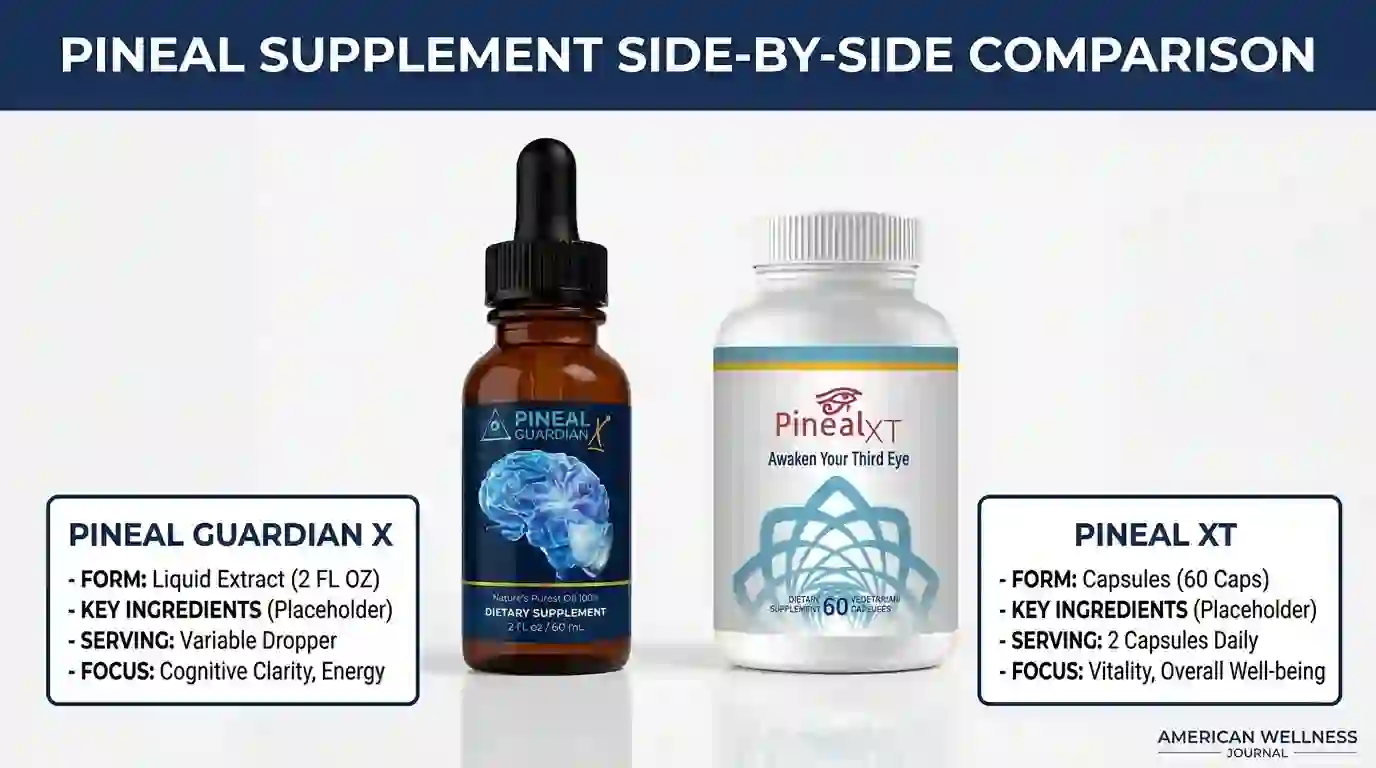
Pineal Guardian wins on evidence quality (39 RCTs behind Pine Bark). Pineal XT targets fluoride via iodine. Full ingredient breakdown and...
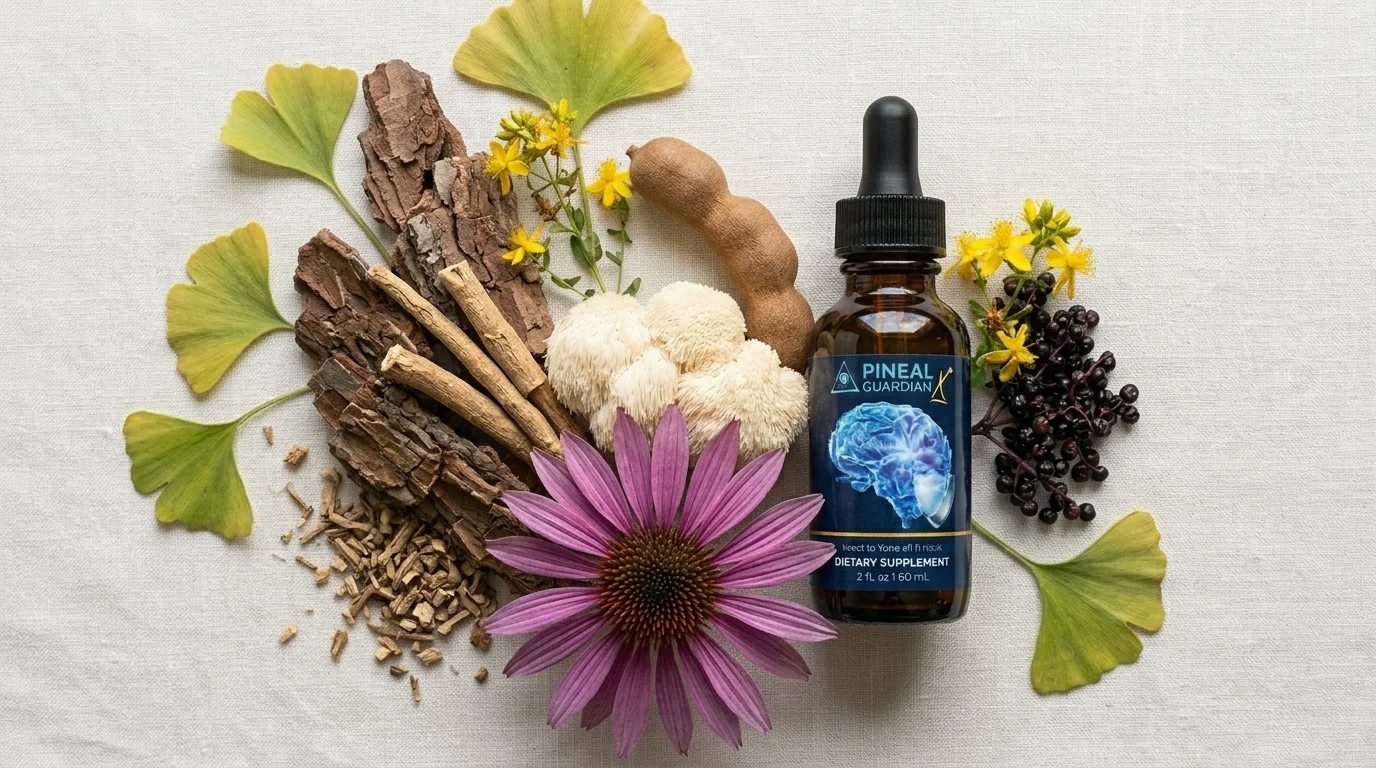
9 botanicals, 7 with documented mechanisms — but Lion's Mane needs 3,000 mg/day. Full Pineal Guardian ingredient analysis: what works,...

Marcus Hale
Independent Researcher · Former Clinical Neuroscientist
I spent 12 years in clinical neurology before the questions got more interesting than the answers. PinealCode is where I document what I find at the intersection of brain science and consciousness.