Does Ashwagandha Decalcify the Pineal Gland? What the Science Says
By Marcus Hale·
Evidence-Based Analysis: This article references peer-reviewed studies from PubMed (PMC3537209, PMC6979308, PMC2819941, PMC4270108). Where evidence is preliminary (animal models, mechanistic studies), it is explicitly noted. Claims about subjective experiences (intuition, "third eye activation") are reported as user experiences, not clinical outcomes.
Read our research standards →
Here’s the pitch you’ve seen a hundred times: ashwagandha decalcifies your pineal gland, restores your melatonin, opens your third eye. It sounds reasonable — ashwagandha is legitimately the most studied adaptogen on earth, with more randomized controlled trials behind it than most pharmaceutical stress compounds. That credibility gets borrowed constantly by claims that have nothing to do with what those studies actually measured.
So let’s do something the wellness industry rarely does. Let’s actually read the research.
This covers what ashwagandha demonstrably does to the brain, what science says about pineal calcification, and how to use it if you decide it belongs in your stack. The honest answer is more useful than the marketing version. It’s also more interesting.
Ashwagandha’s documented mechanism: 27.9% cortisol reduction (2012 RCT) removes glucocorticoid brake on pineal AANAT — the rate-limiting enzyme in melatonin synthesis.
Does Ashwagandha Actually Decalcify the Pineal Gland?
No. Not a single human study — no pilot, no observational cohort, not even a case report — has tested ashwagandha specifically on pineal gland calcification. The claim has no clinical foundation. Anyone selling it as established fact is working from imagination, not evidence.
But here’s where it gets worth your time.
Pineal calcification is the accumulation of hydroxyapatite crystals — the same mineral matrix found in bone — in the parenchymal tissue of the gland. Once those deposits form, dissolving them through an oral supplement isn’t just unproven. It’s biochemically implausible. Controlled bone resorption requires osteoclasts — specialized cells executing a tightly regulated cellular process. You don’t get that from a capsule.
What you can get from a capsule is a different question. And that distinction is what makes ashwagandha worth discussing in a pineal health context at all.
“Decalcifying” and “improving function” aren’t the same thing. The first has no evidence. The second is where ashwagandha has actual data.
What Pineal Calcification Actually Is (and Why It Matters)
A 2023 systematic review and meta-analysis in BMC Neurology — the largest analysis of its kind — found a pooled prevalence of 61.65% for pineal calcification across the general adult population. That’s not a fringe pathology. That’s the statistical norm for adults over 40.
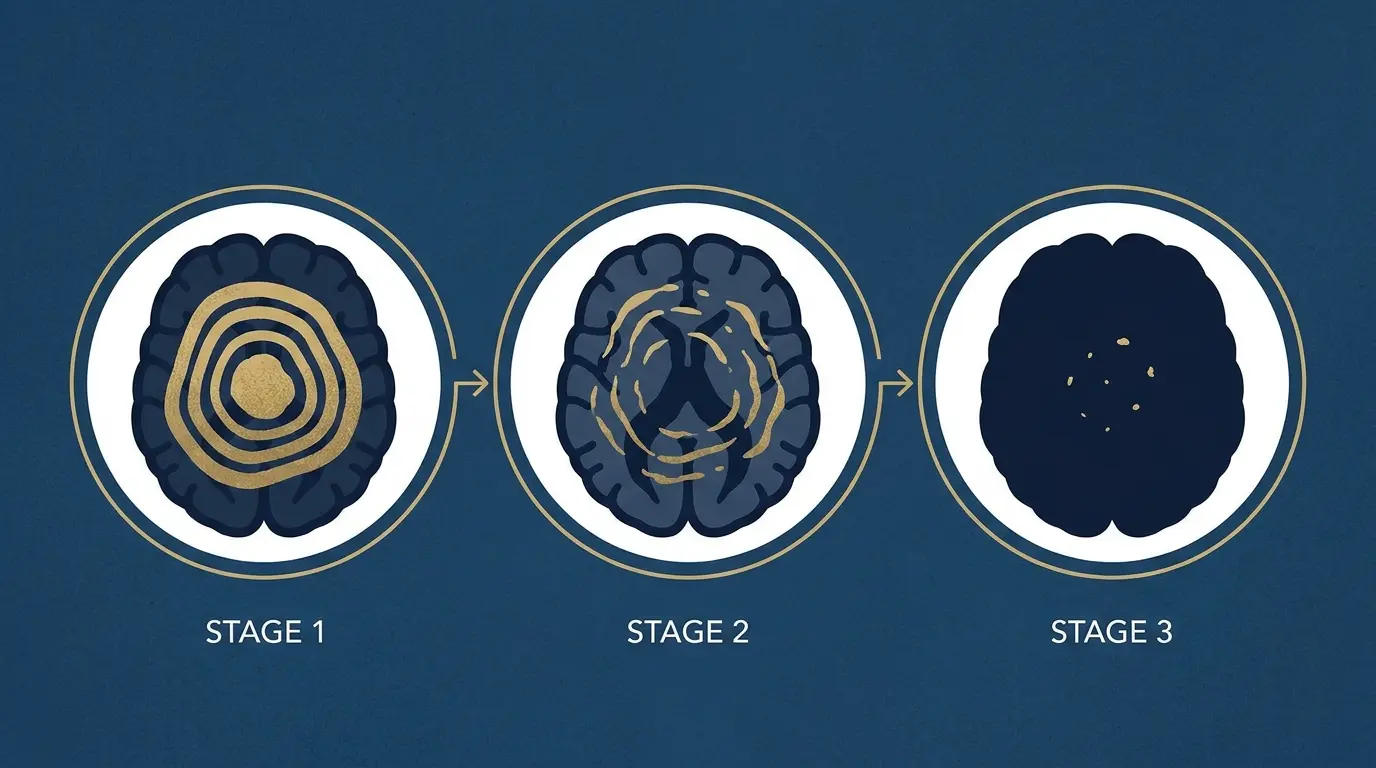
Clinical significance is still contested. No defined threshold exists above which calcification gets diagnosed as pathological. But pinealocytes — the cells that make melatonin — are progressively displaced as calcified corpora arenacea accumulate, reducing synthetic capacity over time. Higher calcification correlates with reduced melatonin output and disrupted sleep architecture.
Nothing reverses it once it’s there. The evidence-informed goal is preserving function and slowing further accumulation — which is exactly where lifestyle and supplementation have a legitimate, if indirect, role.
What Ashwagandha Does to the Brain — The Documented Mechanisms
This is where I stop hedging. This part is solid.
Ashwagandha’s neurological effects aren’t speculative. They’re documented across multiple randomized, double-blind, placebo-controlled trials. Three mechanisms matter specifically for pineal function.
1. Cortisol Reduction
The most replicated finding in ashwagandha research: it reduces serum cortisol. Significantly.
In a 2012 RCT published in the Indian Journal of Psychological Medicine, Chandrasekhar and colleagues gave 64 adults either high-concentration full-spectrum ashwagandha root extract or placebo for 60 days. The ashwagandha group showed a 27.9% reduction in serum cortisol versus 7.9% in the placebo group — statistically significant at p = 0.002. Perceived stress scores dropped 44%. The GHQ-28 general health questionnaire improved 72.9%.
That’s not a marginal signal.
Cortisol matters to the pineal gland directly — which connects to the third mechanism.
2. Neuroprotection via Withanolides
Ashwagandha’s active steroidal lactones — withanolides — show neuroprotective activity in preclinical models. A 2012 animal study in PNAS found that oral withanolide extract reversed behavioral deficits and amyloid pathology in a mouse model of Alzheimer’s. A 2013 study showed neutralization of beta-amyloid toxicity in human neuronal cells in vitro.
I want to be direct: these are animal models and cell cultures. Not clinical trials. The relevance is mechanistic — withanolides do something measurable to neural tissue — not proof of human neuroprotection. I’ll cite the data. I won’t overclaim it.
3. Sleep Quality Improvement
Most relevant for pineal function, by a margin.
A 2019 double-blind RCT in Cureus (PMID 31728244) tested 300 mg KSM-66 twice daily in 60 patients with insomnia and anxiety over 10 weeks. Sleep efficiency moved from 75.63% to 83.48%. Sleep onset latency improved significantly (p = 0.019). Sleep quality scores improved (p = 0.002).
A 2020 RCT in Sleep Medicine (PMID 32540634) tested KSM-66 in healthy adults with non-restorative sleep — significant improvements in sleep efficiency, total sleep time, and wake-after-sleep-onset after six weeks. A 2021 meta-analysis across five RCTs found a small but statistically significant overall effect (standardized mean difference = −0.59).
KSM-66 ashwagandha improved sleep efficiency from 75.63% to 83.48% in a 2019 double-blind RCT — better sleep architecture means the pineal gland gets to do its job.
The pineal gland is the circadian rhythm’s primary timekeeper. Better sleep architecture means it gets to do its job.
KSM-66 ashwagandha reduced serum cortisol by 27.9% versus 7.9% placebo in a 2012 double-blind RCT — a reduction that may directly support nighttime melatonin synthesis by removing a primary glucocorticoid brake on pineal AANAT activity.
Not decalcification. But a documented, mechanistically grounded pathway through which ashwagandha may support what the pineal gland is actually trying to do.
PINEALCODE.COM — MECHANISM MAP VOL. 1
ASHWAGANDHA → PINEAL FUNCTION
The HPA Axis → Cortisol → Melatonin Connection
Documented Pathway
1. CHRONIC STRESS
Sustained psychological or physical stressors activate the hypothalamic-pituitary-adrenal axis.
Ashwagandha does not decalcify the pineal gland. It reduces cortisol → removes a primary brake on melatonin synthesis → supports pineal function indirectly through hormonal optimization. This pathway is documented, mechanistically coherent, and clinically tested.
SOURCES: Chandrasekhar et al. 2012 (PMID 23439798) · Deng et al. 2019 (Molecular Neurodegeneration) · Langade et al. 2019 (PMID 31728244)
Does Ashwagandha Affect the Pineal Gland?
Indirectly, yes. Directly — calcium dissolution — no evidence exists.
This distinction changes what you should expect. Ashwagandha doesn’t reach into your pineal gland and scrub out mineral deposits. What it may do is improve the hormonal environment the gland operates within: reduced cortisol, less nighttime melatonin suppression, better sleep architecture, reduced systemic inflammation via NF-κB modulation (preclinical), and improved attention and working memory (RCTs).
None of that is decalcification. All of it matters to a pineal gland functioning inside a stressed, sleep-deprived, chronically inflamed body.
A 2021 RCT in PLOS ONE found significant improvements in sleep quality and mental alertness with ashwagandha — effects more pronounced in the insomnia subgroup. Better sleep means a more consistent nocturnal melatonin surge. That’s the honest version of “ashwagandha supports pineal function.”
Is Ashwagandha Good for the Third Eye?
Depends entirely on what you mean by that — and I’m not going to pretend the question is stupid.
Ayurvedic physicians were not naive observers. The Charaka Samhita and Ashtanga Hridayam — compiled between roughly 600 BCE and 700 CE, predating most Western systematic medicine by centuries — classify ashwagandha as a medhya rasayana: an herb that clarifies, nourishes, and strengthens the mind. The Sanskrit manas encompasses both cognitive and subtle mental function. That’s not pseudoscience retrofitted to a supplement. It’s a 2,000-year therapeutic categorization that happens to align, mechanistically, with what the clinical trials are now measuring.
Modern RCTs validate a grounded version of the same idea. KSM-66 studies document improvements in working memory, sustained attention, information-processing speed, and reaction time. A 2017 RCT in adults taking 300 mg twice daily found significant improvements across immediate memory, executive function, and general memory compared to placebo.
So: if “third eye” means mental clarity and more restorative sleep, ashwagandha has evidence. If it means direct mystical activation of the pineal gland — I can’t give you that. No data supports it, and I won’t manufacture any.
Mental clarity and restorative sleep — ashwagandha’s documented effects on working memory, attention, and sleep quality (RCT-validated) without mystical claims.
What you do with that distinction is yours to decide.
What Is the Best Supplement for Pineal Gland Decalcification?
No single supplement is clinically proven to decalcify the pineal gland. That’s the answer, upfront, before the list.
“There’s no magic pill” doesn’t mean there’s no evidence-informed approach. There is — built from compounds with individual mechanistic support:
Magnesium — Supports circadian rhythm regulation and competes at calcium receptor sites. Low magnesium correlates with poor sleep and dysregulated melatonin. Most adults don’t get enough.
Adaptogens, including ashwagandha — Cortisol reduction and sleep improvement create a better functional environment for melatonin synthesis.
Building that stack means sourcing multiple compounds, dosing correctly, and timing them. Pineal Guardian combines several of these elements — not a cure, but a practical option if you’d rather not manage four separate bottles. Worth a look.
Evidence-based pineal support stack: ashwagandha (cortisol reduction), magnesium (circadian regulation), vitamin D3+K2 (calcification inhibition), fluoride reduction — no single supplement reverses calcification, but compound support improves functional environment.
How to Use Ashwagandha for Pineal Health — A Practical Protocol
What the evidence actually supports, without embellishment:
Form: KSM-66 or Sensoril. Standardized extracts, not raw powder. Withanolide content is controlled and verified — raw powder has too much variability to dose reliably.
Dose: 300–600 mg/day. The range used across published RCTs. The 2021 meta-analysis found stronger sleep effects at ≥600 mg/day.
Timing: Evening, with a fat-containing meal. Withanolides are lipid-soluble. Evening dosing also aligns the cortisol-lowering window with the time you most need cortisol suppressed.
Duration: Eight weeks minimum. Don’t evaluate at week two and write it off.
Full stack: KSM-66 ashwagandha (300–600 mg) + fluoride-filtered water + D3 (2,000–5,000 IU) + K2 MK-7 (100 mcg) + magnesium glycinate (300–400 mg) + hard stop on screens after 9 PM.
That last item — screens — isn’t a soft suggestion. No supplement compensates for a 2 AM phone scroll. The pineal gland responds to light cues. Give it darkness.
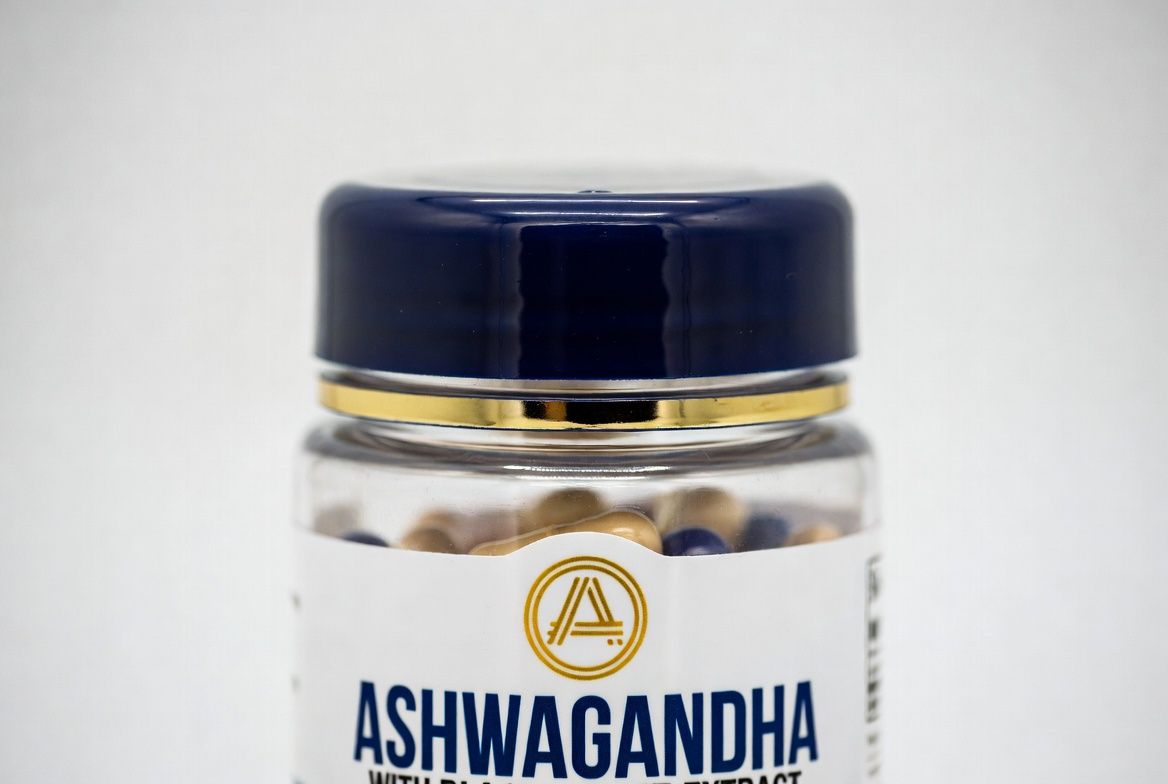
KSM-66 extract protocol: 300mg twice daily (morning + evening) — full-spectrum root extract with highest clinical validation (60+ RCTs) for cortisol reduction and sleep quality.
AANAT is rate-limiting enzyme for melatonin biosynthesis(Established endocrinology pathway (Klein & Weller 1970))
KSM-66 ashwagandha improves sleep onset latency and sleep efficiency(Langade et al. 2019, PMC6827862; Meta-analysis Cheah et al. 2021)
Moderate-Confidence Claims Mechanistic or Animal Data
Lower cortisol indirectly supports melatonin production capacity(Mechanistic inference from AANAT inhibition studies — not directly tested in ashwagandha trials)
Ashwagandha exhibits antioxidant properties in neural tissue(Rat hippocampus models, Bhattacharya et al. 2001, PMC4270108)
Vitamin K2 (MK-7) activates Matrix Gla Protein (MGP) to inhibit soft-tissue calcification(Vascular calcification studies, not pineal-specific — Shea et al. 2012, Advances in Nutrition)
Low-Confidence / Speculative Claims No Direct Human Trials
Ashwagandha directly reduces or reverses pineal gland calcification
Lifestyle interventions dissolve existing hydroxyapatite deposits in pineal tissue
Subjective 'third eye activation' correlates with measurable pineal function changes
Not Evidence-Based Anecdotal
Enhanced dream recall or lucid dreaming experiences
Improved mental 'clarity' or 'intuition'
Subjective 'third eye pressure' sensations between eyebrows
No. There is no human study — not a pilot, not an observational cohort — that has tested ashwagandha on pineal calcification. Dissolving hydroxyapatite deposits via an oral supplement has no documented biochemical mechanism. Ashwagandha may support pineal function indirectly through cortisol reduction and sleep improvement, but that is not the same as decalcification.
Does ashwagandha affect the pineal gland?
Indirectly, yes. Ashwagandha reduces serum cortisol by up to 27.9% in clinical trials (Chandrasekhar et al. 2012, PMID 23439798). Elevated cortisol inhibits AANAT, the rate-limiting enzyme in melatonin biosynthesis. By reducing cortisol, ashwagandha may remove a primary suppressive signal on nighttime melatonin production — a real, mechanistically grounded effect on the pineal gland's functional environment.
What is the best supplement for pineal gland decalcification?
No single supplement is clinically proven to decalcify the pineal gland. The most evidence-informed approach combines fluoride reduction, vitamin K2 (MK-7) for soft-tissue calcification inhibition via Matrix Gla Protein, magnesium for circadian support, and adaptogens like ashwagandha for cortisol and sleep. Each compound has individual mechanistic support; none has been tested directly on pineal calcification in humans.
Is ashwagandha good for the third eye?
If 'third eye' refers to mental clarity, focused attention, and restorative sleep, ashwagandha has documented clinical support — RCTs show KSM-66 improves working memory, sustained attention, reaction time, and sleep efficiency. If it refers to direct activation of the pineal gland as a mystical organ, no clinical evidence exists for that specific claim.
How long does ashwagandha take to work for sleep?
Most RCTs measuring sleep outcomes ran 8–10 weeks. The Langade et al. 2019 RCT (PMID 31728244) found significant improvements in sleep onset latency and sleep efficiency with 300 mg KSM-66 twice daily over 10 weeks. The 2021 meta-analysis found stronger effects at doses ≥600 mg/day and durations ≥8 weeks. Don't evaluate at week two.
What herbs open the pineal gland?
No herb has been proven to 'open' or activate the pineal gland. Herbs with indirect support for the broader brain environment the pineal operates within include ashwagandha (cortisol reduction, sleep improvement), bacopa monnieri — another Ayurvedic medhya rasayana — (neuroprotection, memory), and lion's mane (nerve growth factor stimulation in preclinical models). Effects are on brain health broadly. Claims about direct pineal activation are not supported by evidence.
What This Means for You
Ashwagandha doesn’t decalcify the pineal gland. No study says it does. No mechanism explains how it could.
But that’s the wrong question to be asking.
The useful question is: what’s actually impairing your pineal function right now? For most people, that answer includes chronic elevated cortisol, disrupted sleep, circadian chaos from artificial light, and a diet short on magnesium and K2. Ashwagandha addresses the first two directly — multiple RCTs, a 2,000-year safety record in Ayurvedic practice, and a mechanistic explanation that holds scrutiny.
That’s not a small thing. That’s a legitimate place to start.
If you want a formulation that combines ashwagandha with complementary compounds — rather than building a multi-bottle stack from scratch — Pineal Guardian is worth reviewing. Either way, the principle holds: lower cortisol, protect sleep, reduce what accelerates calcification, and give the system actual time to respond.
Start with sleep. Everything else builds from there.
Marcus Hale is an independent researcher and former clinical neuroscientist. The content on PinealCode.com is for informational purposes only and does not constitute medical advice.
Medical Disclaimer: The content on
PinealCode.com is for informational and educational purposes only. Nothing here
constitutes medical advice, diagnosis, or treatment. Always consult a qualified
healthcare provider before making changes to your health regimen.
Marcus Hale
Independent Researcher · Former Clinical Neuroscientist
I spent 12 years in clinical neurology before the questions got more interesting
than the answers. PinealCode is where I document what I find at the intersection
of brain science and consciousness.