Pineal Gland Detox: What 5 Studies Actually Support (2026)
By Marcus Hale·
Pineal Gland Detox: What the Science Actually Supports (And What’s Just Marketing)
“Pineal gland detox” gets searched about 22,000 times a month. Spend any time reading what actually ranks for that term and you’ll notice a pattern: mystical speculation dressed in scientific-sounding language, or mainstream dismissal that won’t engage with the real data. Neither is useful.
If you’re searching for a real pineal gland detox protocol, the first thing you need to know is that most of what’s out there doesn’t hold up to scrutiny.
I spent 12 years in clinical neuroscience research. We wouldn’t have touched this topic — too fringe, too underfunded, too associated with crystal shops and YouTube thumbnails with glowing foreheads. Then something happened that forced me to actually read the literature. Not dismiss it, not romanticize it. Read it.
Here’s what I found: five ingredients have actual human or mechanistic studies behind them. The rest? We’ll go through those too.
What Does “Pineal Gland Detox” Actually Mean?
The term “detox” is doing a lot of heavy lifting here — and most of it is unearned. Let’s be precise about what we’re actually talking about.
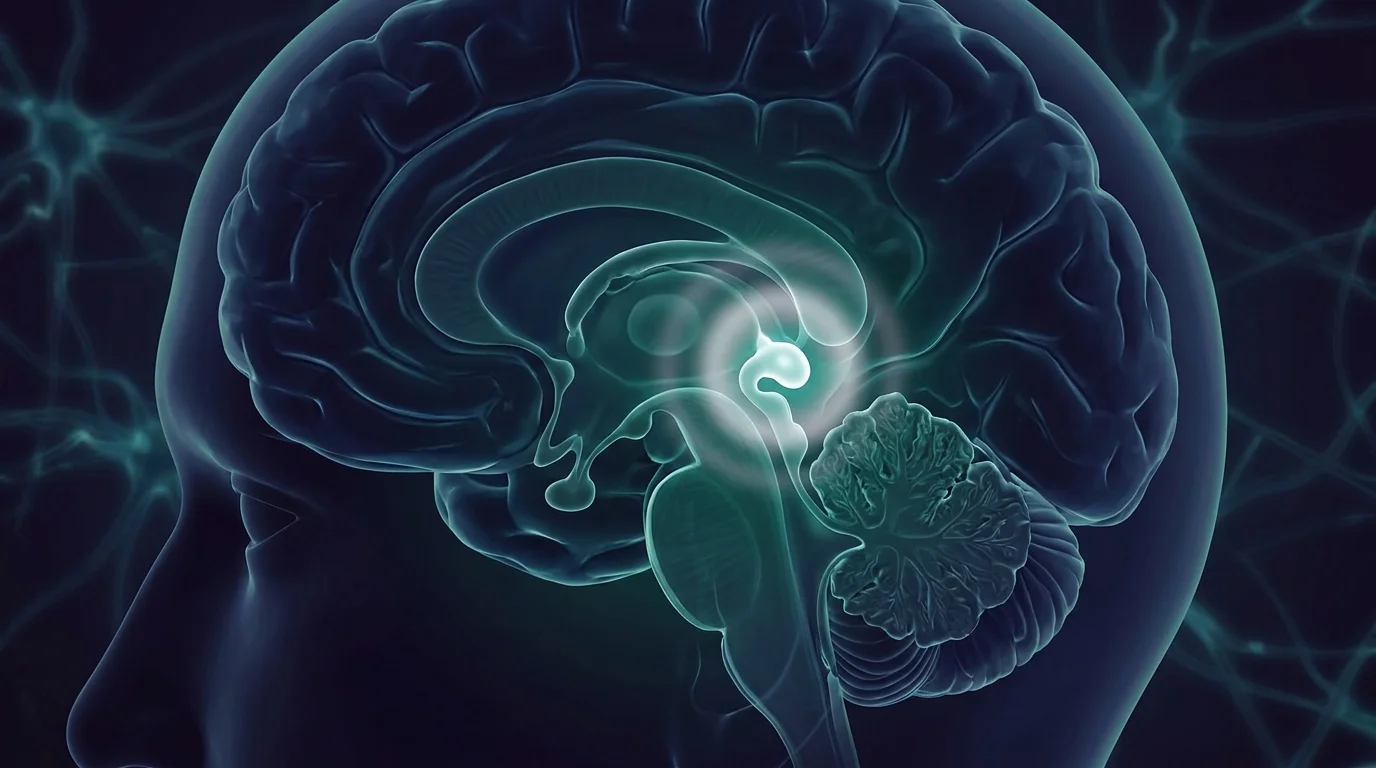
The pineal gland lacks a complete blood-brain barrier. That’s anatomy, not metaphor. It’s one of the circumventricular organs — structures with direct blood exposure, outside the BBB — which means compounds that can’t easily cross into most brain tissue accumulate here freely.
Two things accumulate in measurable quantities: fluoride and calcium.
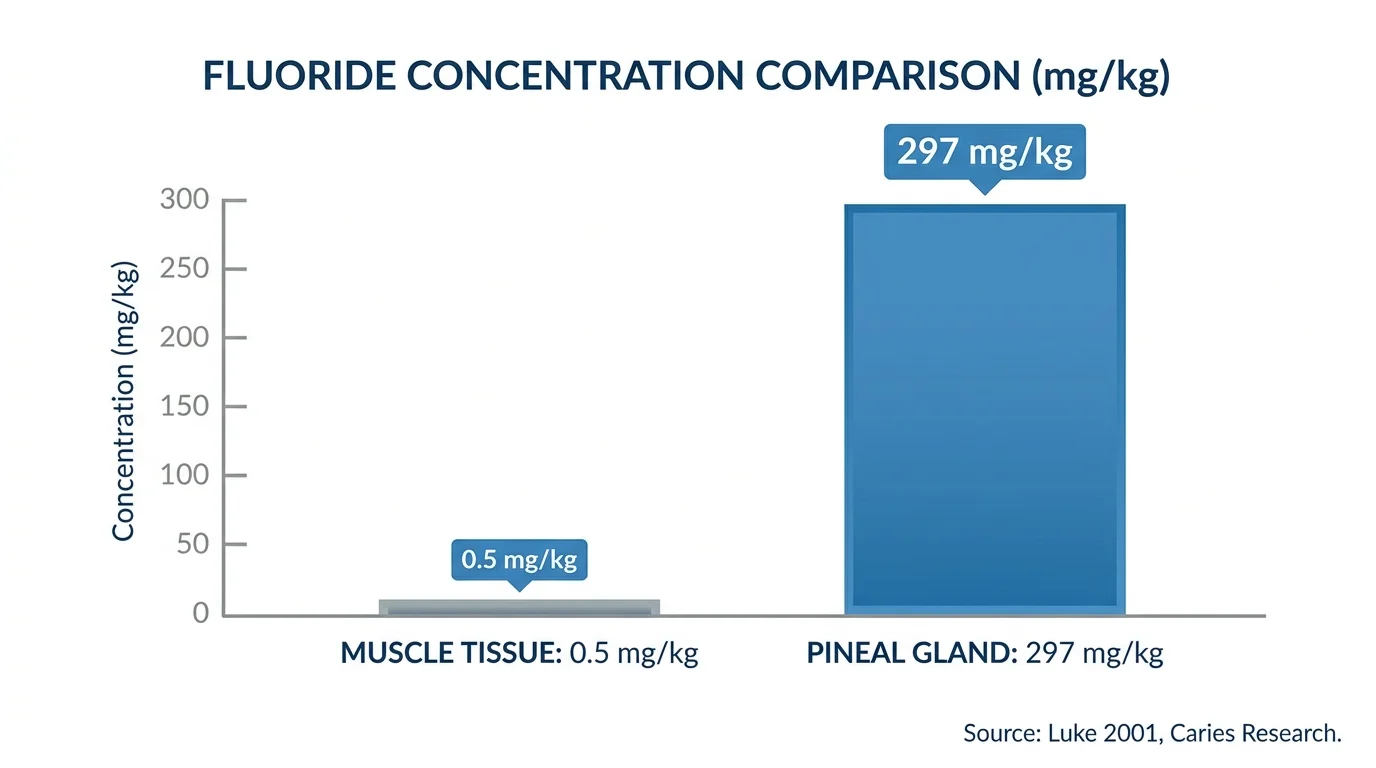
A 2001 post-mortem study by Jennifer Luke in Caries Research found fluoride concentrations averaging 297 mg F/kg in pineal tissue, compared to roughly 0.5 mg/kg in muscle. The correlation between fluoride and calcium accumulation in the same tissue was r=0.73 (p<0.02). That’s a strong association. (Read more: fluoride and the pineal gland.)
Fluoride concentration in pineal tissue vs. other body tissues — post-mortem data from Luke (2001), Caries Research. The pineal accumulates fluoride at 594× the concentration of muscle.
The calcium deposits are called corpora arenacea — brain sand. Crystals of hydroxyapatite, the same mineral matrix in bone. And here’s the part almost nobody mentions in detox content: antioxidants don’t dissolve crystalline mineral deposits. No supplement on the market has been shown in human imaging studies to reduce existing pineal calcification.
So “pineal gland detox” means two distinct goals — and they’re not equally achievable:
Reducing new fluoride accumulation — plausible, with real evidence
Reducing new exposure is more realistic than reversing what’s already there. That distinction matters. It’s also the one most detox content carefully avoids making.
What the Evidence Actually Supports for Pineal Gland Detox
The pineal gland accumulates fluoride at concentrations averaging 297 mg F/kg — higher than bone — due to its incomplete blood-brain barrier, with fluoride-calcium correlation of r=0.73 in post-mortem human tissue, according to Luke (2001) in Caries Research.
Not everything marketed for pineal support is invented. Some of it has actual mechanistic or clinical backing. Here’s where the evidence starts and stops — by ingredient.
Tamarind — Strongest Human Evidence
Of every compound discussed in this space, tamarind is the only one with a human clinical trial specifically measuring fluoride excretion.
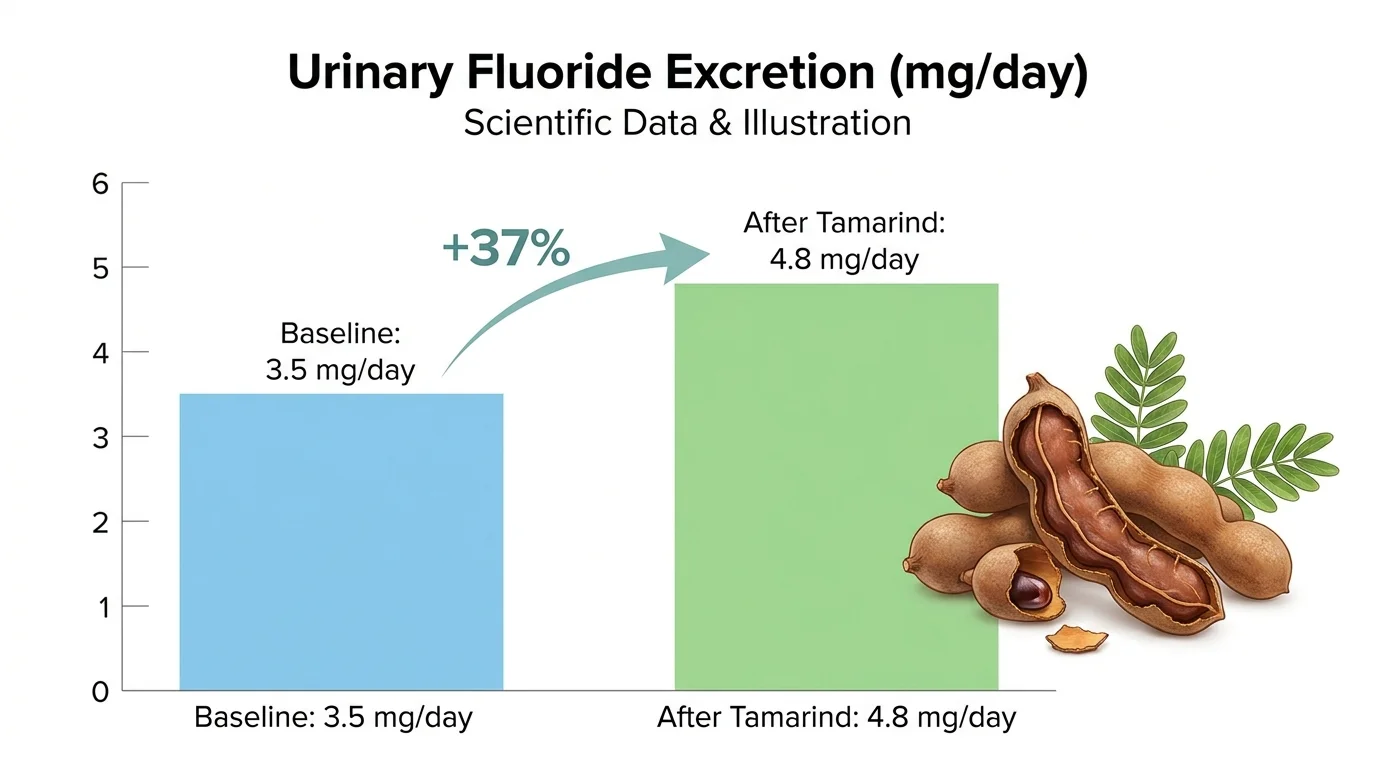
A 2002 study by Khandare et al. in the European Journal of Clinical Nutrition (PubMed ID: 11840184) gave 10g of tamarind daily to 18 schoolboys over 18 days. Urinary fluoride excretion went up 37% — from 3.5 ± 0.22 mg/day to 4.8 ± 0.22 mg/day (P<0.001). A 2004 follow-up in the Journal of Nutritional Biochemistry found tamarind also mobilized fluoride stored in bone tissue, not just reduced new absorption. The mechanism: organic acids in tamarind — primarily tartaric acid — form complexes with fluoride ions, which the kidneys then clear.
Now the honest part. The study population had endemic fluorosis — children in rural India with chronic high-fluoride water exposure. Their baseline fluoride burden was considerably higher than a typical American adult. Whether 10g daily produces the same proportional effect at moderate exposure levels is mechanistically plausible, but not clinically confirmed.
One thing the study caught that almost no detox article mentions: concurrent decreases in magnesium and zinc excretion. Tamarind may chelate more than just fluoride. Cycling it makes more sense than continuous daily use.
Urinary fluoride excretion before and after 18 days of tamarind supplementation — Khandare et al. (2002), European Journal of Clinical Nutrition. The only human trial measuring fluoride excretion from a food-based intervention.
Boron — Fluoride Antagonist
Boron competes with fluoride for binding sites in mineralized tissue. The mechanism isn’t pineal-specific — it was documented in bone and cardiovascular tissue — but the biochemistry is consistent across calcium-rich structures.
Naghii (1997), in Environmental Health Perspectives (PubMed ID: 9197924), found boron supplementation increased urinary fluoride excretion by 45% within 24 hours, with measurable effects on calcium, phosphorus, and magnesium metabolism. Functional dose: 3–6 mg/day.
Nobody has done a pineal-specific boron study. I want to be clear about that. But if you’re trying to reduce systemic fluoride retention, and the mechanism involves competitive binding at mineralized tissue sites, boron is a logical part of a reduction protocol. Upper tolerable intake is 20mg/day. Stay well below that. Full boron and pineal gland analysis
Magnesium — Calcium Balance Regulator
Magnesium competes with calcium in cellular transport pathways. Magnesium deficiency is consistently associated with ectopic calcification — mineralization in soft tissues where it doesn’t belong. A 2016 study in Biochemical and Biophysical Research Communications showed magnesium inhibits extracellular matrix calcification in soft tissue stem cells via the Notch signaling pathway. High Mg²⁺ concentrations significantly inhibit mineralization in human vascular smooth muscle cells.
No study has tested this specifically in pineal tissue. The mechanism — Mg²⁺ as a physiological calcium antagonist in soft tissue — is consistent across multiple tissue types, but that’s an extrapolation.
Form matters here. Magnesium oxide has roughly 4% absorption in clinical review. Magnesium glycinate absorbs via a different intestinal pathway with meaningfully better bioavailability, and without the laxative effect that makes oxide and citrate forms unpleasant at therapeutic doses. Functional range: 300–400mg/day of elemental magnesium as glycinate, taken at night. Magnesium and pineal gland — full breakdown
A 2019 paper by Peckham and Awofeso in Scientific Reports (PMC6466022) documented that fluoride inhibits NIS at the molecular level, reducing active iodide absorption. Populations with iodine deficiency retain more fluoride. The implication: optimizing iodine may compete with fluoride for the same active transport sites.
I’m qualifying this carefully because the NIS research was conducted in thyroid tissue, not pineal tissue. The pineal gland is not thyroid tissue. Extrapolation is biochemically plausible — not directly tested in pineal cells. That’s an honest gap, and the field has several of them.
Iodine from kelp at 150–300 mcg/day is a reasonable starting point. Above 500 mcg/day requires medical supervision, particularly with any thyroid history. Iodine and the pineal gland — full analysis
NAC (N-Acetylcysteine) — Antioxidant, Not Decalcifier
NAC is popular in the pineal optimization community. The science behind it is real. The framing is almost universally wrong.
A 2021 study (PubMed ID: 34658034) from the University of Brighton found NAC reduced calcification in vascular smooth muscle cells by up to 80% in vitro, and by 25% in animal models. Mechanism: NAC raises intracellular glutathione up to 3× in calcified cells, providing antioxidant protection that slows calcification progression.
What the study doesn’t say — and what every detox article skips — is this: NAC cannot dissolve existing hydroxyapatite deposits. No imaging study has demonstrated reduction of pineal calcification from any supplement.
NAC may help slow future accumulation. It will not undo what’s already crystallized. One of those claims has mechanistic support. The other is wishful thinking that sells supplements. Full NAC and pineal gland analysis
What Doesn’t Have Evidence: Common “Pineal Detox” Claims
Supporting your pineal gland and reversing structural calcification are two very different claims. The wellness industry treats them as identical. They’re not.
Claim
Evidence Status
Why It Doesn’t Work
Orgonite / crystal healing
No biological mechanism
Zero physiological relevance; no clinical studies of any kind
Sun gazing
Active documented risk
Bilateral macular damage after 1–2 minutes (Yannuzzi et al., 2013); no pineal benefit established
”Detox water” with lemon
Anecdotal only
Gastric pH ~2 doesn’t reach hydroxyapatite crystals in distant tissue — the acid argument is physiologically wrong
May benefit general metabolic health; no documented mechanism for pineal decalcification
Chlorophyll / “green detox”
No mechanistic support
No clinical evidence; chlorophyll doesn’t bind or mobilize fluoride in human tissue
The sun gazing entry deserves more than a table cell. This isn’t “lacks evidence” — it’s actively dangerous. Staring into sunlight for 60–90 seconds causes photochemical and photothermal damage to the macula. Yannuzzi et al. documented reduced visual acuity with bilateral macular lesions in a patient who practiced sun gazing for spiritual purposes. That’s not a theoretical risk.
Meditation does appear to support circadian function, which matters for a gland whose primary output is a circadian hormone. But “supports melatonin secretion indirectly through lifestyle regulation” is not the same claim as “decalcifies the gland.” One has a mechanism. The other is marketing copy that found a spiritual-sounding explanation.
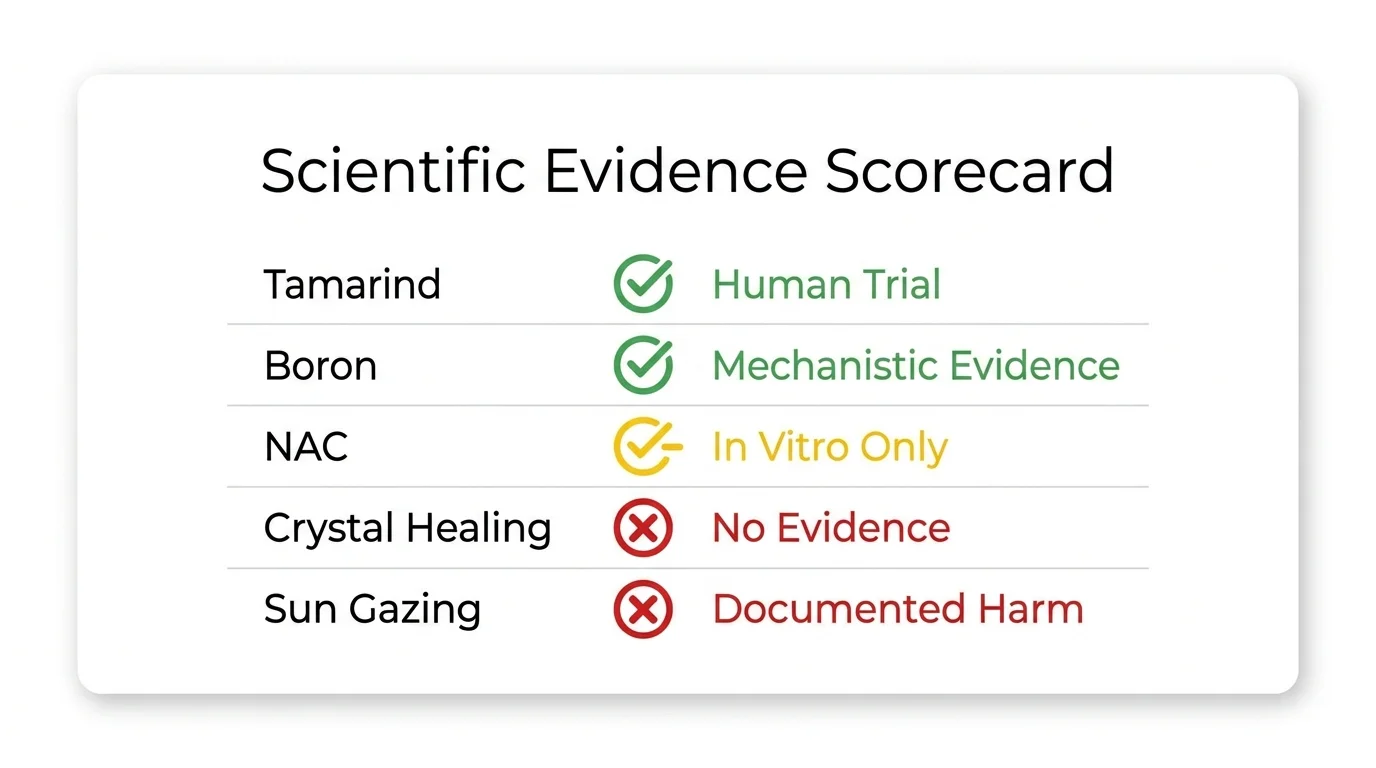
Common “pineal detox” claims rated by scientific evidence quality — from peer-reviewed human trials to no biological mechanism.
A Realistic Pineal Detox Protocol
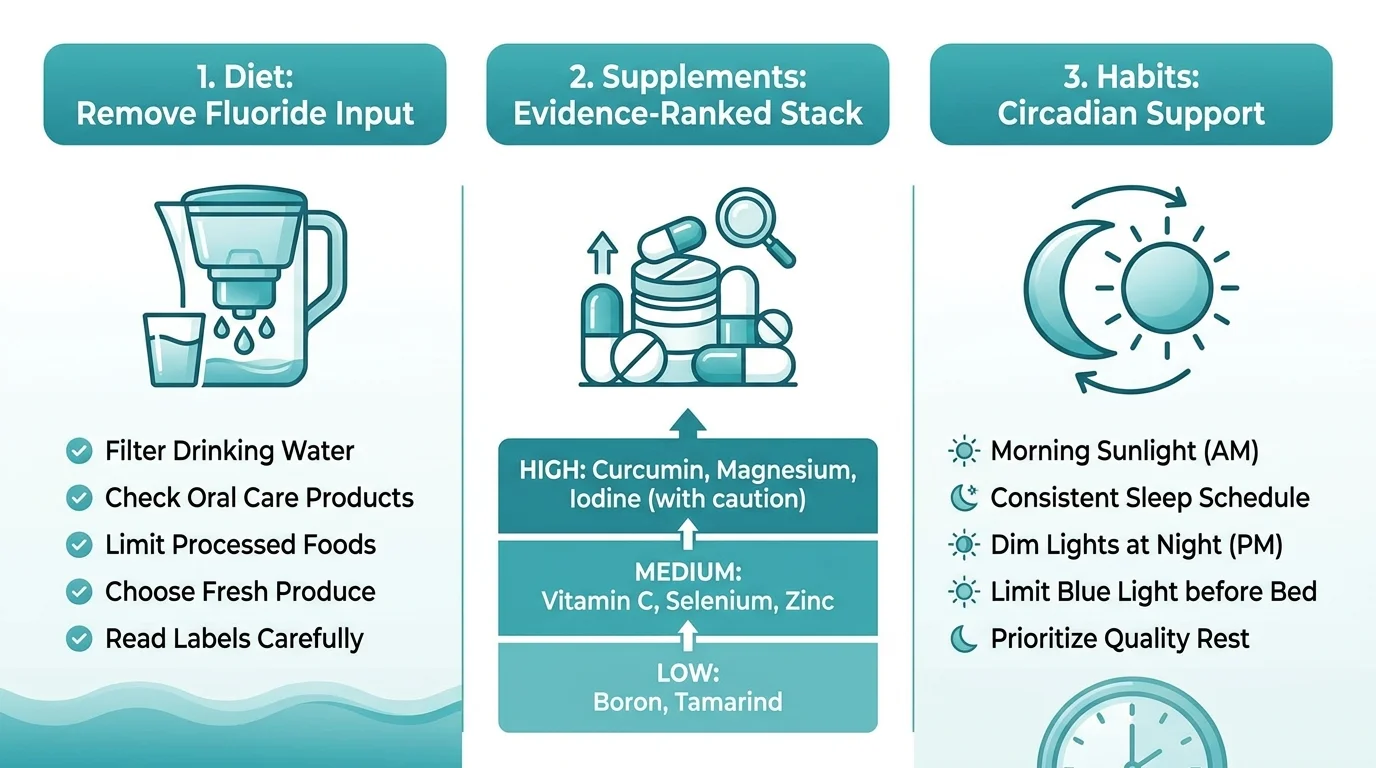
Most protocols fail because they add interventions before removing the primary exposure. That’s backwards. Here’s the structure that matches the actual evidence.
Pillar 1 — Diet: Remove the Input First
Filter your water. Reverse osmosis and activated alumina filters remove fluoride. Standard carbon filters (Brita-style) don’t. This single change reduces daily fluoride input more than any supplement combination.
Switch toothpaste. Fluoride-free formulas using hydroxyapatite (nHA) have clinical evidence for remineralization comparable to fluoride toothpaste — and nHA is the same mineral already in your teeth.
Add tamarind. Paste, dried pods, or concentrate in cooking. 10g/day is the study dose — roughly a tablespoon of concentrate in a sauce or drink. Don’t do it every single day indefinitely given the mineral excretion data above.
Increase dietary magnesium. Raw cacao, pumpkin seeds, dark leafy greens. Most Americans are chronically below the RDA.
Add iodine from food. Kelp flakes, nori, seaweed snacks. Consistent moderate iodine from whole food is preferable to supplementation for most people without documented deficiency.
Reduce inorganic phosphate. Processed foods use phosphate additives that affect overall mineral balance. Not a primary fluoride intervention — but worth knowing.
The three-pillar approach to pineal gland detox — ordered by evidence strength and ease of implementation.
Pillar 2 — Supplements: Evidence-Ranked Stack
Not everything needs to be taken simultaneously. This is ranked by strength of evidence:
Tier 1 — Strongest evidence for fluoride/calcium reduction:
Boron:3–6 mg/day (boron glycinate or calcium borogluconate are common forms)
Magnesium glycinate:400mg elemental at night — glycinate specifically for absorption and sleep benefit
Tier 2 — Supportive mechanisms, less direct evidence:
Vitamin K2 (MK-7):100–200 mcg with a fat-containing meal. K2 activates Matrix Gla Protein (MGP), the main physiological brake on soft-tissue calcification. A 2022 review in Frontiers in Pharmacology (PMC9237441) confirmed MK-7 reduces arterial calcification in clinical trials — arterial, not pineal, but the mechanism is the same.
Iodine from kelp:150–300 mcg in the morning
Tier 3 — Antioxidant support, not decalcification:
NAC:600mg once daily, for oxidative protection — and that’s all it does
On brands: for boron, NOW Foods Boron (3mg capsules) and Life Extension Boron (3mg) are both third-party tested. For magnesium glycinate, Thorne Magnesium Bisglycinate and Pure Encapsulations Magnesium Glycinate are dosed at clinical levels with no fillers. For K2 MK-7, Jarrow MK-7 and Thorne K2 both specify trans-MK-7 — the isomer with actual human evidence. Avoid anything listed as “MK-4” for this purpose; different isomer, different half-life, different data.
Minimum evaluation period: 3 months. Anyone claiming they felt a difference in 2 weeks is describing placebo or general wellbeing improvement from lifestyle changes. Mineral metabolism moves slowly.
⚠️ Medical note: K2 (MK-7) interacts with warfarin and coumarin anticoagulants — don’t take without medical supervision if you’re on blood thinners. Iodine above 500 mcg/day needs monitoring if you have any thyroid history. Boron shouldn’t exceed 20mg/day.
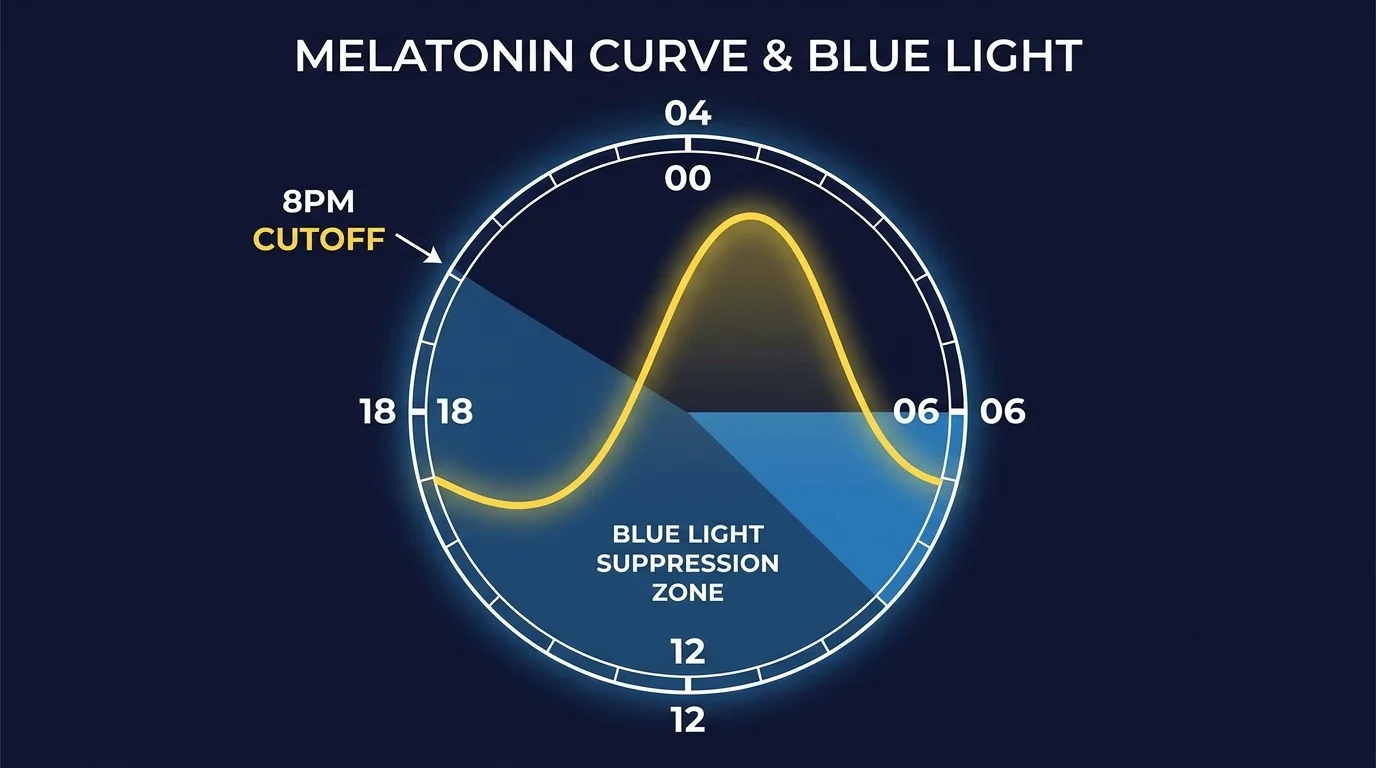
The pineal gland is a light-sensitive organ. Melatonin secretion is triggered by darkness and suppressed by light — specifically short-wavelength blue light. No supplement stack compensates for a circadian system getting noisy signals at the wrong times.
Blue light cutoff at 8pm. Blue-blocking glasses or software filters. The photoreceptors driving circadian suppression are maximally sensitive around 480nm — exactly what LED screens and overhead lighting emit.
Sleep in total darkness. Blackout curtains or a sleep mask. Even ambient light through closed eyelids can reduce melatonin secretion in sensitive individuals.
Consistent wind-down routine before bed. Ten minutes of meditation, same time each night. Not as a decalcifier — as a circadian anchor.
Morning sunlight within an hour of waking. Ten to fifteen minutes outside. This sets the clock. The melatonin signal that matters for sleep comes 14–16 hours later.
Melatonin secretion rises after darkness and is suppressed by blue light — circadian hygiene is foundational to pineal function, no supplement stack replaces it.
The Best Supplements for Pineal Support
Building this stack individually is doable — if you read through Pillar 2, you have the ingredient list and doses.
The practical problem is sourcing five or six separate products, verifying each is dosed at functional levels rather than sprinkle doses, and managing different timing requirements. Most people start well and consolidate badly. They end up with a magnesium oxide product absorbing at 4% and wonder why nothing changed.
If you’re looking for a formulation that combines the key ingredients in evidence-informed doses, Pineal Guardian was designed with pineal support in mind. It’s the option I’d point to for a single-product starting point rather than assembling the stack from scratch.
Quick Verdict — Pineal Guardian
3.95/5
A liquid botanical formula with nine plant-based ingredients targeting pineal support, memory, and mental clarity. The 365-day guarantee makes it a low-risk option for anyone already doing the basics who wants a formulated next step rather than assembling the stack individually.
Here’s where the evidence stops — and I want to be precise about this, because imprecision is exactly the problem with most pineal content.
What is documented: The pineal gland accumulates fluoride at higher concentrations than any other tissue. Tamarind has a human trial showing increased fluoride excretion. Boron competes with fluoride at binding sites. Magnesium inhibits soft-tissue calcification in multiple tissue types. NAC raises glutathione and may slow calcification progression.
What is not documented: Any supplement reversing existing pineal calcification in human imaging studies. Any clinical timeline for how long a reduction protocol takes to affect melatonin function. Any direct test of these mechanisms in pineal tissue specifically — everything above comes from studies on bone, vasculature, and thyroid.
Here’s the question that keeps me coming back to this research: if the pineal gland were just a vestigial calcium deposit, why does it have more blood flow per gram than almost any other structure in the brain? That’s not a spiritual claim. It’s a physiological observation that suggests ongoing functional significance we haven’t fully characterized.
If you want to start somewhere, start with the water filter and the toothpaste. Zero additional risk, addresses the primary input mechanism directly. Add magnesium glycinate at night — most people are deficient anyway, the sleep benefit is real, and the downside is essentially nothing. Everything else is incremental from there.
Not a protocol that opens anything. A protocol that reduces a documented burden on a gland that matters for sleep, circadian rhythm, and a set of functions we’re still figuring out.
Frequently Asked Questions
Does pineal gland detox actually work?
Partially. No supplement has been shown in imaging studies to reverse existing calcification. However, reducing fluoride intake and using evidence-backed supplements like boron and tamarind may slow further accumulation and support melatonin function.
How do you detox your pineal gland naturally?
The most evidence-supported approach: filter fluoride from water, switch to fluoride-free toothpaste, eat tamarind regularly, supplement with boron and magnesium, and prioritize sleep in total darkness. These target the root mechanisms — not myths.
Can you reverse pineal gland calcification?
No supplement has demonstrated reversal of established calcification in human imaging studies. The realistic goal is reducing new fluoride and calcium accumulation, and supporting residual melatonin production through lifestyle changes.
Is there any science behind pineal gland detox?
Yes — selectively. Tamarind has a 2002 human clinical trial showing increased fluoride excretion. Boron has mechanistic evidence as a fluoride antagonist. NAC has antioxidant properties. Claims involving crystals or sun gazing have zero scientific basis.
What supplements help detox the pineal gland?
The best-evidenced options are: tamarind (fluoride excretion), boron (fluoride antagonist, 3–6mg/day), magnesium glycinate (calcium regulation), and iodine from kelp (fluoride displacement). Consult a doctor before starting any mineral protocol.
How long does it take to detox the pineal gland?
There is no defined clinical timeline. Reducing fluoride exposure shows measurable urinary changes within days (tamarind study). Supplement protocols are typically evaluated over 3 months minimum. Managing expectations is key — this is a long-term process.
Disclosure: This article contains affiliate links. If you purchase through these links, I may earn a commission at no extra cost to you.
Marcus Hale is an independent researcher and former clinical neuroscientist. The content on PinealCode.com is for informational purposes only and does not constitute medical advice.
Medical Disclaimer: The content on
PinealCode.com is for informational and educational purposes only. Nothing here
constitutes medical advice, diagnosis, or treatment. Always consult a qualified
healthcare provider before making changes to your health regimen.
Marcus Hale
Independent Researcher · Former Clinical Neuroscientist
I spent 12 years in clinical neurology before the questions got more interesting
than the answers. PinealCode is where I document what I find at the intersection
of brain science and consciousness.