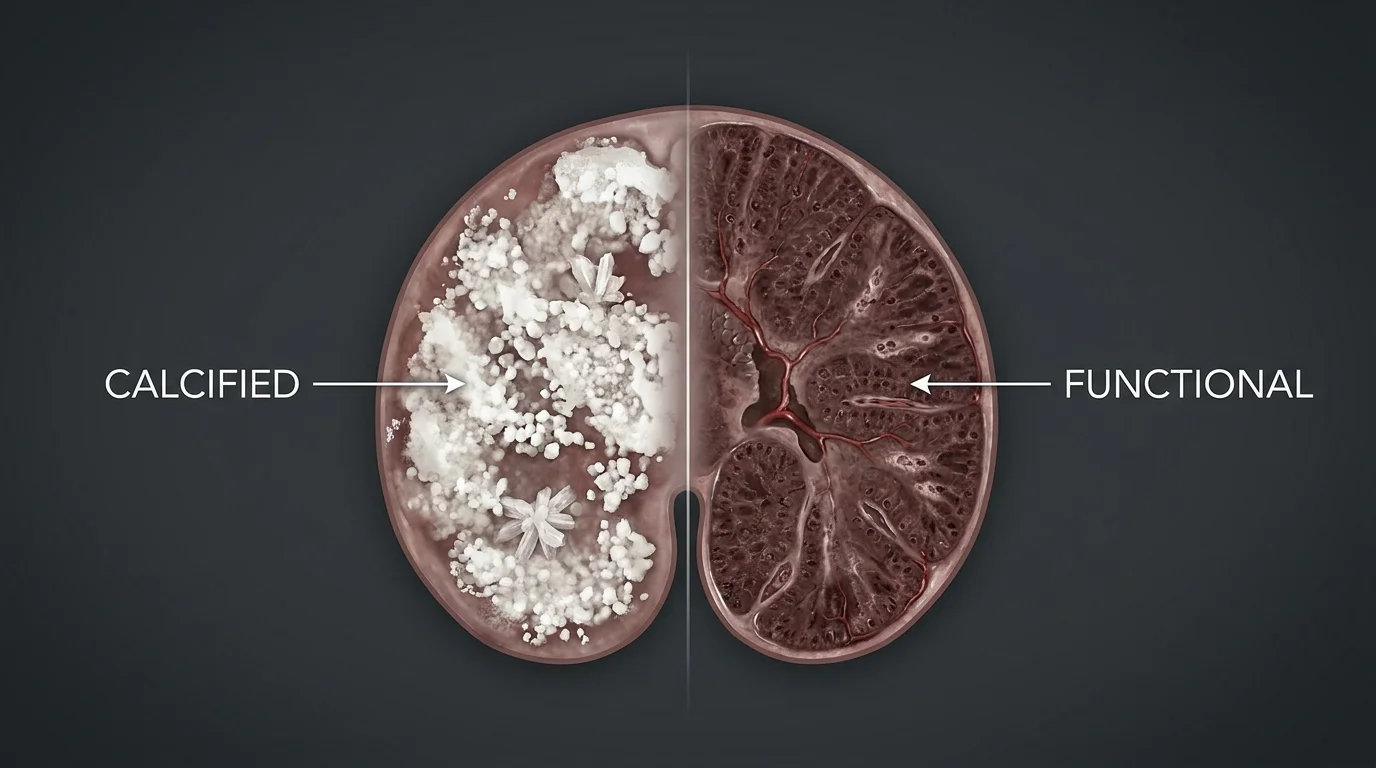
How Long to Decalcify Your Pineal Gland? Not 30 Days
By Marcus Hale·
How Long Does It Take to Decalcify Your Pineal Gland? (Honest Timeline)
Everyone says thirty days. Pinterest, TikTok, the supplement bottles already in your Amazon cart. Thirty-day pineal cleanse. Third eye opened by Sunday brunch.
So how long does it take to decalcify the pineal gland, actually?
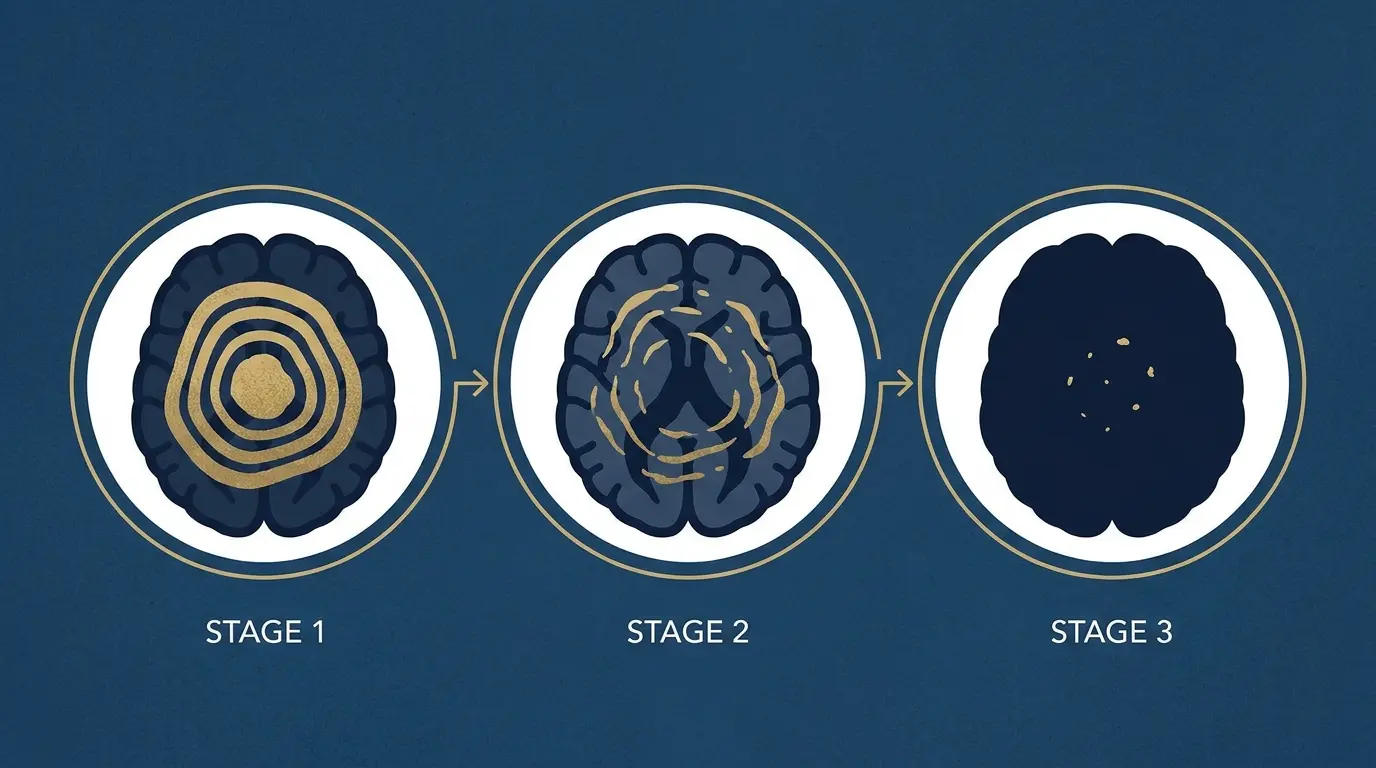
The honest answer is 3 to 6 months for anything you’d call measurable change. Early functional signals like better sleep and more vivid dreams can appear in 2 to 4 weeks. Structural change in a gland that’s been quietly accumulating fluoride for two or three decades doesn’t happen on a Monday-to-Monday timeline.
I spent 12 years in clinical neuroscience research before I started caring about any of this. What I’m going to walk through is the actual science of what changes, when it changes, and why most “30-day cleanse” content on the internet is selling a story that doesn’t match the published data.
Four variables determine your timeline: starting calcification load, ongoing fluoride exposure, protocol quality, and consistency. Most protocols fail at the fourth.
Why There’s No Single Answer to This Question
There’s no universal timeline because four variables change the math, and they change it a lot.
First: how calcified you already are. Pineal calcification builds over decades. A 2023 meta-analysis in Frontiers in Neurology found that roughly 61.65% of adults show measurable pineal calcification, with prevalence climbing to 68.6% in people over 50. If you’re 27, your starting point is different than if you’re 54.
Second: how much fluoride is still coming in. You can’t drain a bathtub while the faucet’s running.
Third: what your protocol actually looks like. There’s a real difference between “I bought a supplement” and “I filtered my water, swapped my toothpaste, dosed boron consistently for 90 days, and watched my dietary phosphates.” Most people are doing the first thing and expecting results from the second.
Fourth: consistency. This is where most attempts die quietly around week 4.
I’m not going to give you a number that fits everyone. I’ll give you the windows where the research suggests things start to shift, and you can find yourself on the curve. If you want the deeper mechanism for what happens to existing deposits, I covered that in reverse pineal gland calcification.
What Does the Research Actually Suggest?
Tamarind. That’s where I’d start, if I were starting from scratch.
A 2002 clinical study by Chauhan et al., published in the European Journal of Clinical Nutrition, found that tamarind ingestion increased urinary fluoride excretion by approximately 37% compared to controls. The mechanism isn’t mysterious. Tamarind raises urinary pH, which mobilizes fluoride from tissue and shuttles it out. That’s a real finding, in real humans, with peer review and a date.
And I’ll be honest — I ignored it for two years because the study was conducted on Indian schoolchildren with endemic fluorosis. Objectively a different exposure context than a 40-year-old in Austin. But the mechanism doesn’t care where you live. Fluoride mobilization via urinary pH shift is the same physiology regardless of geography. That’s when I stopped dismissing it.
Then there’s boron. I used to put it in the same mental bin as colloidal silver, biohacker noise dressed up in lab coats. The animal data changed my mind, partly. Boron and fluoride compete for binding sites at mineralized tissue, and that’s a real mechanism. The supplement marketing still runs ahead of the human trial volume, which is mostly cardiovascular and bone-resistance work. I think the mechanism is plausible. I won’t pretend the data is where I’d want it.
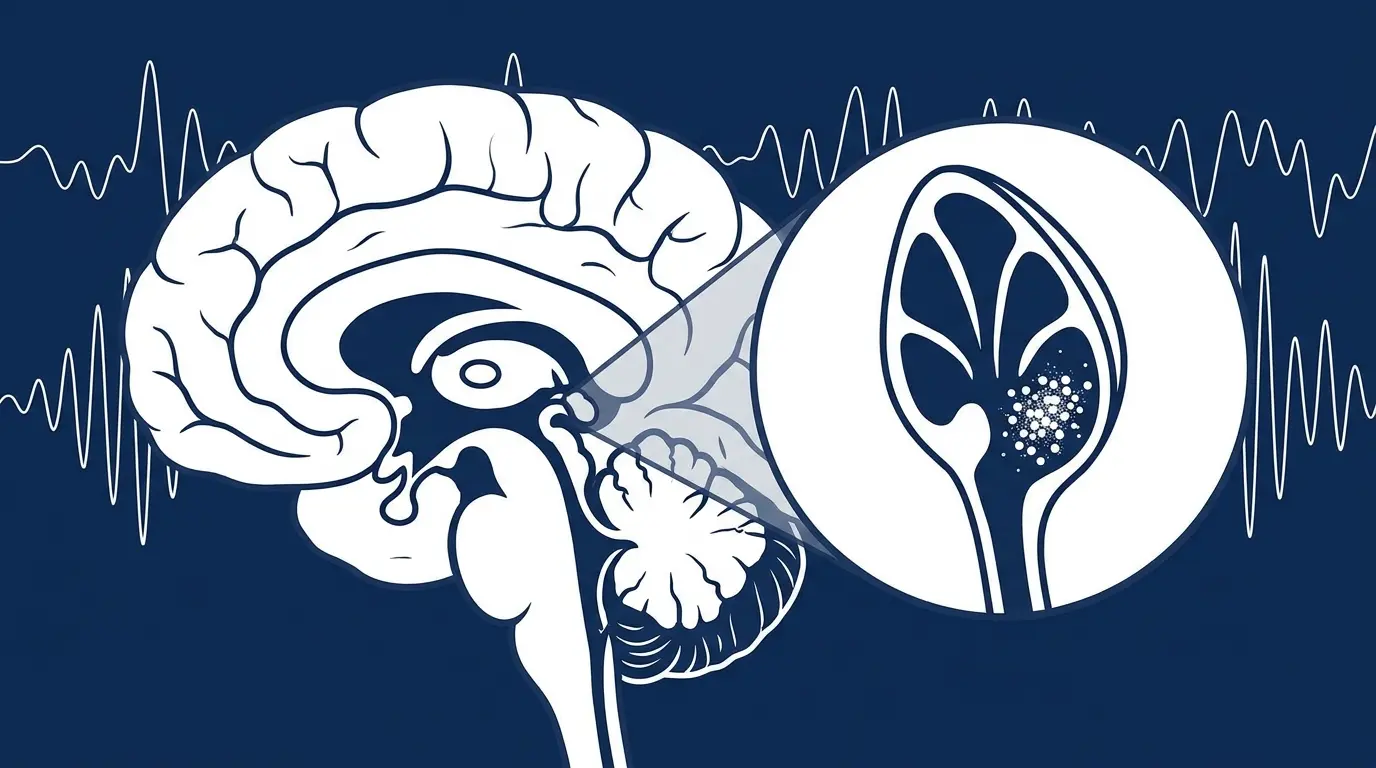
Pineal gland calcification occurs in approximately 61.65% of adults according to a 2023 Frontiers in Neurology meta-analysis, and the gland accumulates fluoride at concentrations averaging 8,900 mg/kg, over four times that of fluorotic bone.
That’s a Luke et al. (2001) finding from Caries Research. It’s been replicated and never seriously disputed.
The pineal gland accumulates fluoride at ~8,900 mg/kg — over 4× the concentration found in fluorotic bone. Source: Luke et al., Caries Research (2001).
NAC operates on a different timeline. NAC is an antioxidant, not a chelator. It supports the gland’s environment; it doesn’t pull calcium out of it. Effects on oxidative markers tend to show up in 3 to 8 weeks of supplementation in human trials. Useful, but not the same thing as decalcification.
I’d take it anyway. Not because it decalcifies anything — it doesn’t — but because a gland under chronic oxidative stress isn’t going to function at its ceiling no matter how much fluoride you’ve removed. Think of it like cleaning rust off a machine while the machine is still running hot. NAC addresses the heat.
Where the research actually lands: 60–90 days for early functional change, 180 days for a full protocol benchmark. For the supplement-stack details, I broke that down in pineal gland detox.
Week-by-Week: What to Realistically Expect
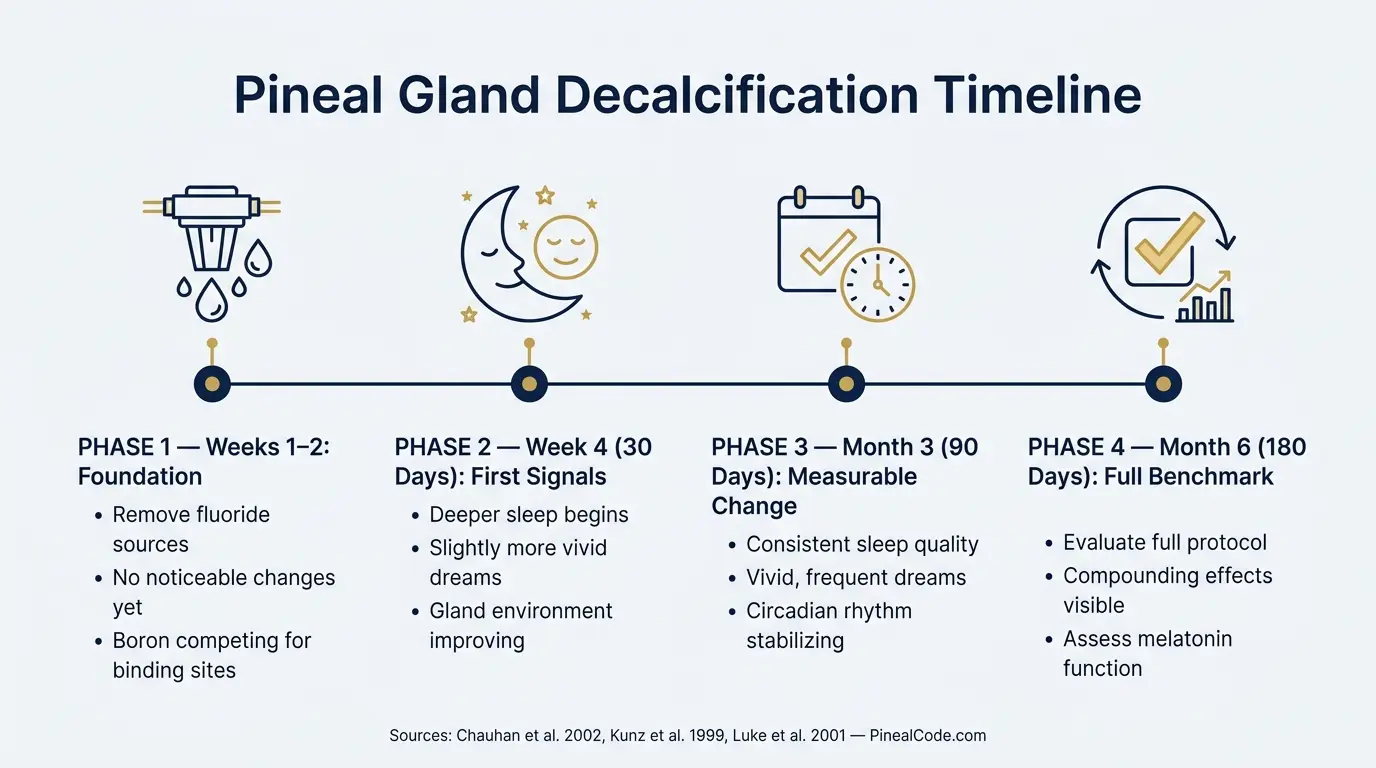
Here’s what the timeline actually looks like, ordered by what you can expect to notice.
The four phases: foundation (weeks 1–2), first signals (week 4), measurable change (month 3), full benchmark (month 6). Structural results require all four phases.
Weeks 1–2: Foundation Phase
Nothing dramatic happens here. That’s the point.
This is where you remove the inputs: filtered water, fluoride-free toothpaste, less processed food with phosphate additives. Mechanistically, boron starts competing for binding sites within 24 to 72 hours of supplementation. Subjectively, you feel exactly the same.
If someone tells you they had a third-eye experience in week one, they had it for unrelated reasons.
Week 4 (30 Days): First Functional Signals
Is 30 days enough to decalcify the pineal gland? No. But it might be enough to start noticing your sleep is different.
This is the window where most users report deeper sleep and slightly more vivid dreams. You haven’t changed the structure of the gland in 30 days. What’s likely shifting is the gland’s environment. Less daily fluoride load, less oxidative stress, a small uptick in nighttime melatonin output.
Month 3 (90 Days): Measurable Change Window
This is where the boron and tamarind data converges with what users actually report. Sleep is more consistent. Dreams are louder. Some people start waking up before their alarm, usually a sign your circadian rhythm is finding its rails again.
Kunz et al. (1999) found that pineal calcification correlates with reduced melatonin output. The reverse, that decalcification restores melatonin, hasn’t been proven in trials. But if you’re seeing functional changes in sleep architecture, the inference is at least biologically coherent.
Month 6 (180 Days): Full Protocol Benchmark
This is where I’d actually evaluate whether the protocol is doing anything. Six months is enough time for compounding effects, enough for inconsistency to shake out, enough to know whether you’re on the curve.
Calcification accumulated over 20 years isn’t going anywhere in 30 days.
Can You Speed Up Pineal Gland Decalcification?
Yes — within limits. The accelerators are about removing inputs and stacking outputs, not finding a magic capsule.
Three things actually move the needle. First, eliminate fluoride at the source. Reverse osmosis water filtration. Fluoride-free toothpaste. This stops the daily refill of the bathtub. If you skip this and just take supplements, you’re trying to drain a tub with the tap running.
Second, stack the supplements with evidence. Tamarind for active fluoride mobilization. Boron at 3–6 mg/day for the competition mechanism. K2 with D3 for calcium routing. You want calcium going to bone, not soft tissue. The breakdown of which products dose this correctly is in best supplement to decalcify pineal gland.
Third, reduce dietary phosphates and synthetic calcium. Most processed foods load you up with both. The mechanism is straightforward: less substrate for fluorapatite formation in the first place.
What doesn’t speed up structural decalcification, despite what you’ll read: meditation, sun-gazing, raw foods, and circadian practices. Those things matter. They improve pineal function measurably, and I’d recommend them anyway. They don’t pull fluoride out of calcified tissue. Don’t conflate “good for you” with “decalcifying.”
If the pineal gland is just a vestigial endocrine relic, why does it have more blood flow per gram than almost any other structure in the brain?
That’s not rhetorical. It’s the part of the picture that keeps me reading the journals.
What Are the Signs That Your Pineal Gland Is Decalcifying?
There’s no consumer-grade imaging that’ll tell you. The signs are functional, not anatomical.
Here’s the order they tend to show up, based on user reports and what’s biologically plausible given the melatonin data.
Weeks 2–4: deeper sleep. Waking less during the night. Less of that 4 a.m. wired-but-tired thing.
Months 2–3: dreams get vivid and frequent. This is a proxy for increased REM-phase melatonin activity, which lines up with the Kunz et al. findings.
Months 3–6: circadian regularity. Less morning fatigue. Sharper cognitive baseline. Some people describe a kind of mental quietness that wasn’t there before.
These are correlates of better pineal function. They’re not proof that calcium is leaving the gland. I’m telling you that distinction because most content in this space won’t.
Sleep architecture shifts are the earliest functional proxy for improved pineal function — correlates of better melatonin output, not proof of structural decalcification.
What We Recommend to Accelerate the Process
Here’s where diet and lifestyle hit a ceiling for most people.
The hardest part of any 6-month protocol isn’t the science — it’s the consistency. Daily tamarind, daily boron, daily attention to fluoride sources is more discipline than most people sustain when they’re working full-time and trying to remember to drink water.
A formulated supplement can carry the load that grocery shopping can’t.
A formulated supplement covers the compliance gap that separates a complete 6-month protocol from one that quietly fails at week 4.
Quick Verdict — Pineal XT
4/5
Formulated around the compounds with the strongest evidence for pineal support: iodine for fluoride displacement, plus antioxidant compounds targeting the gland's documented oxidative exposure. A sensible option for anyone running a 90–180 day protocol who wants consistency without sourcing every ingredient separately.
I’ve looked at a lot of these. Most are marketing. The ones I keep coming back to are dosed at levels that match the actual studies, not a “proprietary blend” sprinkle of every trendy ingredient. If you want to compress your timeline without compressing the truth, this is the category I’d evaluate.
It’s not magic. It’s compliance, in capsule form. That’s a smaller claim than what most pineal supplements make. It’s also an honest one.
Frequently Asked Questions
Is 30 days enough to decalcify the pineal gland?
No. 30 days is enough to notice early sleep improvements, but not structural decalcification. Research on tamarind and boron suggests 90 days minimum for measurable biochemical change, and a full protocol runs 180 days for meaningful results.
Can you speed up pineal gland decalcification?
Yes, within limits. Eliminating fluoride at the source (filtered water, fluoride-free toothpaste), stacking boron at 3–6 mg/day with K2/D3, and reducing dietary phosphates are the three evidence-supported accelerators. Consistency compounds. Missing days resets progress.
What are the signs that your pineal gland is decalcifying?
Signs are functional, not anatomical: deeper sleep within weeks 2–4, more vivid dreams by month 2–3, and improved circadian regularity by month 6. These are proxies for [improved melatonin output](https://www.sleepfoundation.org/how-sleep-works/pineal-gland), the closest measurable signal available without imaging.
What is the fastest way to decalcify the pineal gland?
Remove fluoride inputs first. This stops new calcification from forming. Add tamarind daily and boron at 3–6 mg/day to mobilize existing fluoride deposits. No method reverses years of calcification in weeks; the fastest realistic timeline for early signs is 4–6 weeks.
Marcus Hale is an independent researcher and former clinical neuroscientist.
The content on PinealCode.com is for informational purposes only and does not
constitute medical advice.
Medical Disclaimer: The content on
PinealCode.com is for informational and educational purposes only. Nothing here
constitutes medical advice, diagnosis, or treatment. Always consult a qualified
healthcare provider before making changes to your health regimen.
Marcus Hale
Independent Researcher · Former Clinical Neuroscientist
I spent 12 years in clinical neurology before the questions got more interesting
than the answers. PinealCode is where I document what I find at the intersection
of brain science and consciousness.