Allicin and the Pineal Gland: What the Chelation Science Shows
By Marcus Hale·
Allicin and the Pineal Gland: What the Chelation Science Shows
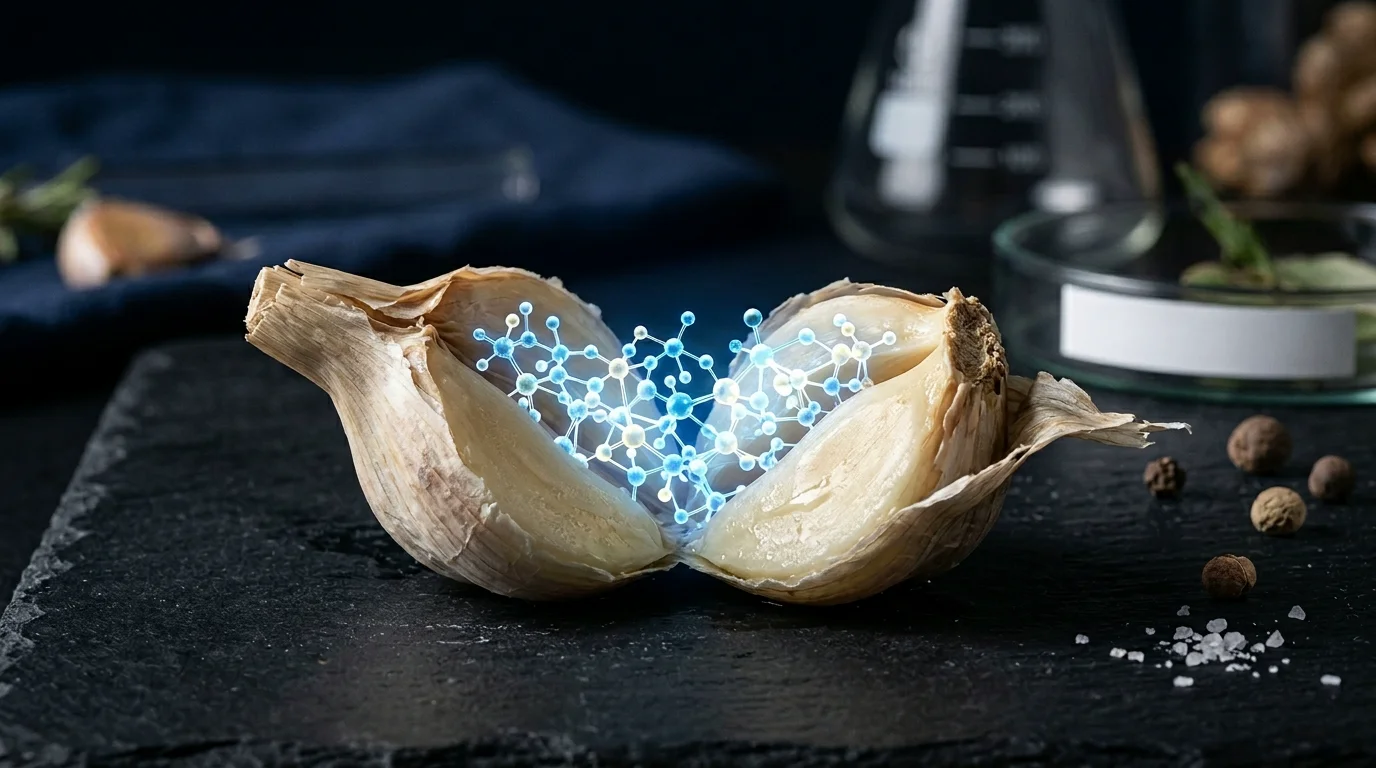
Allicin — the organosulfur compound formed when you crush raw garlic — appears
in 152+ peer-reviewed studies for neuroprotective effects. Heavy metal
chelation. Anti-inflammatory cascades. Glutathione support. The mechanism is
documented at the molecular level.
What allicin cannot do: dissolve hydroxyapatite. That’s the calcium phosphate
mineral that makes up pineal calcification — structurally identical to compact
bone. Chelating Pb²⁺ and dissolving Ca₁₀(PO₄)₆(OH)₂ are different chemistry.
Understanding that distinction is what separates a rational garlic protocol
from the wellness content that oversells it. This article covers what allicin
actually does at the biochemical level, where the evidence holds, and how it
fits — specifically — within a multi-mechanism approach to pineal health.
What Allicin Does in Pineal Tissue: The Chelation Mechanism
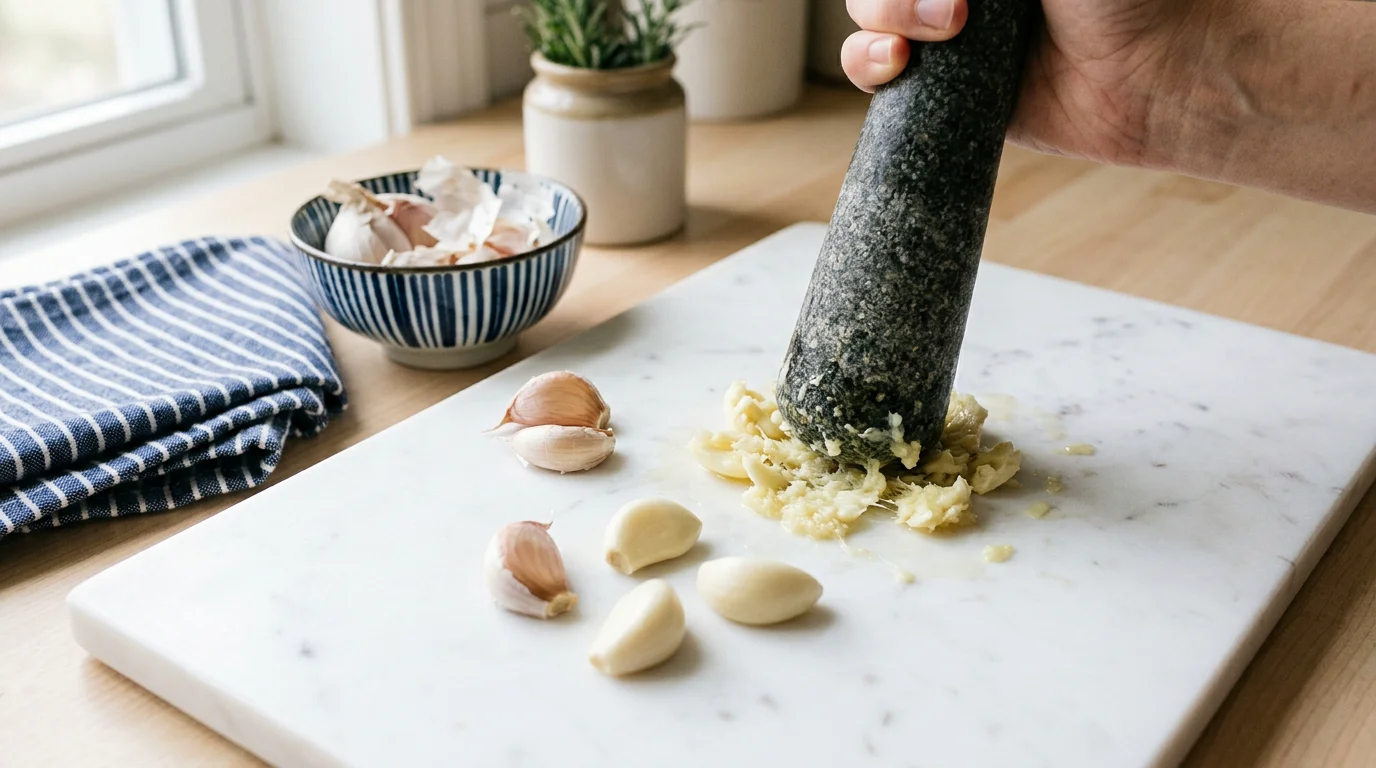
When you crush a raw clove, the enzyme alliinase converts alliin into
allicin — the organosulfur compound responsible for most of garlic’s
documented biological activity. It’s only produced through physical damage
to the cell. No crushing, no allicin.
Once allicin enters your system, two things matter for pineal health.
First: allicin has demonstrated chelating activity against heavy metal ions.
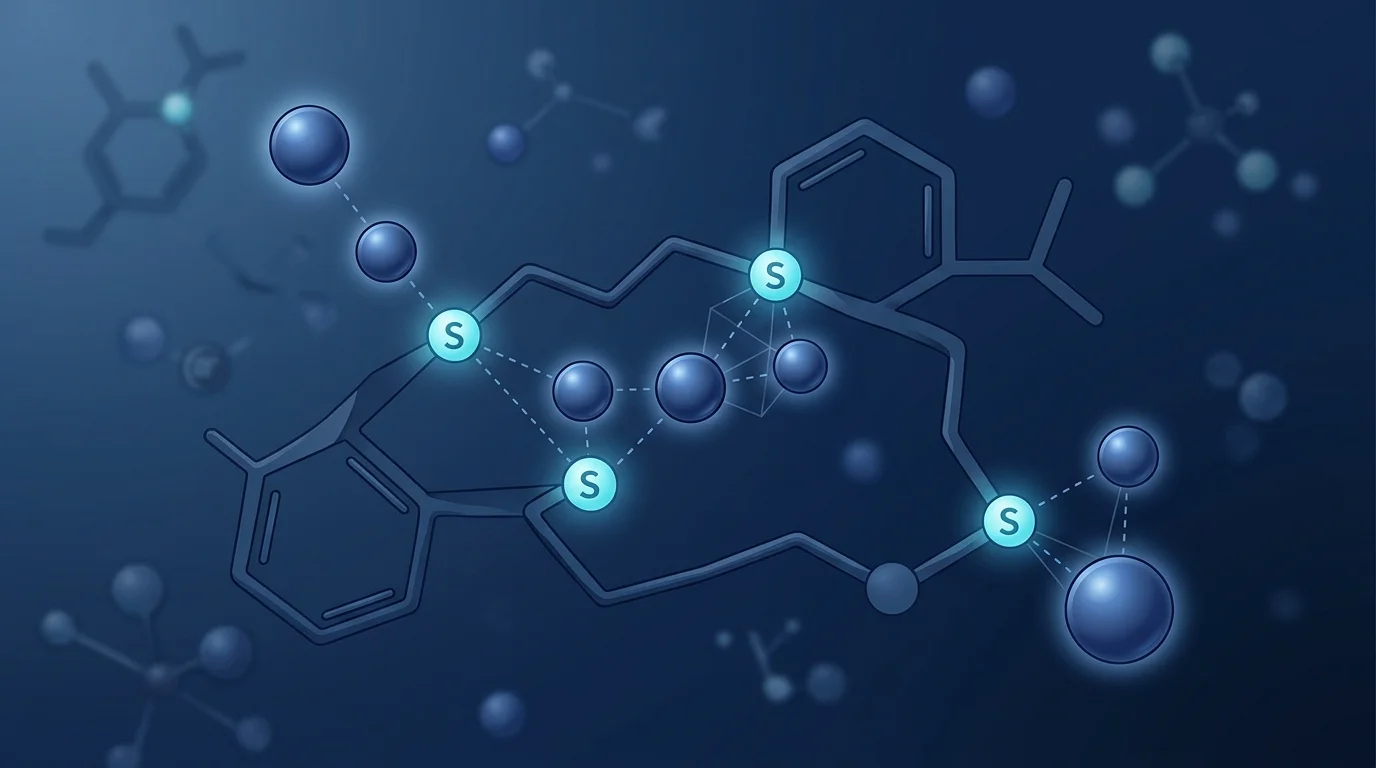
Analytical chemistry confirms that allicin forms stable complexes with lead, copper, and cobalt ions — verified by fluorescence quenching at a molar ratio of 1:400 (Songsungkan & Chanthai, Asian Journal of Chemistry, 2014), with organosulfur groups acting simultaneously as chelating agents and antioxidants. That’s in vitro, not in a living brain. But the chemistry is real.
Second: garlic contains selenium, a precursor to glutathione peroxidase —
one of the brain’s primary antioxidant defenses. A 2023 PMC study found
selenium supplementation reduced oxidative stress and ferroptosis in cerebral
tissue. Not pineal tissue specifically. Brain tissue. The distinction matters.
What garlic is doing, then, is cleaning the neighborhood. Not demolishing
the building.
Does Garlic Dissolve Calcium Deposits?
No — garlic does not dissolve calcium deposits in the pineal gland. Anywhere.
Pineal calcification is composed primarily of hydroxyapatite — the same
calcium phosphate mineral in your bones and teeth. A 2023 comparative analysis confirmed that pineal calcium deposits are structurally similar to compact bone osteons — composed primarily of hydroxyapatite, the same calcium phosphate mineral in bone and teeth, verified by X-ray diffraction. Allicin isn’t an acid. It can’t dissolve
hydroxyapatite any more than lemon juice can dissolve a tooth.
What garlic can do is chelate the heavy metals that coexist with those
deposits — mercury, lead, cadmium. Reducing that toxic burden on surrounding
tissue is legitimate. It’s just not the mechanism most people are imagining.
Allicin binds Pb²⁺, Cu²⁺, and Co²⁺ — organosulfur groups act simultaneously as chelators and antioxidants
Is Garlic Good for the Pineal Gland?
Yes — as a supporting agent, not a primary intervention.
Allicin, the primary bioactive compound in raw garlic, appears in 152+
peer-reviewed studies for neuroprotective effects, including attenuation of
heavy metal-induced neurodegeneration — but no study has tested these effects
directly on human pineal tissue.
A 2021 review in Antioxidants confirmed that allicin suppresses neuroinflammatory cascades and attenuates metal-induced neurodegeneration — reducing pro-inflammatory cytokines, oxidative stress markers, and altered neurotransmitter levels associated with copper and aluminium toxicity in preclinical models. A 2019 study by Nillert et al. found aged
garlic extract reversed 67% of LPS-induced transcriptome changes in microglial
cells. Inflammation down. Oxidative load down.
None of those studies looked at the pineal gland. I want to be transparent
about that. The extrapolation from “neuroprotective in brain tissue” to
“beneficial for pineal function specifically” is reasonable — not proven.
Is Garlic Bad for the Pineal Gland?
No — I’ve thought about this one. There is zero published, peer-reviewed
evidence supporting this claim.
The idea circulates in esoteric communities, and it has an actual history
worth knowing: it traces partly to George Ohsawa’s macrobiotic system,
popularized in the West in the 1960s and 70s, which classified garlic as
an “extreme yang” food that overactivates the nervous system and disrupts
meditative states. From there it migrated into Gurdjieff-adjacent circles
and eventually into modern wellness content as vague warnings about sulfur
compounds and the pineal.
I understand why it sounds plausible. Sulfur compounds are biologically
active. But here’s what the actual biology shows: they reduce inflammation.
They support antioxidant capacity. No indexed study in PubMed, PMC, or Scopus
shows allicin or any garlic organosulfur compound harming pineal tissue.
The concern is philosophical. The evidence points the other direction.
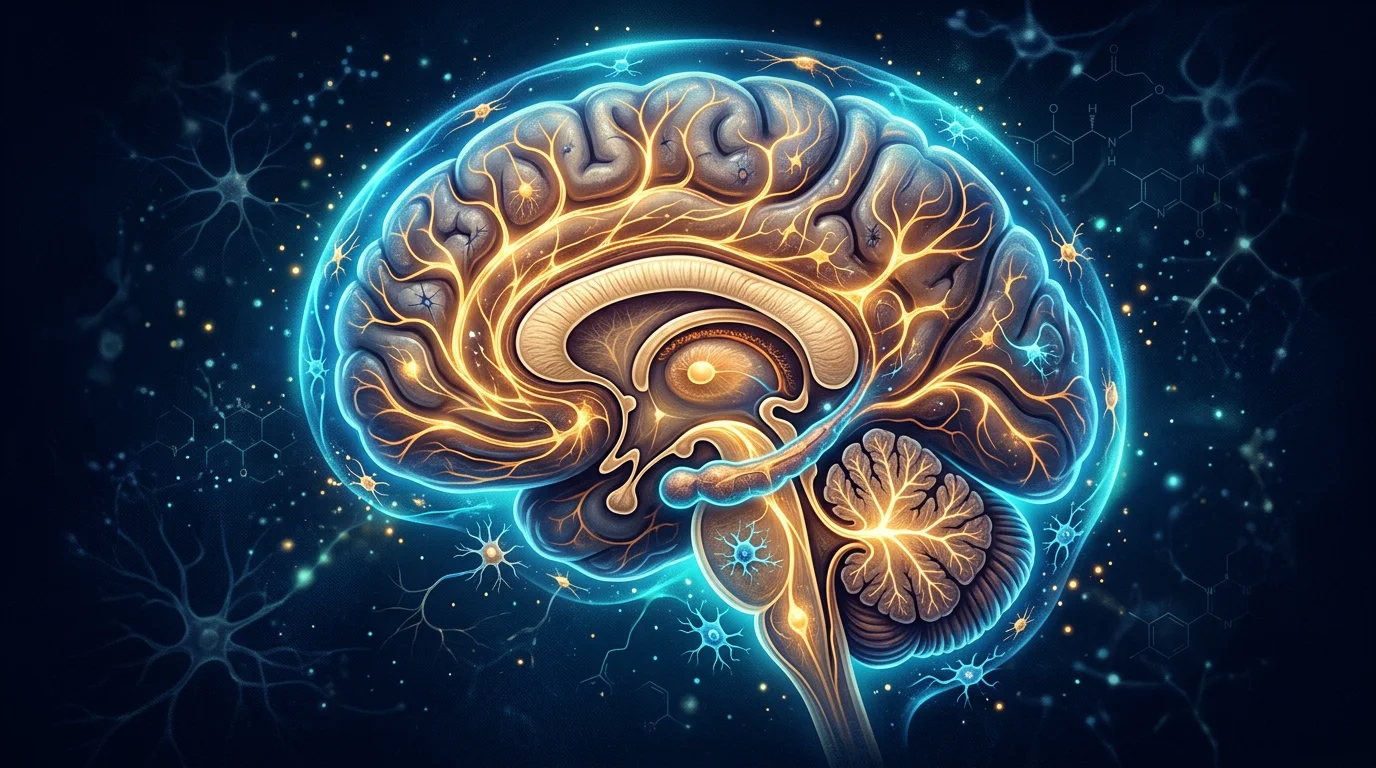
Allicin reduces neuroinflammatory cascades in brain tissue — no direct pineal-specific human data exists yet
Raw vs. Cooked Garlic — Which Is Better for Detox?
Raw garlic wins. Not as a preference — as a matter of biochemistry.
Alliinase, the enzyme that produces allicin, is heat-sensitive. Cooking
destroys it. A 2025 pharmacokinetics study by Nakamoto et al. (PMC11959343)
showed that S-allylcysteine (SAC) and S-allylmercaptocysteine (SAMC) in
aged garlic extract have completely different absorption profiles than fresh
allicin. Cooked and aged garlic keep some organosulfur benefits. The allicin
pathway is gone.
The protocol:
Crush or mince 1–2 raw cloves
Wait 10 minutes before consuming (alliinase needs time to complete the
conversion)
Eat raw, or stir into food after removing from heat
Not with antacids — you’ll blunt absorption
If raw garlic tears up your stomach — and for some people it does — look for
enteric-coated allicin supplements with a standardized allicin yield. “Garlic
powder” is not the same thing.
Cooked garlic isn’t worthless. For the chelation mechanism relevant to pineal
health, though, raw is the only meaningful choice.
Crush first, wait 10 minutes — alliinase needs time to complete the allicin conversion
Allicin Dosage: What the Evidence Actually Supports
The practical starting point: 1–2 raw cloves (2–4g) daily, which is the
range used across animal chelation studies where allicin-related effects were
observed. Beyond that, we’re in honest uncertainty.
Practical limits: high doses irritate the gastric lining, thin blood slightly,
and interact with anticoagulants. If you’re on any blood thinner, talk to your
doctor first. More garlic is not more benefit.
Dose matters. Consistency matters more.
Allicin in a Multi-Mechanism Protocol — Where It Fits
Garlic alone won’t reverse pineal calcification. I’ll say that again before
listing anything, because the temptation in this space is always to stack
five interventions and call it a protocol.
Here’s my actual concern with that: if you start garlic, K2, chlorella,
tamarind, and a supplement simultaneously, you’ll never know what’s doing
what. If something works, you won’t know which one. If something causes side
effects, same problem. Start with one. Add slowly.
That said, here’s what a rational multi-mechanism approach looks like when
you’re ready to build it:
If you’re looking for a formula that combines Tamarind and Chlorella with cognitive botanicals, the Pineal Guardian ingredient breakdown covers what the research shows about each compound.
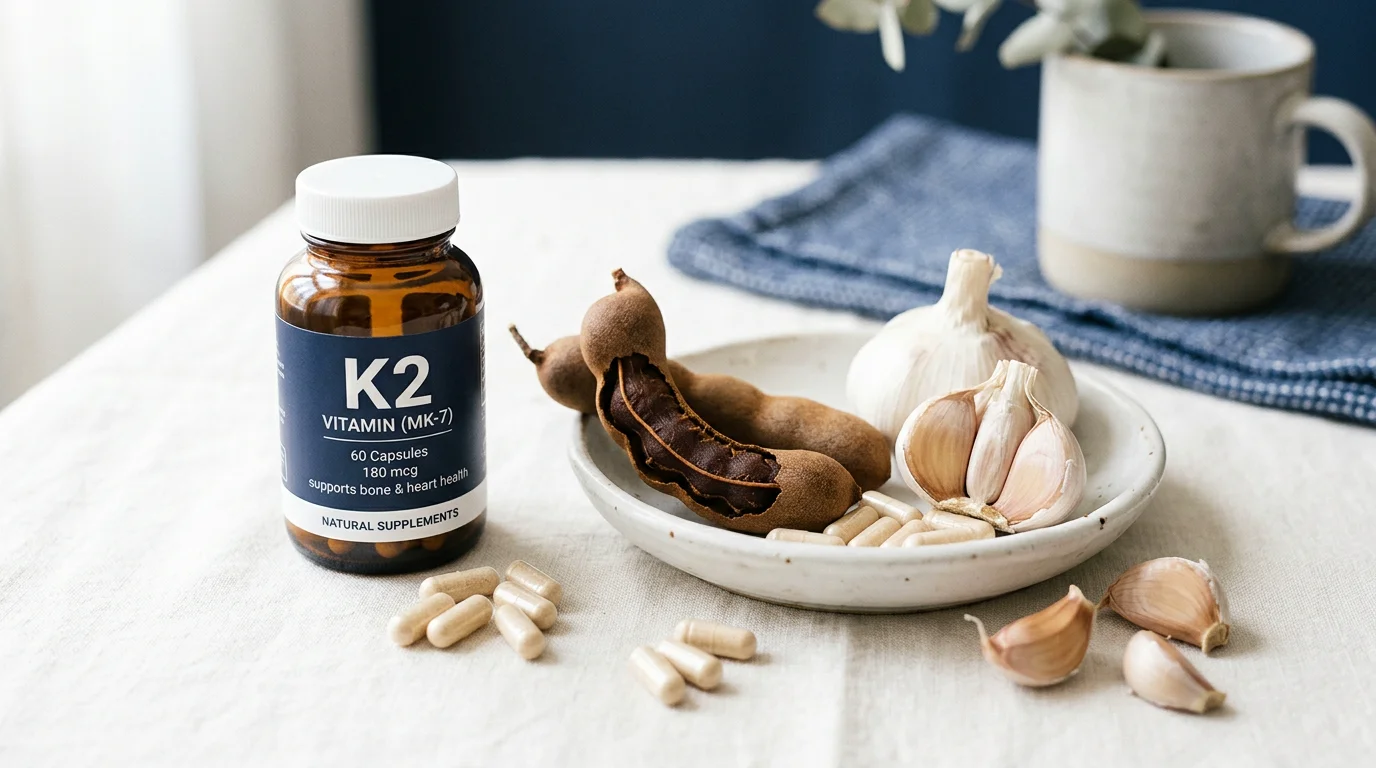
Each compound targets a distinct mechanism — garlic, K2, tamarind, and chlorella are not interchangeable
One of the most persistent misconceptions in this space: garlic removes
fluoride from the pineal. It doesn’t. Fluoride forms fluoroapatite, a
structural modification of the calcium deposits themselves. A 2016 study in
Fluoride Research found a correlation of r²=0.915 between pineal fluoride
content and calcification grade. That’s not a chelation problem. It’s a
different mechanism entirely.
For the broader overview of garlic’s role in pineal health — including the selenium angle and phase II detox mechanisms — see the full garlic and pineal gland analysis.
When Garlic Is Not Enough
I used to use the phrase “promising preclinical data” as if it were reassuring.
Twelve years in clinical research taught me it usually means: we saw
something interesting in cells and mice, and we don’t know yet if it means
anything for you.
That’s the honest status of garlic and pineal decalcification.
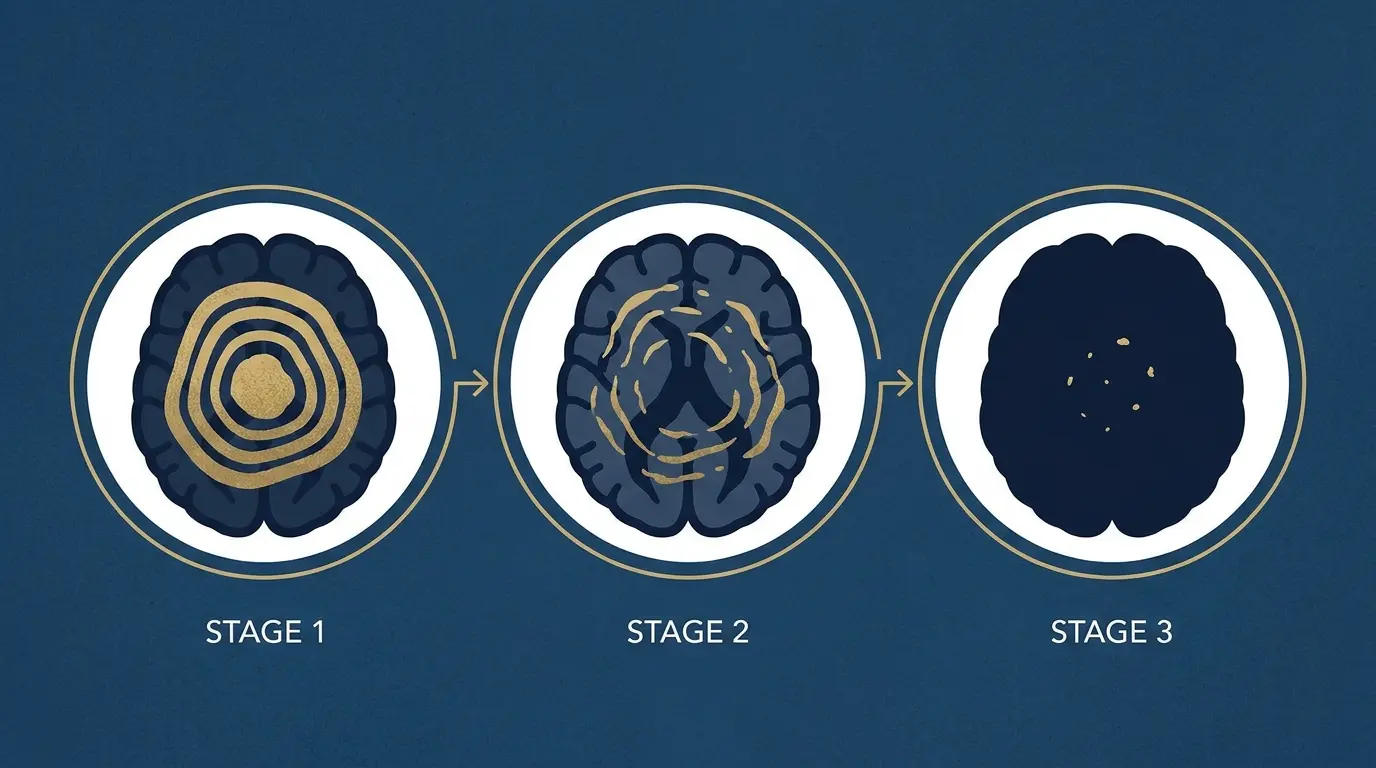
No intervention — garlic, K2, tamarind, chlorella, any supplement — has
demonstrated in a controlled human trial that it reverses established pineal
calcification. Not one. The 2025 literature still debates whether pineal
calcification is an active process (like bone remodeling) or passive dystrophic
accumulation. That question isn’t settled.
What garlic can plausibly do is reduce the ongoing toxic load that may worsen
calcification over time. That’s prevention-adjacent work. Important, but
different from reversal.
If you’re looking at this systematically — years of fluoride exposure, chronic
metal accumulation, the full picture — garlic is a starting point, not a
destination. I’ve put together a detailed look at the best supplement
approaches to pineal decalcification
for anyone who wants to see what the research actually supports beyond the
marketing. And for the full multi-factor protocol, start with how to reverse
pineal gland calcification.
What This Means for You
Garlic is real medicine with documented mechanisms. Allicin chelates heavy
metals in vitro. Its organosulfur compounds reduce neuroinflammation. Its
selenium content supports glutathione production in brain tissue.
These are documented mechanisms. Not folklore.
But garlic does not dissolve calcium. It does not remove fluoride from your
pineal gland. And no study has measured its effect on pineal calcification in
living humans — because that study simply hasn’t been done.
The honest protocol: 1–2 raw crushed cloves daily, as part of a broader
approach that includes K2+D3, reduced fluoride exposure, and consistent sleep
(melatonin production is the actual functional goal, when you strip away the
mythology). No magic. No miracles. A reasonable reduction in the burden your
pineal tissue is operating under.
Start there. Be consistent. Don’t expect a clove of garlic to undo a decade of
calcification in three weeks. That’s the job of a protocol — not a single food.
Frequently Asked Questions
What metals does allicin chelate?
Analytical chemistry studies confirm allicin forms stable complexes with lead (Pb²⁺), copper (Cu²⁺), and cobalt (Co²⁺) via fluorescence quenching at a molar ratio of 1:400. It does not act on calcium ions — hydroxyapatite (the mineral in pineal calcification) requires different chemistry entirely.
Does allicin cross the blood-brain barrier?
The precise pharmacokinetics of allicin in the human central nervous system are not established. In vitro and animal studies confirm neuroprotective effects, but whether allicin reaches therapeutic concentrations in pineal tissue specifically has not been tested in a controlled human trial.
How much raw garlic provides meaningful allicin for chelation?
Heavy metal chelation studies used the equivalent of 1–2 raw cloves (2–4g) daily. Crush first, wait 10 minutes for alliinase conversion, then consume raw. No clinical dose has been validated specifically for pineal tissue.
Is raw garlic better than cooked for pineal health?
Yes. Alliinase — the enzyme that produces allicin — is destroyed by heat. Cooked garlic retains some organosulfur benefits but loses the allicin pathway entirely. For chelation-related effects, raw is the only meaningful option.
Does raw garlic remove fluoride from the pineal gland?
No. Fluoride forms fluoroapatite within pineal calcium deposits — a structural modification that garlic's chelation mechanism does not address. Fluoride reduction requires different approaches, including tamarind and reduced dietary fluoride exposure.
Marcus Hale is an independent researcher and former clinical neuroscientist.
The content on PinealCode.com is for informational purposes only and does not
constitute medical advice. Always consult a qualified healthcare provider before
starting any supplementation protocol.
Medical Disclaimer: The content on
PinealCode.com is for informational and educational purposes only. Nothing here
constitutes medical advice, diagnosis, or treatment. Always consult a qualified
healthcare provider before making changes to your health regimen.
Marcus Hale
Independent Researcher · Former Clinical Neuroscientist
I spent 12 years in clinical neurology before the questions got more interesting
than the answers. PinealCode is where I document what I find at the intersection
of brain science and consciousness.